
Between tourism and biodiversity protection, sea salt asks to become an agricultural activity
The general states of the sector in Confagricoltura. Recognition would guarantee access to anti-famine funds and a facilitated tax regime. Giansanti: salt pans as a pole of attraction for tourists
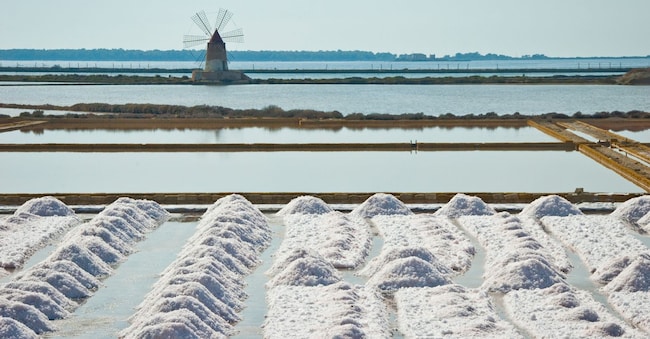
Enough with the expression 'salt as much as it takes'. Salt is not an undifferentiated commodity, but a product that has characteristics that are also significantly different and should be valued according to its qualities but also in relation to its multifunctional role: salt pans are places of tourist attraction and protection of the territory and biodiversity.
Recognising saliculture as an agricultural activity
This is what emerged in Rome from the States General of Saliculture held at the national headquarters of Confagricoltura. The main demand that emerged from producers and the supply chain is that of the recognition of saliculture as an agricultural activity. An imprimatur that would have to come from the Ministry of Agriculture and that would allow companies to access aid from the anti-salinity fund envisaged for farms, as well as the relevant favourable tax regime.
In France with recognition access to anti-malaria funds
An example in this regard came from France, where the sector has a turnover of 65 million euro and 1,200 employees, and where 'salt cultivation' (which is that at sea and differs from mining from rock salt) has already become an agricultural activity as of 2019. "Thanks to this recognition," explained Aude Yvon of Salins du Midi, "the salt workers of Guerande received help during the rains that prevented the harvesting of the product in previous years. The recognition also ensured an enhancement of the national heritage because the salt marshes are central to the conservation of biodiversity. In Giraud, the stop of salt marsh exploitation in a few years led to desertification'.
In Italia from North to South 10 thousand hectares 'cultivated' with salt
Participating in the salt summit at Confagricoltura were Atisale Spa, which in Margherita di Savoia in Apulia, boasts one of the largest salt pans in Europe with 4,500 hectares in production, and which together with the Sant'Antioco plant in Sardinia is Italy's largest sea salt producer. Also present are the Luigi Conti Vecchi salt pans in the Santa Gilla Lagoon near Cagliari, with almost 2,800 hectares in production.
Salt pans are also widespread in Sicily and in particular with the Sosalt plants that in the coastal strip between Trapani and Marsala has about a thousand hectares in production. In Sicily there is also Isola Longa on the island of the same name in the Stagnone archipelago in the Trapanese area with an extension of about 200 hectares. Plants that suffered extensive damage from Cyclone Harry and are currently excluded from any form of compensation.


