
‘Beyond the hype surrounding humanoids, the value of robots lies in specialised systems’
Goldberg, a lecturer at Berkeley and an entrepreneur, explains where market value lies for the business world

Key points
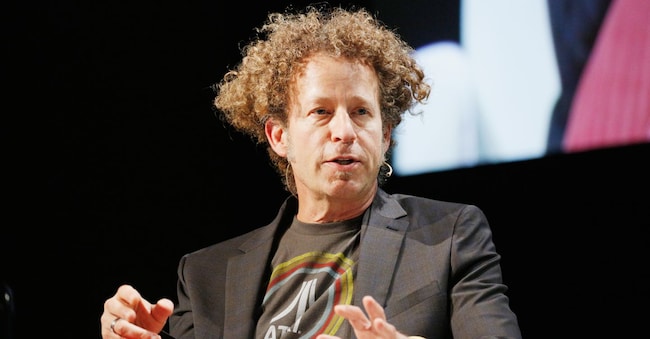
If artificial intelligence is making its way into factories, but humanoid robots are still in their infancy, where, then, are the opportunities and the market? Ken Goldberg, a professor of engineering and robotics at Berkeley and founder of companies that sell robotic systems, including Ambi Robotics, is enthusiastic about robotics but is wary of the timelines and promises surrounding humanoids – that is, what he calls ‘generalist’ robotics.
‘Businesses don’t buy a demonstration’
He has only one yardstick: results. ‘Companies don’t buy a demonstration; they buy a result.’ That is the essence of his argument. ‘From an industrial perspective, a robot that performs a spectacular movement just once has limited value unless it can repeat it thousands of times at an acceptable cost,’ says Goldberg. His companies, he notes, generate revenue from very specific tasks — sorting parcels, stacking pallets — precisely because the value is measurable and recurring.
The future of variable automation
Professor Goldberg introduces a very important concept: variable automation. For years, we have thought in terms of just two categories: fixed automation – the robot that endlessly repeats the same rigid movement – and the humanoid, the supposed all-rounder. Goldberg points to a third way, and it is this that is currently generating revenue: specialised systems that carry out a structured task but with inputs that change every time. ‘No two parcels are ever identical; AI is precisely designed to perceive the difference and adapt, within a defined scope,’ he explains to me. In his view, these activities do not require general intelligence, but rather sufficient intelligence operating within clear boundaries.
It is here that Goldberg elegantly challenges the spectacle of humanoids. Walking or running, he explains, is relatively easy to simulate, because gravity is a stable and well-known force. Manipulation, however, is quite another matter: friction, points of contact, changing surfaces, deformable objects and finger pressure all come into play. It is a problem of physics, not of choreography. This is why a robot capable of an acrobatic leap can still appear clumsy when faced with an ordinary task such as grasping a cable, a shoe or an irregularly shaped object. The discrepancy between simulation and the real world – the sim-to-real gap – is much wider for the hand than for the legs.
Goldberg adds another key point: the amount of data used to train language models may not be sufficient to train robots. ‘In robotics, every useful example must bring together perception, force, timing, contact and outcome, all correctly linked,’ he explains to me in great detail. According to Goldberg, current methods – simulation and teleoperation – tend to plateau at around 80 per cent success and struggle to be generalised to new scenarios. This raises an issue that is not merely technical, but also one of governance. Data is not just numbers: it records the actions of those carrying out the work and the environment in which the machine operates. Even before being considered technical assets, they constitute sensitive information. For this reason, the way in which they are collected and used — by whom, for what purposes, and with what safeguards — must be defined from the outset, rather than treated as a detail to be addressed later.

