
Biden: new aid to Kiev. 'Russia is failing and Ukraine will remain free'
The American President opens the summit for the 75th birthday of the Atlantic Alliance with a firm speech that also wants to dispel doubts about its fragility and leadership. In Kiev, he announces a historic package of new anti-aircraft defences, including a system from Italy

3' min read
3' min read
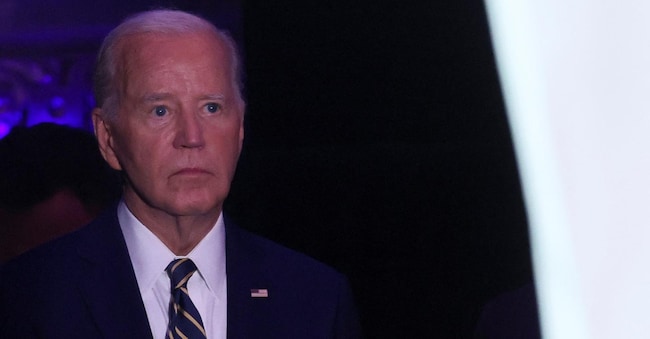
Lined up on stage, entering one by one, were the leaders of the 32 NATO countries at the 75th anniversary celebrations of the Atlantic Alliance, today at the centre of unprecedented growth and one of the greatest challenges in its history, the Russian war in Ukraine. At the centre was the host, President Joe Biden, himself at the centre of a political and personal crisis, beset by doubts about the fragility of his leadership at the age of 81. Solemn music accompanied them, played by the military band in red gala uniform. Under the stage, a slogan stood out as a declaration of commitment: Defending our future.
Resilience after 75 years
.The image recalled, in the vast hall of the Andrew G. Mellon Auditorium, is one of resilience: this is where the original treaty that gave birth to NATO was signed in 1949, under the presidency of Harry Truman. The lights dim and a video montage of historic moments for the alliance runs, in black and white and colour showing the passage of time and changes, from the Cold War and the Berlin Wall to terrorism and now Ukraine invaded by Vladimir Putin. In the flashes, Biden signing a ten-year bilateral security agreement with Ukrainian President Volodymyr Zelensky in June this year.
It is the symbol of tenacity that Biden - and NATO - want to send, during a three-day summit that intends to launch new aid to Kiev and an increased role for the Atlantic Alliance in the coordination of military supplies and the training of Ukrainian forces, creating a 'bridge' towards the progressive integration of Kiev and its future admission into NATO. The latter, although still amid caution and without dates, should be defined as an 'irreversible' path by the summit's final communiqué. All moves that represent a warning to Putin.
Honour for Stoltenberg
NATO Secretary General Jens Stoltenberg, who will hand over the reins to Mark Rutte in October, opens the celebrations. Then it is Biden who does the honours. In closing, he offers Stoltenberg the highest American civilian honour, the Presidential Medal of Freedom. And he delivers a speech in confident tones, as if to chase away domestic criticism and international nervousness about his condition, including rebellions in the Democratic Party that would like to replace him as the candidate in the November elections for fear he will be defeated by the isolationist Donald Trump.
Biden makes no missteps and intones that 'this moment requires our collective strength' and claims alongside Ukraine's courage the support offered by NATO. He assures that this will continue and increase: Kiev will receive within a few months "dozens of new tactical anti-aircraft defence systems" from the allies. A strengthening sanctioned by a collective announcement with the US by Germany, Italy, Holland, Romania and Ukraine. In particular, the five NATO countries confirm supplies of a number of strategic systems, including Patriot and a SAMP-T system donated by Italy. Biden describes the commitment as 'historic'. And he promises that 'he can and will stop Putin'.


