The golden year of Italian tennis

Binaghi: 'From Atp Finals, Internationals and Davis about two billion impact'

Fitp president's challenges for 2025: more tennis in schools and on free-to-air TV, and the market for major world events

by Marco Bellinazzo

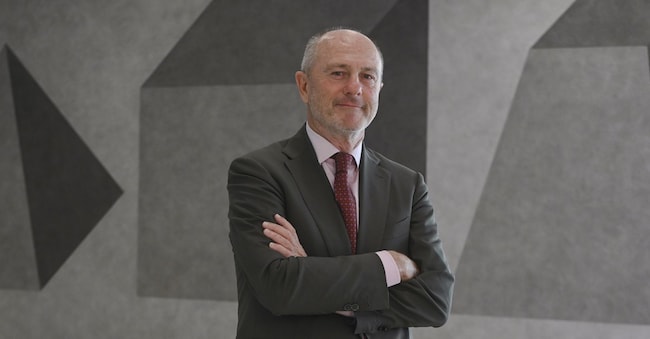
Angelo Binaghi Presidente Federazione Italiana Tennis e Padel. (Imagoeconomica)

5' min read

5' min read

Italy, more and more the hub of world tennis, will in the coming years host the Atp Finals (between Turin and Milan until 2030), the Internazionali di Roma (which is gradually taking on the role of a 'fifth' Slam with the extra-large 14-day version) and the Davis Cup Finals (until 2027). The three major international tennis events (apart from the Slams) will produce an economic impact on the territory of close to EUR 2 billion.

"For the Finals, as surveyed by Boston Consulting, the impact was 503 million and an added value for GDP of 243.2 million," explained Angelo Binaghi, president of the Italian Tennis and Padel Federation, "also taking into account how much was generated in the weeks before and after for the set-up and break-down. A more correct analysis, if you like, than the one by Ernst & Young, who calculated an impact of over 630 million last year for the Internationals, without taking these latter factors into account. For 2025 in Rome we already have a 50% higher presale and with a doubled site, with more courts, commercial areas and spectators we aim to achieve an economic impact on the territory of one billion. So by adding the Davis Cup we are moving towards two billion. Without considering the reputational impact and the value of the know-how created for the organisers. But let me tell you something else about Rome'.

Loading...

Please.

'The Internazionali d'Italia is the only high-level sporting event in Italy that does not have one euro of public contribution. To those 'inattentive' sports executives who attack us saying that we do it in a facility built by CONI, I reply that it was built with public money and that we are the only ones who use it by paying an important rent and giving back to the State through Sport and Health, which has been our partner since 2005, millions of euro in fees. Money used to improve the facility for the good of all. I would add that for the Winter Olympics where we were up against only one other country, the government will spend about 5 thousand million euro. To make five years of Finals, for which they had 39 competitors at the beginning, including London, Singapore and Tokyo, they spent 81 and only recovered five times as much in tax revenue."

When you picked up the baton in 2001, the Italian tennis movement - which tonight, 4 December, celebrates its much-deserved Grand Gala - was on the brink of default, with less than 130,000 members, a federal turnover of less than 15 million euros and Italian tennis players on strike against the Federation. This year tennis Italy has 'gone too far'. The titles won are hard to count. How was it possible to build this phenomenon?.

"Poverty has been our main virtue. It pushed us to be rigorous in planning resources and savings and it pushed us to return to the sports market at the height of the crisis by trying to be innovative. We overturned what was happening before and started to no longer take decisions for 'political' purposes, the real disease of Italian sport, but to gain efficiency and competitiveness. We reorganised the Federation also from an ethical point of view, because there were also those who stole, we relaunched the Internationals, we invested more and more resources in the technical sector, then we invented our television and at the same time we found girls who started to win. All the economic indicators since 20o1 have been growing steadily. Covid then gave us a hand in broadening the base, despite the fact that some wanted to include tennis and padel as contact sports. Between 2018 and 2019, we took the Nitto Atp Finals while our men's sector exploded with Fognini and Berrettini and now with Sinner and Musetti and all the others.

How did all this talent blossom? .

"You see, the previous system was politicised and centralised. The federation with its technical centre, the supposed factory of champions, 'fought' against the clubs and academies. Like the Soviet Union. We overturned the system starting with the 'Integrated Area Plans' to decentralise and incentivise the aggregation of clubs in the territory so as to raise the technical offer, instead of dividing it up. We then developed private teams, financing them in relation to the potential of the players, who we now assist on demand with our technical-scientific sector. This has made private academies flourish. In addition, we have imposed that at least 50 per cent of the tennis players fielded must be trained in-house, protecting the nurseries and with promotion and relegation mechanisms. Previously, to play in the Serie A it was enough to 'buy' two first-class players. Berrettini comes from this path. What neither football nor basketball are able to do and what we have copied from volleyball'.

Today, Fitp's turnover is already over 200 million and there are more than one million Fitp members. The number of Fitp members is over one million.

"This is our 'family'. The number obviously doesn't coincide with the number of players, because there are the tennis, padel and pickleball players, the members of clubs who don't play, the managers and 13 thousand coaches and instructors, who today train on five levels of qualification. Then there are those of the young people involved in the 'Rackets in the classroom' initiative, 400 thousand primary school students to whom we give free lessons to bring them closer to our disciplines, thanks to the foreign capital that we attract with the Internationals, between sponsors and the 30% of ticketing purchased by foreigners".

What are the company goals for 2025? 

I would say three. Practitioners and fans are almost as numerous as those in football but we have a generation of 22/23 year old champions that football does not have and a 'rampant' and decision-making federation. Just look at what has happened in the last couple of months. Football, however, is present in 90 per cent of municipalities, we in less than 30. So we need to increase the facilities, as clubs have waiting lists to play, particularly in medium and small municipalities. We need to increase the demand for tennis so that more clubs come up and build new courts, as happened with padel. Plus having the number one player in the world. Secondly, Italian tennis was disappearing as it was only broadcast on pay TV. Since 2008 we have created a Supertennis popularisation channel so that it would be on TV and free for everyone and not the prerogative of an elite. Goal achieved in full. We also helped other broadcasters to create a channel dedicated to tennis. But, how should I put it, someone has taken advantage of this by preying on our good faith. We feel cheated. We are convinced that there was an attempt at commercial speculation to the detriment of Italians. The mother of all our battles, therefore, will be to have more and more tennis in the clear. If Jannik were eight years old today, he would not be able to see Sinner enough.

And the third challenge?

Well, leave us room for a few surprises. Let's say, that we continue to be very active players in the acquisition market of major world events.

Copyright reserved ©
Loading...

Brand connect

Loading...

Newsletter

Notizie e approfondimenti sugli avvenimenti politici, economici e finanziari.

Iscriviti