
Biodiversity, the Enea project for the natural habitat of molluscs
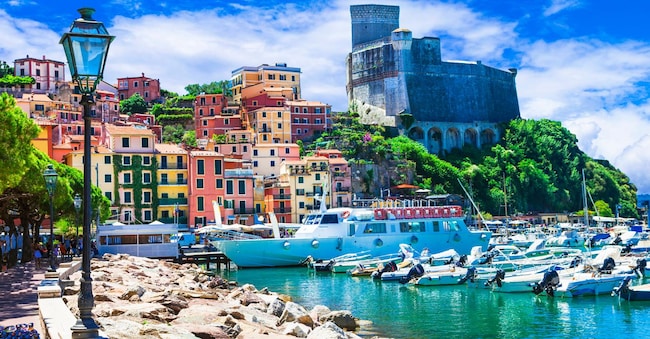
The initiative will take place in the Bay of Santa Teresa in Lerici. The University of Bologna and the Italian Navy Comsubin are also involved in the project

Key points
From artificial reefs made of mortar containing mussels, a boost to recreate the habitat of a mollusc, the flat oyster, fundamental for biodiversity. This is, in short, what is envisaged by the initiative that Enea researchers are carrying out in the bay of Santa Teresa in Lerici (La Spezia), with the cooperative of mussel farmers Associati, the Municipality of Lerici and the Scuola di Mare within the Raise project for the development of regenerative solutions based on nature in order to rebuild natural habitats and restore port areas.
The project, between circular economy and biodiversity
Specifically, ENEA researchers have placed three new bio-reefs (innovative and environmentally friendly artificial reefs capable of stabilising and implementing marine biodiversity) in the sea at the centre of the bay, made of a mortar containing mussel shells, with the aim of encouraging the repopulation of the flat oyster (Ostrea edulis), a mollusc-filter that helps regenerate marine environments, protect biodiversity and regulate the climate.
"With a regenerative circular economy approach,' explains Cristian Chiavetta, head of the Tools for Sustainability and Circularity of Production and Territorial Systems Laboratory at ENEA's Sustainability Department, 'we have used mussel shells as a secondary raw material to replace quarry materials, so as to valorise a by-product of shellfish farming and return to the sea a precious natural resource consisting of over 90% calcium carbonate, avoiding its disposal in landfills, but also reducing the environmental impact linked to the extraction of natural resources.
The collaboration of universities and the Navy Comsubin
The three new ree, 3D-printed with a mix of mussel shells (40%) and biocompatible cement, were realised as part of a PhD project that saw the collaboration of Enea the University of Bologna, Universidad de Cantabria and Fundación Leonardo Torres Quevedo. 'The cement used in the mix,' adds Chiavetta, 'has a low clinker content and is specifically formulated for marine environments.
The installation was carried out by divers from the Italian Navy's Comsubin Operational Diving Group and the company Submariner, supported by the La Spezia Coast Guard and Port Authority. "The artefacts," adds Letizia Caroscio, an ENEA-University of Bologna doctoral student, "were then 3D printed, a technique that guarantees greater design freedom and optimisation of geometries, for an eco-functional design supporting biodiversity.

