
Biodiversity opens up new transversal skills
There is a growing need in companies to attract specialised nature conservation professionals with both technical and economic skills

4' min read
Key points
- From technical knowledge to business skills
- Emerging professions and the labour market
- Pirelli: biodiversity in the factory and supply chain
- Italferr: infrastructure and natural capital
4' min read
A biologist working alongside a purchasing manager to assess the impact of an agricultural supply chain or an economist analysing the risks associated with the loss of natural habitats. Scenes that a few years ago would have seemed unusual, today tell of a transformation taking place: biodiversity is no longer just a subject for research or conservation, but a strategic asset for companies. From the protection of genetic resources to nature-based urban solutions, to the responsible management of supply chains, a new vision is emerging that no longer confines biodiversity to the 'scientific' sphere, but transforms it into a professional field requiring contamination of knowledge. Biologists, agronomists, foresters, engineers, economists and managers must work side by side, translating complex data into decisions useful to business and the planet.
From technical knowledge to business skills
According to Matteo Pedrini, scientific director of Sustainability Makers, the association of sustainability professionals, and director of Altis - Graduate School of Sustainable Management at the Università Cattolica, it is not enough to define oneself as a biodiversity expert: what counts is the ability to adapt one's skills to business contexts. Biodiversity, he explains, is not one-size-fits-all knowledge, but a set of tools to be customised according to sectors. At the training level, Pedrini identifies two major gaps: on the one hand, managerial profiles, which often lack the tools to interpret scientific data; on the other hand, technical-scientific profiles, which struggle to move within business logic. "For the former, structured courses are needed to learn how to read data on biodiversity; for the latter, it is crucial to acquire the managerial toolbox: policies, strategy, planning, performance measurement, economic-financial language".
Emerging Professions and Labour Market
An updated snapshot comes from the report Biodiversity and the private sector in Italy. Trends, policies, and financial instruments, produced by Etifor, an environmental consulting company set up within the University of Padua, which brings together around 80 experts including foresters, environmental engineers and economists. In its second edition (2025), the study collected responses from about a hundred companies linked to Italian CSR and ESG networks. The data show that biodiversity is becoming part of strategies: over 50% of the companies surveyed already have a sustainability department that includes the topic; one in two has invested in dedicated projects and almost 45% have adopted a mitigation strategy. "However, the lack of in-house skills remains the most cited obstacle," warns Alessandro Leonardi, CEO and founder of Etifor, "which is why we are seeing a growing demand for new and transversal figures." According to Leonardi, 'the professionals most in demand are environmental engineers, agronomists, foresters and environmental scientists. Figures that must, however, go beyond the technical approach, acquiring an international socio-political and economic vision, digital skills such as the use of Gis (Geographic Information Systems) and territorial governance and facilitation skills.
Among the cases followed by Etifor is the Kering group (Gucci, Balenciaga), which has launched a Water Strategy to generate a positive water impact by 2050. The first laboratory will be activated in the Arno basin, a strategic district of Tuscan tanneries, where territorial facilitators and river governance experts will coordinate companies and institutions to restore freshwater ecosystems and increase the resilience of the territory, adopting a holistic vision and a collective approach to achieving the sector's sustainability objectives.
Pirelli: biodiversity in the factory and supply chain
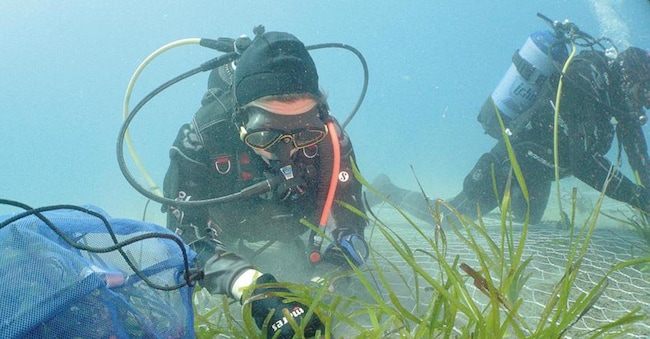
Among manufacturing companies, Pirelli has included biodiversity among the priorities of its sustainability strategy: from the introduction of Fsc-certified natural rubber to the regeneration of degraded areas in Mexico, and initiatives such as the Bollate biodiversity hub and the marine reforestation of posidonia. "For each production site we have prepared a biodiversity action plan, with concrete measures such as rainwater reuse, energy efficiency and the restoration of local ecosystems," explains Matteo Battaini, head of sustainability and future mobility.

