
Biofertilisers from volcanic ash and municipal waste
Enea and Catania University's Landfeed project aims to enhance the circular economy by bringing together industry, the environment and agriculture

2' min read
2' min read
Volcanic ash and urban waste are transformed into 'raw material' for the production of biofertilisers. This is the objective of the project called Landfeed, which aims to enhance the circular economy by bringing together the industrial, environmental and agricultural spheres developed by researchers at ENEA as part of a collaboration programme with the University of Catania.
The project aims to respond to this challenge," anticipates Antonella Luciano, researcher at ENEA's Tools for Sustainability and Circularity of Production and Territorial Systems Laboratory and project leader, "by recovering valuable nutrients from agricultural, forestry, industrial, and urban waste and by-products, thus contributing not only to waste reduction, food safety, and sustainable agriculture, but also to the creation of a European biofertiliser market, considering that most of these products come from foreign imports. For the project, researchers at ENEA will develop an industrial symbiosis web platform that will serve to simplify the management of the various residues and facilitate their use in the production of biofertilisers,
"In this way, we will be able to coordinate the entire production process, promoting collaboration and the exchange of by-products and waste between companies in an industrial symbiosis system," the researcher argues. "Furthermore, we will help to implement a 'digital product passport' for organic fertilisers, so as to ensure traceability along the entire supply and production chain, thereby optimising the use of different organic residues, according to the principles of the circular economy.
In addition to the development of innovative nutrient recovery technologies for the production of bio-based fertilisers, the project will also develop new generation coatings based on chitosan and microalgae, capable of improving efficiency through controlled nutrient release mechanisms. 'In this way,' he argues, 'Landfeed will contribute to more efficient fertiliser management, optimising yields, reducing greenhouse gas emissions, minimising the impact on water resources and helping to restore soil health by improving soil biodiversity.
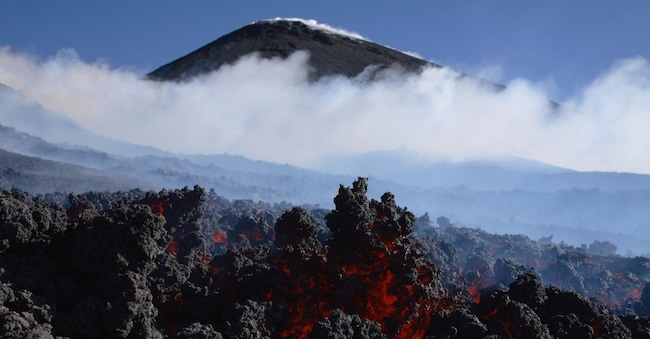
The programme includes five European case studies that differ in the type and treatment of organic waste used. The Italian pilot project will focus on a mix of wastes including sludge from wastewater treatment plants, both industrial and civil, and from freshwater fish farms, residues from microalgae cultivation, and digestate from agricultural residues. To these will be added the industrial by-products of orange processing and volcanic ash from Etna, a residue rich in minerals useful for the soil. "All these residues, although different in nature," continues the researcher, "will be treated through a sustainable process that will allow them to be transformed into a useful product for agriculture, within a system of industrial symbiosis that optimises the use of available resources, reducing their environmental impact.

