
Biofuels from renewable raw materials: a new source of energy for European industry and transport
Recent geopolitical crises have highlighted the risks associated with Europe’s dependence on technology, raw materials and production capacity. A strategic study challenges the common misconceptions about biofuels, a solution that is already available to help decarbonise transport and strengthen European industry.

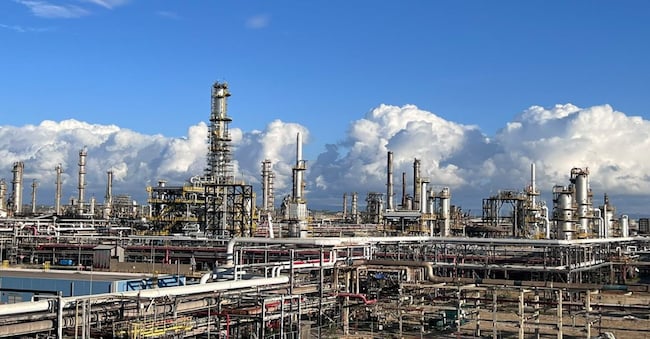
Biofuels produced from renewable raw materials are a solution that is already available and useful both for contributing to the green transition in transport and for diversifying Europe’s energy supply. The data is set out in the strategic study “Sustainable biofuels as a strategic lever for industrial competitiveness, energy security and decarbonisation”, carried out by the TEHA Group in collaboration with Eni and presented on 5 September at the Cernobbio Forum. The underlying argument is that biofuels from renewable feedstocks – such as HVO, hydrogenated vegetable oil, and SAF for aviation – are neither a superficial stopgap nor a technology still in the pipeline, but a concrete and already available lever for decarbonising transport, strengthening energy security and safeguarding European industrial competitiveness.
The first key finding concerns compatibility. According to the TEHA-Eni Study, over 170 million diesel vehicles already on the road in Europe – that is, around 60 per cent of the vehicle fleet – can run on pure biofuels without any modifications to their engines or distribution networks, provided their engines have been validated for use with the product. The same applies, the analysis argues, to maritime transport, where HVO can be used in its pure form, and to some extent to aviation, where SAF is now permitted in blends of up to 50 per cent with conventional jet fuel. It is precisely the so-called hard-to-abate sectors – aviation, shipping and heavy goods transport – where electrification remains technically more challenging, that stand to benefit from the use of biofuels.
Then there is the issue of emissions. The EU regulatory framework measures vehicle emissions at the tailpipe: in this context, electric vehicles, by definition, have zero tailpipe emissions. However, when considering the entire life cycle, the International Council on Clean Transportation (ICCT) estimates that battery-electric cars reduce emissions by 73–78 per cent compared with their fossil-fuel-powered counterparts. This figure is comparable to that of biofuels derived from renewable feedstocks, which, when assessed over their entire life cycle, deliver reductions of between 73% and 93%. Enilive, which produces HVO biofuels in Italia at its biorefineries in Venice and Gela, has calculated that by 2025, across the entire value chain, the average reduction in CO₂eq emissions from Enilive’s HVO will be 79.5 per cent compared with the reference fossil fuel mix as defined by the European Renewable Energy Directive.
The crux of the argument, however, concerns industry. Since 2009, Europe has lost around a fifth of its refining capacity, resulting in an estimated loss of 90,000–130,000 skilled jobs, according to TEHA’s analysis of FuelsEurope data. The conversion of fossil-fuel plants into biorefineries is presented as the alternative to decommissioning: a way to preserve sites, skills and jobs. In this regard, Eni has the advantage of experience, having converted its plants at Porto Marghera, in Venice, in 2014 and at Gela in 2019 into biorefineries. The study points out that the case of Gela, in particular, demonstrates an estimated economic multiplier of at least 2.5 times for every euro invested.
Italia, moreover, is one of Europe’s leading hubs for the production of drop-in biofuels, such as HVO and SAF. According to forecasts, the net biorefining capacity of plants using HEFA (Hydroprocessed Esters and Fatty Acids) technology will cover 7.4 per cent of total domestic transport fuel demand by 2030 (compared with 2.5 per cent in 2025).
The overall figures illustrate the scale of what is at stake. According to estimates by the TEHA Group, private investment in biorefining in Europe could generate up to 66 billion euros in gross domestic product and support over 33,000 jobs. The analysis compares this figure with the approximately €49 billion in European public funds earmarked for electric mobility between 2016 and 2030: funds of which – according to TEHA’s analysis – China is likely to be among the main beneficiaries, given the structure of the value chains. The study explicitly raises the concern that dependence on oil may be replaced by a new technological dependence.
Finally, the issue of raw materials for biorefining, which currently consist mainly of waste and residues such as used cooking oil and animal fats, as well as a proportion of oils from intermediate crops grown in rotation with food crops and on so-called ‘degraded’ land. TEHA estimates that the global potential of this latter type of raw material is approximately five times Europe’s requirements, without taking land away from food production. This is the model that Eni is trialling, particularly in Africa, with projects that could involve over a million farmers by the start of the next decade.
The paradox, according to the analysis, is that Europe accounts for just 16 per cent of global demand for biofuels but stands out for having a more stringent regulatory framework on raw materials and sustainability, whilst the United States, China and Brazil make greater use of biofuels, including as an instrument of industrial policy. Hence the study’s proposals to the EU authorities: to assess emissions across the entire supply chain and not just at the tailpipe; to support the conversion of refineries; and to verify sustainability using data measured in the field rather than through theoretical bans. Enilive, for its part, aims to reach 5 million tonnes per annum of global biorefinery capacity by 2030. The conclusion is that the transition does not hinge on choosing a single technology, but on utilising all those that are already mature where they are truly needed.

