
Biomedical, multinational LivaNova boosts Mirandola oxygenator hub

3' min read
3' min read
The new production site for fibres for cardiopulmonary oxygenators inaugurated yesterday in Mirandola marks a decisive stage in LivaNova's industrial strategy to strengthen the technological integration of the Emilia biomedical pole. The Anglo-American multinational - with a turnover of $700 million in 2024, 1,200 employees in the Modena district out of 3,000 globally - has started the in-house production of a strategic component for heart-lung machines that until now has been imported from the United States. "There are only five producers of this fibre in the world, it is an extremely complex product. After five years of in-house development and three years of construction sites, we are now able to internalise this critical production as well. And Mirandola is the only site in Europe that has this know-how,' explains Franco Poletti, president of LivaNova's Cardiopulmonary Business Unit.
The new structure, christened Griffon (Grow innov
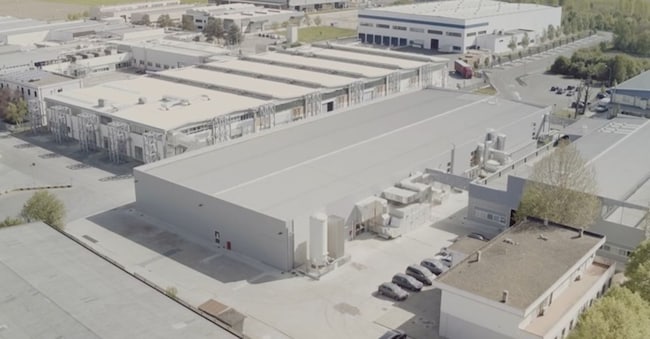
ation for fibre on site), has been authorised to operate since last April and occupies 1,630 square metres on the LivaNova campus in Mirandola, with an ISO 14644-1 certified 450 square metre clean room and twenty workstations. It is the first piece of the strategic industrial plan to 2030 focused on innovation, production capacity and supply chain integration, which will lead to an estimated increase in production capacity of between 30% and 35% within two years.
Twelve people have already been hired for the start-up of the fibre plant, and more are expected by the summer, also thanks to the absorption of 30 employees from the neighbouring Mozarc Medical, which has ceased operations in the acute sector. LivaNova has also leased the 1600 square metre Mozarc clean room for six years (renewable), where it will temporarily transfer some lines, while waiting for another investment presented yesterday to be ready - by summer 2026: a new in-house production unit for disposable cardiopulmonary devices. In parallel, a second 2,000 square metre facility is under construction, adjacent to the campus, which will be operational between late 2026 and early 2027. 'For now we can only see the skeleton,' Poletti points out, 'but it will be the place where the new products we are developing with our research activities will take shape. Another concrete sign of the group's commitment to the future of the district'.
On the Mirandola campus - 88 thousand square metres, the largest plant in the biomedical pole - LivaNova produces 570 thousand extracorporeal circulation devices every year, 95% of which are destined for export, with China, India and Australia alone absorbing 40% of volumes. 'The global market is growing, but we are growing faster,' Poletti emphasises. 'We are gaining share and strengthening our leadership'. The company recently reached the milestone of 4 million patients treated worldwide. LivaNova devotes 9% of its global turnover to research and development (more than 60 million dollars in 2024 alone) and the Emilian site - the group's main production facility listed in London and on the Nasdaq - centralises an increasing share of its innovative and industrial activities. 'We have chosen to grow our technologies here,' Poletti concludes, 'because we believe in the value of the district and its skills, and because in Italy we are able to produce at lower costs than in many European and North American countries, with very high standards of quality and efficiency. It is a commitment that I feel is also mine personally: I started working in the group 40 years ago, when the company was still called Dideco (one of the many biomedical newco's created by Mario Veronesi, the father of the district, ed)'.


