
Biomethane: Brescia’s steel industry signs supply contracts for 34 million cubic metres
Feralpi Group, Alfa Acciai, Duferco, Industrie Riunite Odolesi, Ori Martin, Ferriera Valsabbia and Raffmetal have signed agreements this year with 12 agricultural partners to source 18 per cent of their requirements

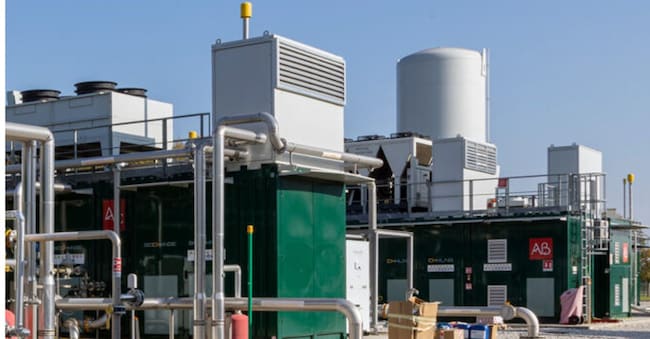
Organised by Confindustria Brescia and Ramet – an organisation bringing together 22 metalworking companies from Brescia in a joint project to study and monitor the impact of their production activities on the workplace and the local area – and in collaboration with the Italian Biogas Consortium (Cib), some of Brescia’s leading steel companies have this year signed biomethane supply contracts with 12 local agricultural businesses. These include six steelworks: Feralpi Group, Alfa Acciai, Duferco, Industrie Riunite Odolesi, Ori Martin and Ferriera Valsabbia. There is also one company producing aluminium alloys via continuous casting: Raffmetal. In total, supply agreements have been signed for a volume of approximately 34 million cubic metres per year: a quantity which, for this group of companies, covers around 18 per cent of their annual methane requirements and – by way of comparison – is equivalent to the consumption of 35,000–40,000 households over the same 12-month period.
“This initiative represents a particularly significant step in the decarbonisation of Brescia’s industry, because it translates environmental objectives into a concrete project that is industrially sustainable and deeply rooted in the local area, whilst also serving as a model for other regions in Italy,” comments Simone Zanolini, CEO of the Ramet consortium, who broadens the perspective: “For ‘hard-to-abate’ sectors, and in particular the steel industry, the transition requires renewable energy sources that are genuinely compatible with existing production processes. From this point of view, biomethane is a particularly effective solution, as it allows for the gradual replacement of fossil methane without requiring radical changes to the plants.”
The initiative began over a year ago. In March 2025, Confindustria Brescia and Cib signed a collaboration agreement to promote the use of biomethane within Brescia’s metallurgical sector, as part of the wider Green Metals Brescia decarbonisation (and energy self-sufficiency) project. The aim then, as now, was to establish a short supply chain, reducing exposure to international fluctuations in gas prices – which, in this year of the Hormuz crisis, have had a significant impact on the energy costs of businesses and households – within the virtuous cycle of gas produced from agricultural waste. Against this backdrop, in March 2026, Acciaierie di Calvisano (Feralpi Group) formalised the first contract for the supply of local biomethane with AB Ambiente (an agricultural company of the AB Group), which was subsequently joined by others.
“We do not purchase gas produced elsewhere, but we meet our needs by linking two fundamental components of our economy – industry and agriculture – thereby creating a local supply chain capable of tangibly reducing the use of fossil fuels,” emphasises Zanolini. “It is a model that generates environmental and economic value whilst at the same time strengthening the sustainability of our energy supply.”
Ramet’s CEO also sets out some financial figures: “The value of the CO₂ allowances saved through all the contracts is estimated at around 5 million euros a year, with the benefit shared equally between producer and consumer. Furthermore, the contracts have a five-year term and are renewable for three periods, outlining a potential 15-year timeframe and thus offering stability to both agricultural producers and industrial companies.” “The challenge,” he concludes, “will be to consolidate and gradually expand this model.”


