
Biomethane, one third of national plants in Lombardy
Circular Economy. Prandini (Coldiretti): Lombardy is a model to imitate for simplification. No need for authorisation for those already producing biogas

2' min read
2' min read
Lombardy is a model to be imitated on a national level for the simplification of authorisations for biomethane plants. The president of Coldiretti, Ettore Prandini, is convinced of this and has said so on several public occasions: 'In order to increase the amount of energy produced from renewable sources, the real challenge is for the institutions to help us from a bureaucratic point of view: in Lombardy, for example, we have succeeded.
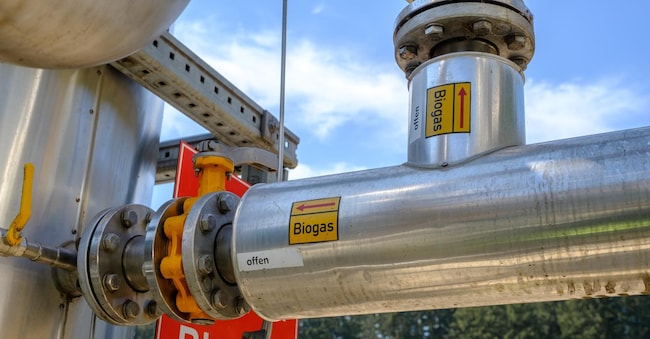
The region already hosts one third of national biomethane plants, i.e., those that produce gas from agricultural by-products or animal excrement. With the regulatory simplification sought by Lombardy's environment councillor Giorgio Maione, it will no longer be necessary to apply for an environmental permit to transform a biogas plant into a more modern biomethane plant, thus shortening the timeframe. "In the region," reads a note from the Department of the Environment, "numerous plants are being designed and built for the conversion of biogas produced by the anaerobic digestion of organic matter into biomethane destined to be fed into the grid in the same way as fossil methane gas.
The Italian biogas sector, Coldiretti recalls, counts on more than 1,500 plants, for an installed capacity of more than 1,200 MW with a particularly high production coefficient (at least 80 per cent of the annual hours), allowing investments of about 4 billion euro. Thanks to biogas plants, agro-livestock companies complete their production cycle by valorising farm residues.
Also with a view to the circular economy, the Region of Lombardy has also approved a resolution for the reuse of clippings and prunings, by-products of both agriculture and public green maintenance. "The resolution," Prandini explains, "finally provides clarity on the possibility of reusing clippings and prunings before they are considered waste. This intervention allows agricultural, floricultural, and green maintenance companies to consider clippings as by-products and, as such, to reuse them to improve the green areas themselves, for normal agricultural practices such as soil fertilisation, for the production of biogas and biomethane, or for the development of innovative supply chains linked to the valorisation of plant material, such as the reuse of urban wood.
By reusing clippings and prunings, municipalities can also save on expenses: according to a study by Coldiretti-Assofloro, the cost of disposing of clippings at authorised centres varies, depending on the different areas of Italy, from 30-35 euros per tonne for woody materials to 60-120 euros per tonne for grass and branches, to which must be added an overall increase of 20-25% in the cost of work.


