Epidemic

Bird flu: what we know and where the outbreaks are in Italy

The virus is spreading throughout Europe and has started to affect livestock farms. Here are the risks for humans and the most affected areas

by Massimo De Laurentiis

3' min read

Translated by AI
Versione italiana

3' min read

Translated by AI
Versione italiana

The influenza avian flu is again worrying Europe. In Germany the authorities have ordered the culling of about 130,000 ducks and chickens on farms near Berlin, with the German National Centre for Animal Disease Research speaking of a 'high' risk.

Cases in Denmark and The Netherlands also occurred on commercial farms: 150,000 chickens were culled on Danish territory, while more than 70,000 birds were culled in the Netherlands.

Loading...

The virus spreads mainly among wild birds, including cranes, which have never been affected before. German authorities have introduced surveillance zones and ordered animals to be kept indoors, urging the population to avoid contact with sick or dead birds. Switzerland and Finland have also stepped up their vigilance: in the Nordic country it is already possible to vaccinate against bird flu voluntarily, while Berne has concluded a vaccine reservation contract to protect the most exposed groups, such as farmers and veterinarians.

L'influenza aviaria si diffonde in Germania: "Questa moria di uccelli e' un evento sconosciuto ed estremo"

What we know about the virus

The avian influenza strain H5N1 has been known for decades for its ability to affect birds, but in recent years it has shown a dangerous ability to adapt. Since 2022 it has also infected mammals - domestic cats and cattle - and, more rarely, humans.

For humans, this new epidemic appears to be less lethal than in the past. Of the more than 900 human cases recorded globally from 2003 to 2023, almost half were fatal.

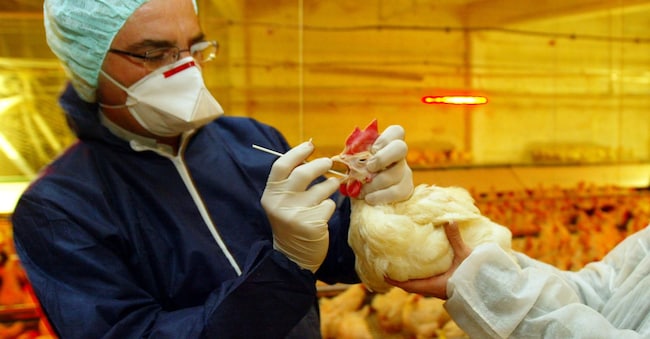
In the past two years, 68 human cases and one death have been confirmed in the US. So far, there is no evidence of human-to-human transmission, but experts point out that the more the virus circulates, the greater the possibility of it adapting and acquiring this ability. This is why the use of personal protective equipment, constant monitoring of agricultural workers and the strengthening of biosecurity measures are recommended.

The outbreaks in Italy

In Italy attention is high, especially in the north, where most cases are concentrated. The last month has seen a number of outbreaks spread across Friuli Venezia Giulia, Veneto, Piedmont, Emilia-Romagna and Lombardy.

The first autumnal case was reported in Povoletto, in the province of Udine: all the animals of the affected herd were slaughtered and a protection area was also set up in the neighbouring municipalities, with a surveillance zone extended as far as Udine.

In Veneto, the virus appeared two months earlier than last season, affecting a turkey farm in Oppeano, near Verona. Breeders expressed concern about the economic fallout, with the region having already reinforced preventive measures.

In Piedmont, in the area of Occimiano (Alessandria), the outbreak affected a 35,000-head farm: the animals were slaughtered and livestock movements were stopped in order to proceed with controls on neighbouring farms. A few days later, around 22 October, a second outbreak was discovered nearby, with another 60,000 animals slaughtered. The regional authorities speak of a situation under control, but vigilance remains high.

Even Emilia-Romagna at the end of October recorded an episode in the Forlivese area, where a chicken farm was seized and 150 birds slaughtered: according to the Istituto Zooprofilattico delle Venezie, the virus is not linked to the outbreaks in the rest of northern Italy, and may have been introduced by wild animals.

The situation is also complex in Lombardy. In the early days of November in Seniga, in the Brescia area, an outbreak was detected on a turkey farm with 34,000 head of turkeys destined for slaughter. The Ats established a three-kilometre protection zone and a wider surveillance area involving a dozen neighbouring municipalities.

In previous days, cases had also occurred in Cremona and in Zelo Buon Persico, in the Lodigiano region, where a pheasant farm with a capacity of 60,000 animals per year was affected. Here, restrictions such as a ban on the movement of poultry and eggs and a tightening of biosecurity rules for 43 farms were triggered.

Experts urge to remain on guard but without alarmism: the risk to the population remains low and there are currently no cases among humans in Italy.

Copyright reserved ©
Loading...

Brand connect

Loading...

Newsletter

Notizie e approfondimenti sugli avvenimenti politici, economici e finanziari.

Iscriviti