
Blue crabs, mucilage and worms: a summer of scourges on Italian fisheries
In the Po Delta, clam farming is only at 10%. In Orbetello, however, quintals of sea bream are dying of asphyxia
4' min read
4' min read
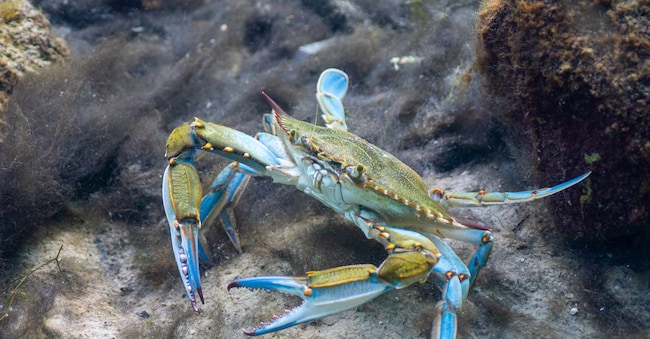
In the Sacca di Scardovari, where the clam farms were literally mown down last summer by the blue crab, fishermen are stubbornly trying to get going again. In the past few days Veneto Agricoltura, the region's agency for supporting the primary sector, has supplied the first batch of clam seed, 14 million specimens, which have been put into the sea protected by special cages to protect them from the claws. "We want to sow to return to production after months of stop, but it's hard," admits Paolo Mancin, president of the Polesine fishermen's cooperative consortium.
The blue crab does not let go of its grip on the Italian coasts, so much so that in the Dl Agricoltura (decree on agriculture) the creation of an ad hoc extraordinary commissioner has been envisaged. At the Coldiretti assembly, the Minister of Agriculture Francesco Lollobrigida had announced his appointment by the end of this week, but it seems that fishermen will have to wait a little longer. Yet the blue crab is not the only calamity affecting the national seas in this summer of 2024. From the heat that suffocates the giltheads in the Orbetello lagoon to the mucilage that clogs the nets in the Adriatic, up to the extremely dangerous vermocane, the map of fishing damage is extensive.
The asphyxiation of lagoons
.The news of the last few days has shifted the focus to the Lagoon of Orbetello, which is reckoning with the death of quintals of sea bream and eels due to the excessive heat. Fishermen and the municipal administration, starting with the mayor, are in the field trying to save what can be saved. They fish the product before it dies and remove the fish carcasses from the waters. "The slaughter of fish in the Orbetello lagoon is at least the third in the last decade," denounces Andrea Bartoli, vice-president of Fedagripesca Toscana. "We need to intervene at the source, on the infrastructures, and we need the law to release the necessary funds. In 2015, for the same causes, more than 200,000 kilos of fish died.
It is also an emergency in Taranto: according to operators 80% of mussel production is at risk. In addition to the extremely high sea temperatures, which cause the product to suffer and die of asphyxia, the problem is the lack of a storage chain that allows the product to be picked up and stored, while waiting for sales requests to arrive.
The Blue Crab
.The predatory crustacean, however, remains the number one enemy this year. In the Po delta, after losing between 80 and 100 per cent of the product last year, mussel and clam producers have equipped themselves with fences, but the truth is now only 10 per cent of the space usually dedicated to breeding is used: "For every clam that is farmed, there are at least 100 crabs ready to eat it," admits the vice-president of Confcooperative Fedagripesca, Paolo Tiozzo, bitterly. "If there is no major containment of this alien species in the next five years, the direct and indirect damage could amount to 1 billion euro.


