
Blue Economy: Sicily’s marine treasures are worth 17.4 billion
The Bapr Foundation’s analysis covers a sector that accounts for 6 per cent of regional GDP, comprising 29,500 businesses and 102,000 workers. However, the productivity gap compared with the national average amounts to almost one billion a year
by Nino Amadore
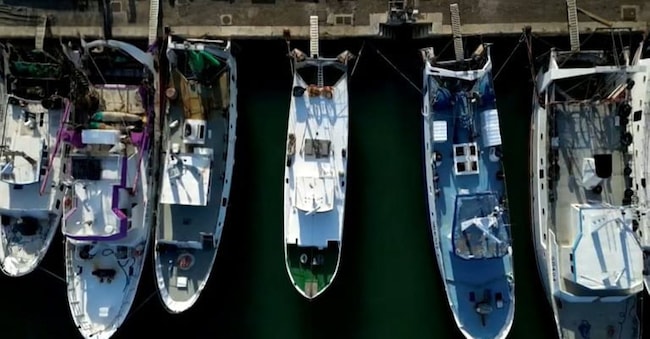
The sea is one of Sicily’s main economic drivers, but the region has not yet managed to transform its full potential into added value. This is the most interesting finding in the report “The Blue Economy or Maritime Economy in Sicily”, compiled by the Economic Research Centre of the BAPR Foundation and presented in Ragusa at the headquarters of Banca Agricola Popolare di Sicilia.
In 2025, Sicily’s Blue Economy was worth 17.4 billion, accounting for 6% of the region’s GDP, compared with a national average of 4%. There are 29,500 businesses operating in the maritime sector – 6.5% of the regional total – employing 102,000 people directly: one in every 15 people in Sicily is employed in this sector. Between 2019 and 2024, around 4,000 new ‘blue’ businesses were established.
The island accounts for 21 per cent of Italia’s coastal heritage, with 1,152 kilometres of coastline on the main island and around 500 kilometres on the smaller islands. But the issue is not just how much coastline Sicily has: it is how much value it manages to generate. Every euro generated directly by the Blue Economy triggers an economic multiplier effect of 1.9 euros in the local economy, which is higher than the Italian average of 1.8.
However, the sector remains highly concentrated. Over 80 per cent of its value comes from two sectors: tourism and accommodation, which account for 43 per cent, and logistics and transport, at 38.7 per cent. These are the cornerstones of Sicily’s maritime sector, but they also highlight its limitations: to take the next step, more technology, port digitalisation, advanced shipbuilding, offshore renewable energy, innovative aquaculture and integrated logistics services are needed.
The main issue is productivity. According to the report, each worker in Sicily’s Blue Economy generates an average of 53,700 euros in value, compared with the national average of 62,100 euros. The gap amounts to 8,400 euros per worker. Closing this gap would mean injecting almost one billion euros of additional wealth into the Sicilian economy each year. This is the ‘hidden billion’ of the maritime economy: potential wealth held back by micro-enterprises, fragmentation and lower technological intensity.


