
Telefono Azzurro: AI is transforming child protection. There is also a focus on European Chat Control
Anxiety and panic attacks are the main reason why teenagers seek help. Over 76 per cent of online reports concern child sexual abuse material.

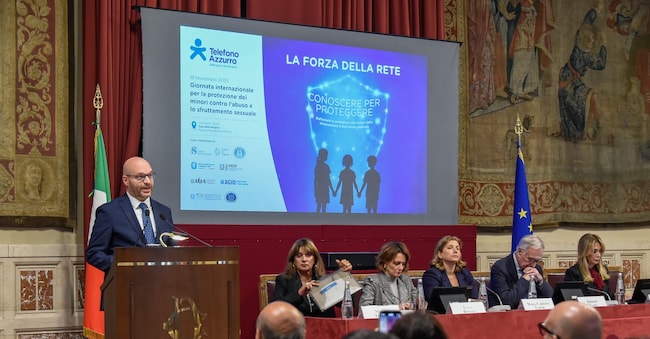
The protection of children increasingly depends on our ability to understand the digital world in which children and young people are growing up. This is one of the messages that emerges from Telefono Azzurro’s 2025 Social Report, which details the Foundation’s evolution as it approaches its fortieth anniversary and the strengthening of its commitment to research, prevention and innovation in order to address the new challenges posed by mental health, online safety and Artificial Intelligence.
New technologies and young people
‘As we approach the 40th anniversary of Telefono Azzurro, we are called upon to address a profound change: today, protecting a child means understanding the world in which they are growing up. Artificial Intelligence, digital platforms, social media and algorithms are changing the way young people build relationships, learn and develop their identity. It is our responsibility to ensure that children’s rights are safeguarded in these new environments too. ‘This is why we continue to invest in listening, research, prevention and innovation, working alongside institutions, schools, families and businesses to ensure that technology truly serves the development and protection of children,’ says Ernesto Caffo, President of Telefono Azzurro.
Adolescents’ requests
This change is already evident in the Foundation’s work. During 2025, anxiety and panic attacks became the main reason why teenagers sought help. The age group most affected is 14 to 17-year-olds; around 65 per cent of users are female, and 58 per cent of enquiries are made via chat, confirming that the ways in which young people seek support are also gradually shifting towards digital platforms.
Risks are also evolving in parallel. Through the ‘Click and Report’ hotline, managed as part of the ‘Generazioni Connesse’ Safer Internet Centre, 3,022 reports of illegal online content were received in 2025, over 76 per cent of which related to child sexual abuse material. Alongside these phenomena, new vulnerabilities linked to generative Artificial Intelligence are emerging, such as deepfakes, conversational chatbots, virtual companions and systems capable of forming emotional bonds with children and adolescents, with potential repercussions for their cognitive, psychological and relational development.
How to tackle challenges
To tackle these challenges, Telefono Azzurro is also trialling the use of Artificial Intelligence within its services, utilising it to improve the triage of requests for help, strengthen the response capacity of its operators and ensure that situations involving the most vulnerable are dealt with more promptly.
Brand connect


Newsletter Scuola+
La newsletter premium dedicata al mondo della scuola con approfondimenti normativi, analisi e guide operative
Abbonati