
Blush: the return of the colour that sculpts the face

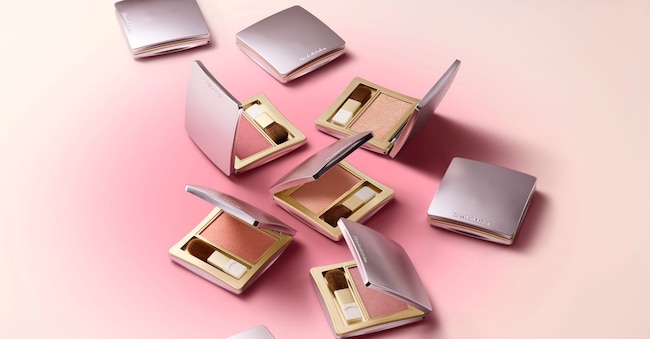
In 2026, blush is no longer a simple finishing touch. It becomes a structural element of make-up, capable of redefining facial volumes and, in some cases, even replacing traditional contouring. This was also seen on the catwalks of the recent Milan Fashion Week: colour is back in the spotlight and make-up abandons the rigid architectures of contouring to embrace a softer, more natural approach. "At the basis of this evolution is the return of a historical technique: blush draping, made famous in the 1970s by make-up artist Way Bandy," explains Angie Valentino, an Italian make-up artist who has lived in New York for over ten years and looks after the make-up of some of the New York Fashion Week shows. "The principle is simple but very effective: use colour to sculpt the face following its natural structure. Not only on the cheeks, but also along the cheekbones, temples and sometimes the eyelids. This creates a lift effect that enhances different facial morphologies: from rounder faces to elongated or square ones. One clarification: as a make-up artist I follow trends, but I don't like to apply them rigidly. Every face is different and often what is fashionable is not necessarily what really enhances the person'.
The nuances of the new season
The palette of the moment focuses on bright, vital shades: coral, peach and natural pink dominate the trends. But choosing the right colour is not simply a matter of following the fashion; the secret is always the undertone of the skin. "Warm complexions are enhanced by golden hues such as peach, coral and apricot, which amplify the natural radiance of the complexion," Valentino continues. "Cool undertones, on the other hand, find their balance in candy pink, raspberry or light plum, shades that illuminate without weighing down. Today, blush is interpreted in a logic of 'total face', a precisely constructed chromatic harmony between cheeks, eyes and lips, rooted in the principles of armoury. The result is a more coherent and luminous make-up where each shade contributes to creating an overall balance".
The 'cold-kissed' effect
Among the most viral trends is the so-called cold girl blush, that effect that imitates the natural redness of the skin when it is cold, concentrating the colour in the highest points of the face: in the centre of the cheeks, along the bridge of the nose and often also on the forehead or chin. "To make it believable, however, the key is application," the make-up artist continues. "The colour should not be concentrated only on the tip of the nose, which could give an unnatural red nose effect, but distributed in a continuous shade. You can use the W technique, which draws a single imaginary horizontal line that crosses the cheekbones and passes over the bridge of the nose. The result is more natural and harmonious'.

