
BMW and Toyota relaunch hydrogen and promise new cars for 2028
The German and Japanese manufacturers renew their technology partnership and focus on hydrogen technology (hydrogen) as an alternative to 100% electric engines.

2' min read
2' min read
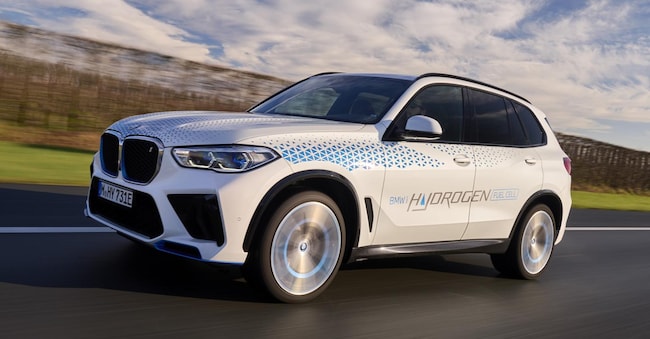
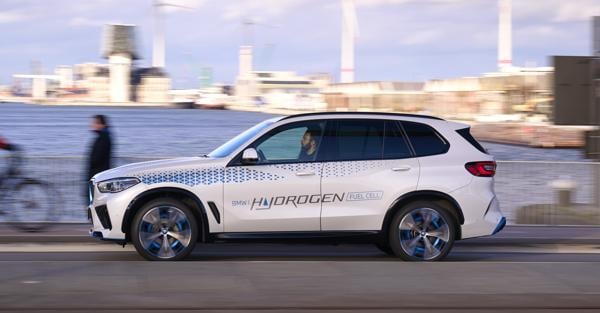
The Toyota Mirai (dating back as far as 2015) and the BMW iX5 Hydrogen are two hydrogen-powered cars built by the two brands more as pilot projects to demonstrate the potential and advantages of the technology. However, thanks to new studies on fuel cells, the two automakers today announced the arrival of the first production vehicles as early as 2028.
An opportunity to be seized
.The recent openness on the part of the European Unit with regard to alternative fuels and the delay in the transition to electric vehicles are opening up new possibilities, which BMW and Toyota want to seize by exploiting their know-how in hydrogen vehicles. However, the commitment is a major one: the two manufacturers have pledged to contribute to the development of a refuelling network throughout Europe, to be set up over the next few years. The goal is to have a filling station every 200 km or so and in major urban centres for a total of more than 600 refuelling points. This is in fact an essential element for a possible commercial spread of hydrogen-powered cars. On the other hand, this type of car may represent an interesting opportunity for those who do not have access to cheap recharging points, for those who live in very cold areas that affect battery autonomy, and for those who are looking for greater flexibility in their journeys without the anxiety of being stranded with a 100% electric vehicle. This type of technology can also find a place in commercial vehicles. Besides BMW and Toyota, several other manufacturers such as Honda and Hyundai (with the Nexo) are also working on hydrogen-powered cars.
A state-of-the-art technological solution
.Technically they are called Fuel Cell Electric Vehicle (FCEV) and are electric cars that generate electricity through a chemical reaction between hydrogen, contained in the tank, and oxygen, without any thermal combustion. In hydrogen-powered cars, the gas is therefore not used directly for traction but generates energy that powers the electric motors. To a certain approximation, hydrogen cars can be said to be electric cars that store energy in the hydrogen tank instead of batteries. Hydrogen cars are totally environmentally friendly, the exhaust gases combine into water vapour, and there is no need for the famous rare earths that are subject to much criticism from the detractors of electric mobility; the materials used are in fact essentially those of a heat engine to which carbon fibre is added for the hydrogen tank.
Some perplexity
.Hydrogen cars are quite efficient and the new generation fuel cells BMW and Toyota are working on will offer even better performance. The poor market response for electric cars, however, shows that European consumers are rather sceptical when it comes to embracing a novelty, albeit a technologically advanced one. The costs of development and, above all, that of implementing a refuelling network, albeit certainly assisted by local governments, risks nipping the spread of this type of car in the bud, preventing the economies of scale necessary for real diffusion from being achieved.

