The study

Bnl: Sicily grows more than Italia, now the challenge is innovation

Bnl Bnp Paribas Roadshow in Palermo: the Island's GDP exceeds pre-Covid levels by 9.3%. Goitini: central Mediterranean, but human capital, technology and businesses more open to global markets are needed

by Nino Amadore

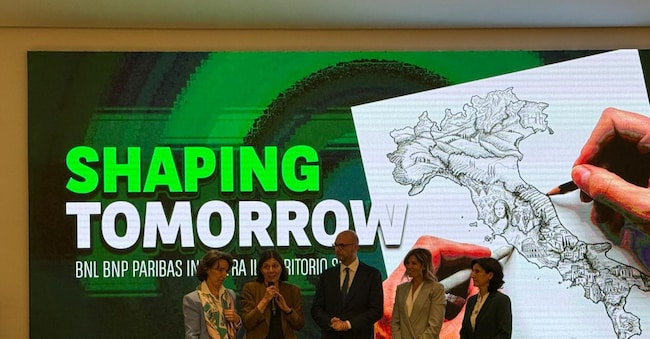
Da sinistra Josè Rallo, ad Donnafugata; Elena Goitini, Angelino Alfano, Barbara Martini, Simona Costagli Chief economist Bnl Bnp Paribas

5' min read

Translated by AI
Versione italiana

5' min read

Translated by AI
Versione italiana

Sicily is running faster than the Mezzogiorno and faster than Italia in comparison with the pre-pandemic period. But the real game now is not only to record growth: it is to transform it into stable development, investment, innovation, human capital and the ability to stay in international markets. This is the theme at the centre of the Palermo leg of 'Shaping tomorrow', the Bnl Bnp Paribas roadshow that arrived at the Marina Convention Centre to bring together banks, businesses, institutions, academics and stakeholders on the new macroeconomic scenarios and prospects for Southern Italy.

The starting point is clear: in 2024 the GDP of the South was 7.6% higher than in 2019, while that of Sicily was 9.3% higher than its pre-Covid level. A dynamic that, in an ideal comparison, places the Island ahead of Spain, Germany, France and Italia itself. Sicily now accounts for 5.1% of the national GDP, while the entire Mezzogiorno is worth 18.1%.

Loading...

The weight of services in the Sicilian economy

However, the picture of the regional economy remains strongly unbalanced on services, which account for 80.2% of the total added value. Industry accounts for 8.4%, construction for about 7% and agriculture for 4.5%.

It is within this composition that the most delicate challenge lies: not to dissipate the momentum that has matured since the pandemic and to make it more solid, less episodic, more linked to productive investments, technology and skills. "The Mediterranean has regained a great centrality," said Elena Goitini, managing director of Bnl and head of the Bnp Paribas group in Italia. "Our natural position offers us an important opportunity: we must make better use of it with industrial and economic policies, especially in the South." According to Goitini, the relaunch depends on the ability to give continuity to interventions, create a system between institutions, companies and universities, and make better use of tools such as special economic zones. "To make better use of the sea, we also need skills and human capital that objectively knows how to bring certain types of intervention to scale," he added.

Local and global, the role of the bank

The Palermo stage insisted on the relationship between the local dimension and the global platform. The point is not only credit but, as Barbara Martini, who is the bank's territorial director for the South, explains, the accompaniment of companies in the most complex steps: dimensional growth, internationalisation, generational turnover, access to foreign markets, innovation and specialised consultancy. The bank's presence in southern Italy is part of a territorial network that covers, in addition to Sicily, also Basilicata, Calabria, Campania and Puglia. In the Island Bnl Bnp Paribas has 46 offices, while in the entire Southern Territory the structure includes about a thousand people and 150 points of presence between branches, Private Banking & Wealth Management centres, Corporate Banking, SMEs, Public Administration and the Wealth Advisory Partner network. In this logic, the territory is not read as a peripheral market, but as a platform to be better connected to national and international flows. The case of wine, with the presence of José Rallo, CEO of Donnafugata, becomes one of the examples of Made in Italy rooted in Sicily but oriented towards global markets.

"There is no South and North"

For Goitini, the Mezzogiorno must be fully integrated into the Italian trajectory. 'I think of the South as really an integrated piece and increasingly to be integrated into the Italian narrative. There is not a South and a North,' stressed the Bnl CEO. However, two delays remain to be bridged: 'We still have two gaps: on human capital, which we must objectively increase, and then the technological one. Hence the need to focus on 'investment in research and development, skills'. For Goitini, putting these elements together 'is already a big step forward' and accelerating in this direction, together with the institutions, will be the next step. The roadshow, which started in 2024, has so far reached 11 cities, with over 50 speakers and around 2,500 guests. Palermo is the second stop in 2026 and the third in Southern Italia after Naples and Bari. The next ones will be Modena on 7 July, Turin on 6 October and Vicenza on 12 November.

Exports, tariffs and international markets

On the export front, the Southern Territory will represent 7.3% of the Italia total in 2025. The main outlet markets are Switzerland, Germany and the United States. It is precisely the United States that remains a market to be watched carefully in light of the tariffs issue. The US weight on Sicilian exports is 6.4%, against an average for the South of 7.6%. Italy's share of exports to the United States is 10.4%. The issue of internationalisation is thus intertwined with that of company size and skills. For many Sicilian companies, the leap towards foreign markets requires not only credit, but also assistance, risk analysis, financial instruments and the ability to build business relations outside the domestic market.

Tourism, Culture and the Economy of Beauty

In the elaborations of the Bnl Bnp Paribas economists, specific attention is also dedicated to the so-called 'economy of beauty', between tourism, culture and attractiveness of territories. In Southern Italy, almost 15 million foreign visitors are expected in 2025, for an expenditure of over 7 billion euro. Sicily, in this context, is the first region in the South for the number of cultural institutions: 188 theatres and spaces for the arts, 139 museums and galleries, 40 monumental complexes and 32 archaeological parks. These are numbers that confirm the potential weight of the island in the cultural and tourism chain, but which also raise the issue of the quality of the offer, the ability to organise services, and the connection between heritage, businesses and investments.

The confrontation with Alfano

In Palermo, Elena Goitini spoke with Angelino Alfano, former Minister of Justice, the Interior and Foreign Affairs, now a partner in the Bonelli Erede law firm, chairman of the San Donato Group and the De Gasperi Foundation. "International events are feeding the great book of history and, never before have we experienced major geopolitical changes and their economic and social impacts almost live," said Goitini. With 'Shaping tomorrow', he explained, BNL BNP Paribas intends to reaffirm its role as an international group with deep roots in Italia, capable of 'sharing horizons and building common paths, accompanying current and potential customers in their development projects, investing in the future'. Sicilian growth, therefore, is there. But the decisive point is to prevent it from remaining merely a statistical rebound. If it is to become structural development, it must engage companies, human capital, technology and global markets. This is where the island's true ability to use the new centrality of the Mediterranean is measured, not as an evocative formula, but as a concrete economic lever.

Copyright reserved ©
Loading...

Brand connect

Loading...

Newsletter

Notizie e approfondimenti sugli avvenimenti politici, economici e finanziari.

Iscriviti