Opening of the 2026–2027 academic year

Bocconi: Rector Billari says, “A university committed to social mobility, because we change people’s lives”

This year, the focus has been on the issue of social mobility and education as a means of social advancement in a country where it is often pointed out that this pathway is blocked. And in a country where not all families can afford the tuition fees of a private university such as Bocconi, especially in a city as expensive as Milan.

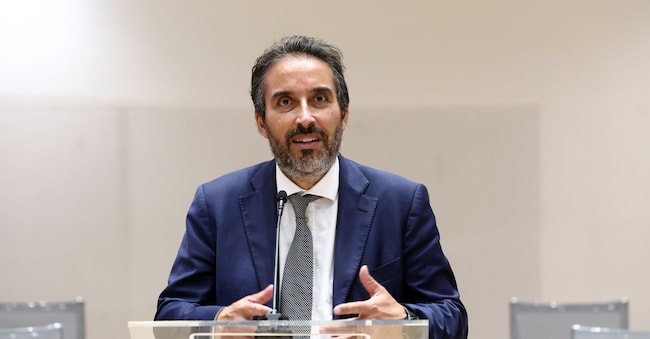
Francesco Billari Rettore Bocconi (Imagoeconomica)

4' min read

Translated by AI
Versione italiana

4' min read

Translated by AI
Versione italiana

Opening of the 2026–2027 academic year at Bocconi University in Milan, marking the 125th anniversary of its foundation. This year, the focus has been on the theme of social mobility and education as a means of social advancement in a country where it is often pointed out that this is stalled. And in a country where not all families can afford the tuition fees of a private university such as Bocconi, especially in a city as expensive as Milan. We discuss this with the Vice-Chancellor, Francesco Billari.

“The fact that social mobility is more constrained today than in the past is actually a potential misconception, because when education and universities expand, societies become more open. Universities are the social ladder, so a mistake we risk making is to think that in some idealised past there were open societies with high levels of social mobility. All data analyses show that in the past, societies were more closed and social mobility was lower. Social mobility is ensured by the expansion of higher education, and this holds true in general, not just for Bocconi: there is specific research showing that increasing the proportion of people attending university boosts social mobility. Italia, in particular, is lagging behind, because we have few graduates and a selective system; yet without education, we would have no social mobility in today’s world.”

Loading...

And what policies does Bocconi implement to promote social mobility?

“Bocconi is an institution that can play a part in this work; it can do so by offering scholarships. At present, one in eight students has a full scholarship, so they do not have to pay to study at Bocconi. One in three students receives some form of financial support, and we will strive to do even more in this regard. Another area where we can take action is by reaching out to students in schools, because it is one thing to award a scholarship to someone who has decided to take the plunge and enrol at Bocconi and who has financial needs, as they do not have a family behind them that can afford the tuition fees. It’s quite another to reach out to students right from the moment they start thinking about going to university, because some students don’t even consider going to university; they don’t think it’s possible to go to Milan, which is an expensive city that can be daunting. So we go out and seek out these students.”

On the day of the opening, the importance of seeking out the ‘lost Einsteins’ and the ‘lost Marie Curies’ was emphasised.

“This is, in a way, our dream, because, deep down, in our own small way, we’re trying to change students’ lives in order to change the world. Having someone who helps to make the world a better place is the dream of every researcher, every teacher – it is the dream of an institution like Bocconi.”

In Milan, students also face the issue of housing. How are you tackling this issue?

“Student accommodation is a key aspect of the learning experience. It is no coincidence that major international universities talk about ‘campuses’. A campus offers an immersive experience that must be lived full-time; therefore, students need to live the university life and live close to the university. We have decided to increase the number of beds: there are now around 2,800 for just over 15,000 students. Potentially, we could provide beds for almost all first-year students. We have also secured around 700 beds in the Olympic Village, which is close to Bocconi University.”

“This is to help students from all over the world who need to avoid having to navigate Milan’s extremely challenging property market, and also for those without the financial means – in which case we offer them reduced rates. For example, our refugee students obviously do not pay tuition fees or accommodation costs, and are also entitled to computers, books and everything else. But what is important is that all students, regardless of their family background, can enjoy the campus experience. This will change their lives.”

There is currently a wide-ranging debate taking place on artificial intelligence: its uses and risks. How do you deal with this tool, which certainly cannot be ignored? 

Loading...

“We use it; we don’t shy away from it, and we don’t ban it. On the one hand, we encourage students to use it, which is why we’ve entered into agreements with the major providers. On the other hand, we’re strengthening critical thinking – training that encourages students to use AI critically, to ask the right questions and interpret the answers. So it’s about combining artificial intelligence with human intelligence. It’s also important that we ensure all students – boys and girls alike – are on an equal footing. The risk of artificial intelligence being accessible only to a select few is enormous. So we will use it, train our students and continue to explore how to conduct research and how best to teach in the age of artificial intelligence and human intelligence.”

So what does Bocconi envisage for the coming years?

“A Bocconi that focuses on social mobility, because we change people’s lives. And by changing people’s lives, we also change the world. By changing the world, we can create greater widespread well-being. This is, in a way, what we want to achieve – though obviously not just in a single year. The main tools for this are scholarships for social mobility, artificial intelligence that is managed responsibly and accessible to all, and an international outlook for all our students, underpinned by research.”

Scuola, tutti gli approfondimenti

La newsletter di Scuola+

Professionisti, dirigenti, docenti e non docenti, amministratori pubblici, operatori ma anche studenti e le loro famiglie possono informarsi attraverso Scuola+, la newsletter settimanale de Il Sole 24 Ore che mette al centro del sistema d'istruzione i suoi reali fruitori. La ricevi, ogni lunedì nel tuo inbox. Ecco come abbonarsi

Le guide e i data base

Come scegliere l’Università e i master? Ecco le guide a disposizione degli abbonati a Scuola+ o a 24+. Qui la guida all’università con le lauree del futuro e il database con tutti i corsi di laura

Lo speciale ITS

Il viaggio del Sole 24 Ore negli Its per scoprire come intrecciare al meglio la formazione con le opportunità di lavoro nei distretti produttivi delle eccellenze del made in Italy. Tutti i servizi

Copyright reserved ©
Loading...

Brand connect

Loading...

Newsletter Scuola+

La newsletter premium dedicata al mondo della scuola con approfondimenti normativi, analisi e guide operative

Abbonati