
Bocconi Rector Billari: universities are places of pluralism, they are at the centre of the future
For President Sironi, the inestimable value of independence must be protected. Central role of research. For 2025-26 a new record: 25% increase in international students
7' min read
7' min read
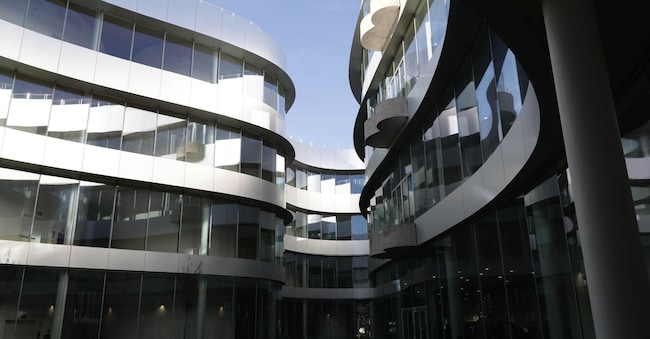
In the heart of the Bocconi campus, the Academic Year 2025-2026 opened with speeches by President Andrea Sironi, Rector Francesco Billari, and the President of the European Investment Bank and former Vice-President of the Spanish Government Nadia Calviño, guest of honour at the ceremony. In a lecture hall crowded with students, lecturers, alumni and national and international guests, the inauguration turned into a moment of collective reflection: on what it means to be a university today, on what the role of academic institutions should be in a time marked by instability, constant crises and difficult choices.
"Weakening academic freedom and limiting the independence of universities means compromising their essential missions: research, teaching and the ability to contribute to the progress of society," Sironi stressed. "Even without going as far as drastic measures, such as cutting funding, what effect does it have on academic research if researchers self-censor to avoid controversial topics? How can students be taught critical thinking if the university is not the home of pluralism and confrontation in the greatest diversity of ideas and opinions?"
With an evocative image - an hourglass that runs silently, without alarm, but full of consequences - Billari opened his presentation with a direct message: "We live in a condition of permaemergence, in which strategic choices are postponed and planning risks giving way to the anxiety of the present. But postponing - today more than ever - is already a choice, often a wrong one. "i
The university as an infrastructure of democracy
In his speech, Billari referred to a phenomenon that is now also affecting mature democracies: the weakening of trust in universities. From the censorship of academic and research programmes in the United States to ideological pressure in Eastern Europe, the attack on freedom of thought is no longer an exception. "When you hit the university, you hit democracy," he said. "Because it is in universities that free thought is formed, pluralism is defended, argued dissent is experienced. And democracy needs all this, today more than ever'. Bocconi, he emphasised, rejects the role of 'ivory tower' and proposes itself as a public actor: a place where knowledge meets responsibility and freedom translates into concrete impact.
A community that chooses to be there
The title of the event - Time to Make Choices. Think Responsibly, Act with Vision - is a declaration of intent: choosing to be there today means being actively engaged in building a fairer, more open and more aware future. "We choose every day how to use our time: for research, for inclusion, to form aware citizens. Every choice well made is an act of faith in the future," said the rector.
A strong signal also comes from the numbers: applications to the three-year degree courses for 2025-2026 set a new record, with a 25% increase in international students. More than 64% of the applications come from abroad: France and Turkey remain the top two countries, but for the first time the United States takes third place. Internationalisation is also visible in the teaching staff and classes, with 120 nationalities represented.
Search that matters, research that impacts
At the heart of the University's strategic vision, which is renewed in the Strategic Plan 2026-2030 that is currently being finalised, is the choice to put research at the centre. Not as a self-referential exercise, but as a tool for reading the world, orienting policies, strengthening citizenship. "Science does not advance by chasing fads, but by choosing unexplored paths," said Billari, citing a Bocconi study published in Econometrica. Bocconi can now count on 72 projects financed by the European Research Council since the programme's inception: 36 are currently active, with 7 won in the last year alone, in fields ranging from artificial intelligence to pure mathematics, from the labour market to sustainable development.But betting on research, the rector emphasised, also means investing in the training of future researchers. It is in this perspective that the strengthening of the Doctoral School and the launching, from the 2026-27 academic year, of a new PhD in Mathematics and Applications is to be seen. Designed to attract talents from all over the world, the programme will have a strong interdisciplinary and theoretical focus, and will consolidate Bocconi's presence in the field of STEM disciplines. It will complement the five existing programs, expanding opportunities for excellent doctoral training capable of generating lasting impact in science and society.
Brand connect


Newsletter Scuola+
La newsletter premium dedicata al mondo della scuola con approfondimenti normativi, analisi e guide operative
Abbonati