
Bocconi University study rejects ‘Safe Roads’: the military are on duty but with limited powers
This focus comes at a time when a political debate has arisen within the majority between Matteo Salvini and Guido Crosetto

Key points
The current model of Operation Safe Roads exhibits ‘four forms of misalignment’: the ‘exceptional mission has become permanent, but its structure continues to be justified through extensions rather than by a comprehensive law defining its objectives, exit criteria and evaluation’.
Furthermore, staff ‘may patrol and witness criminal incidents, but do not always have the legal tools to complete the first stage of the response’. ‘The value of a police presence is often measured in terms of units deployed, checks carried out or locations manned’ and, finally, ‘every urban shift takes time away from preparation, training and recovery at a time when collective defence requires greater readiness’.
This is highlighted in a study by the Shield Centre for Strategic Research and Training at Bocconi University’s SDA, which focuses on national security and is due to be published in the scientific journal *Azienda Pubblica*.
The power struggle within the majority over ‘Strade Sicure’
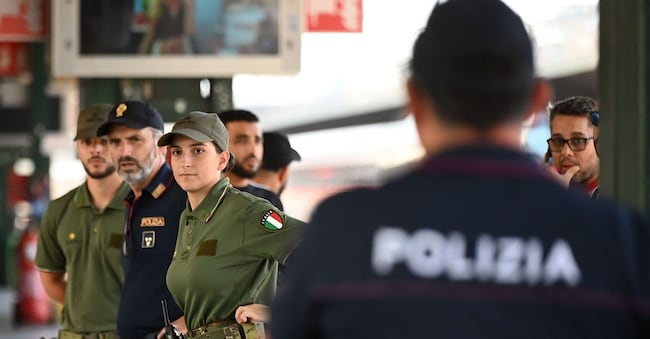
This focus comes at a time when a political debate has developed within the majority between the Deputy Prime Minister and Minister for Transport, Matteo Salvini of the Lega, who is calling for a strengthening of the joint military operation launched in Italia in August 2008 (during the fourth Berlusconi government), which involves the deployment of Italian Armed Forces personnel to support the police in safeguarding public security and maintaining control over the territory. However, the Defence Minister, Guido Crosetto, founder of Fratelli d’Italia, is seeking to rein in these calls.
Salvini’s pressure and Crosetto’s reluctance
In particular, Salvini called for more troops to be deployed “immediately” to patrol streets, squares and stations, thereby bolstering the operation, which currently involves 6,800 soldiers. But Crosetto, in a post on X, retorted: “As long as it’s not just for ‘cosmetic’ reasons, to show off a few soldiers in camouflage on the streets.” He referred to a defence reorganisation bill, cited as a means of making the use of the military against crime “legally possible”. But the Carroccio did not back down and, referring specifically to Crosetto, called for a change “as early as next week” – “not with a mere ‘cosmetic’ presence”, but rather with ‘thousands of trained and armed young men and women who could leave the barracks and support the police’.

