South America

Bolivia: why Rodrigo Paz declared a state of emergency

Blocked roads, cities in crisis and an economy under strain. This is how the South American country came to declare a state of emergency and face yet another challenge for its president

by Angelica Migliorisi

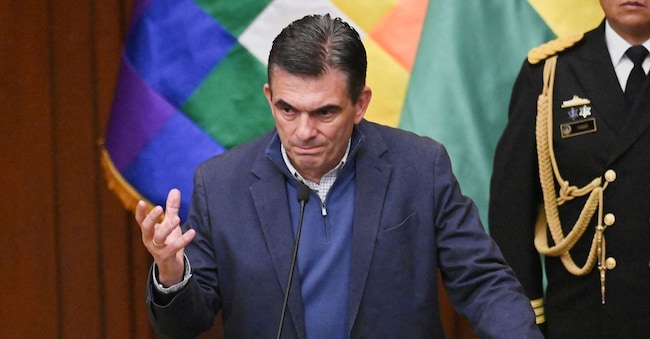
Il presidente della Bolivia Rodrigo Paz interviene durante un incontro con i leader della Confederazione dei lavoratori boliviani (COB – Central Obrera Boliviana) per avviare trattative nel contesto delle proteste che hanno causato interruzioni nella catena di approvvigionamento, provocando gravi carenze di generi alimentari, carburante e medicinali, a La Paz, in Bolivia, il 17 giugno 2026.  (REUTERS/Claudia Morales/Foto d’archivio)

4' min read

Translated by AI
Versione italiana

4' min read

Translated by AI
Versione italiana

For weeks now, Bolivia has been living to the rhythm of roadblocks. On the main roads criss-crossing the country, there has been a build-up of stalled lorries and buses, and long queues of vehicles waiting to set off again. Many towns are facing serious difficulties in obtaining supplies of fuel, food and medicines. Business organisations are reporting enormous economic damage. The protesters, however, maintain that they have no other choice but to force the government to listen to their demands.

On the night between Friday and Saturday, after more than fifty days of protests and around forty-five days of blockades, President Rodrigo Paz decided to take the step that much of the country had been either expecting or fearing.

Loading...

At 1.30 am, he appeared on television alongside his cabinet ministers to announce the declaration of a state of emergency across the whole country.

“We sought peace right up to the very last moment,” he said. “We have always believed that a leader’s ability is not measured by force, but by the ability to avoid it. But there comes a time when inaction ceases to be prudence and becomes irresponsibility.”

A few hours earlier, the government had reached an agreement with the Bolivian Workers’ Confederation (Cob), the country’s largest trade union, on the suspension of the protest measures organised by the confederation and the resumption of dialogue with the government. But the crisis has not come to an end.

Several farmers’ groups and social organisations have in fact decided to continue their campaign. These include the coca farmers of the Chapare, the region in central Bolivia which for years has been the main political stronghold of former president Evo Morales.

Negotiations with Cob alone were therefore not enough to bring the situation back under control. In his address to the nation, Paz explained that he had ‘exhausted all avenues of dialogue’, that he had reached agreements with the sectors whose demands were deemed legitimate, and that he had decided to intervene to ensure freedom of movement and the restoration of supplies.

“Bolivians cannot continue to be held hostage by roadblocks that prevent them from working, studying, receiving medical treatment, obtaining essential goods and providing for their families,” he said.

A step back

The Bolivian economic model, which for years had benefited from revenue generated by natural gas exports, has been creaking at the seams for months now. For almost twenty years, gas has been one of the driving forces behind the economy. Exports to neighbouring countries have brought the state billions of dollars, which have been used to fund public spending, social programmes and fuel subsidies. In recent years, however, production has fallen and revenues have declined. At the same time, the central bank’s foreign exchange reserves have gradually dwindled.

With less gas to export and fewer dollars to buy fuel, medicines and other essential goods from abroad, the economic difficulties have moved from the public finances into people’s homes. And in May, a national mobilisation began.

Trade unions, farmers’ organisations, social movements and other groups are demanding a response to the crisis. As the weeks have gone by, however, part of the protest has taken on an increasingly political dimension, going so far in some cases as to openly call for the president’s resignation.

Roadblocks have become the main means of exerting pressure. In a vast, mountainous country like Bolivia, where most goods are transported by road, blocking the main transport routes means bringing the entire economic system to a standstill. According to estimates released by business associations (and therefore not government figures), the cumulative losses over the past few weeks are said to have reached a figure of around 5 per cent of the gross domestic product forecast for 2026. Thus, during the night between Friday and Saturday, the decision was taken: a state of emergency across the whole country.

What does a state of emergency entail?

The measure is based on Law 1740, which was passed by the Legislative Assembly on 8 June. According to the government, the measure does not entail a blanket suspension of economic activities or of fundamental constitutional rights.

There are no plans for a nationwide curfew. No blanket law applicable across the whole country has been introduced. Schools, universities, markets, businesses and the banking system will continue to operate as normal.

The stated aim is, in fact, to ban road and motorway blockades, ensure the free movement of people and allow the transport of essential goods.

The Armed Forces will temporarily assist the Police in operations necessary to clear transport routes and protect infrastructure and services. Temporary restrictions may be imposed only in areas affected by incidents of violence or particular security risks. “This state of emergency is not intended to eliminate normality, but to restore it,” said Paz. A promise that will be judged not by the number of motorways cleared, but by Bolivia’s ability to emerge from the crisis that caused them to become gridlocked.

Copyright reserved ©
Loading...

Brand connect

Loading...

Newsletter

Notizie e approfondimenti sugli avvenimenti politici, economici e finanziari.

Iscriviti