The league table

Italia’s smartest cities: Bologna retains top spot, with Pordenone in second place

The City Vision Score 2026–27 covers all 7,896 local authorities in the country and takes into account a wide range of factors, from the economy to the environment, including transport and governance

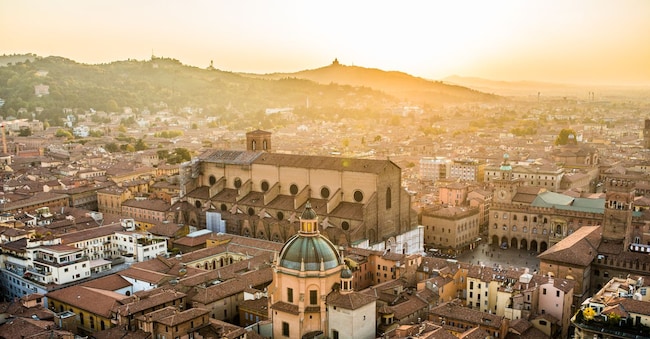
 stock.adobe.com

4' min read

Translated by AI
Versione italiana

4' min read

Translated by AI
Versione italiana

Bologna has been named Italia’s smartest city for the second year running. Rounding off the top three are Pordenone, which has risen from eighth to second place, and Casalecchio di Reno, in the province of the capital of Emilia-Romagna. This has been determined by the City Vision Score 2026–27, the index compiled by Blum and Prokalos which measures the degree of ‘smartness’ of all 7,896 municipalities in the country on a scale from 10 to 100. The results of the seventh edition of the survey were presented in Padua, during the General Assembly of Smart Cities. The three cities leading the ranking scored 100, 99.96 and 99 points respectively. The ranking is based on 30 indicators divided into six dimensions: smart governance, smart economy, smart environment, smart living, smart mobility and smart people.

The top spots

The rankings reveal marked disparities between the various geographical areas of the peninsula. The average score for local authorities is 63.2 in the North, 57.1 in the Centre and 37.8 in the South and on the islands. In the North, the North-East (67.7) ranks higher than the North-West (61.2), although the latter has more municipalities in the top 100 (47 compared with 44). In the City Vision ranking, the North therefore occupies a position of absolute dominance. Nine of the top ten municipalities are in the North, 18 of the top 20 and 45 of the top 50. In eighth place is Florence, the only city in the Centre to have secured a place in the top ten.

Loading...

Whilst, in 2025, the top 15 positions were occupied solely by municipalities in the north-east, this year the list includes nine municipalities from the north-east, five from the north-west and one from central Italy. Just off the podium, in order of ranking, are Bergamo, Brescia, Rovereto (in the province of Trento), Agrate Brianza (Monza Brianza), Florence, Milan, Udine, Imola (Bologna), Trento, Modena, Padua and Monza.

“Bologna retains its top spot, but the figure that raises questions for politicians is another: not a single municipality in the South or on the islands features in the top three hundred,” observed Domenico Lanzilotta, director of City Vision.

The North-South divide

The gap between the North and the South, in the City Vision ranking, therefore remains stark, to the extent that 91 municipalities from the North and 9 from the Centre feature in the top 100, but none from the South or the Islands, whilst among the top 200, 185 are from the North and 15 from the Centre (in 2025, there were 23 municipalities from the Centre in the top 200).

To find a town in the South – Pescara – you have to go all the way down to 301st place. The city in Abruzzo remains, however, the only one among those in the South and the Islands to have made it into the top 500. The first island city, Cagliari, is in 865th place, with 74.2 points. Among the municipalities in the South, Bari (1,456th), Avellino (1,671st) and Lecce (1,688th) follow.

The smartest regions

At regional level, the best performers were Lombardy, which has 43 municipalities in the top 100, and Emilia-Romagna, with 23 municipalities in the top 100. These are followed by Trentino-Alto Adige (8), Veneto (7), Friuli-Venezia Giulia and Tuscany (6 each), Marche (3), Piedmont (2), and Valle d’Aosta and Liguria (1 each).

As for the individual provinces, Bergamo has 16 municipalities in the top 100, whilst Bologna has 14. These are followed by Brescia and Milan with 7 each, Monza and Brianza with 6, and Trento with 5. Furthermore, whilst in 2025 four municipalities with fewer than 1,000 inhabitants were among the top 30, no village features in the top 100 municipalities of the ranking and only two make it into the top 200: Andalo (Trento, 155th) and Albiano (Trento, 172nd). Of the 119 provincial capitals analysed, however, 31 feature among the top 100 municipalities.

“The capacity to innovate,” explained Lanzillotta, “depends on structural factors, such as sustained investment and administrative capacity; where these are lacking, the gap widens. Innovation and digitalisation are not sector-specific issues, but a national concern that requires coordinated decisions between central government, regions and local authorities. The award-winning initiatives demonstrate that, where local authorities network and plan for the long term, results are achieved.”

Best practice

During the General Assembly in Padua, the City Vision Best Practice Awards were also presented. Out of the nearly 200 entries received, seven local initiatives were recognised: these were developed by the cities of Alghero, Andria, Livorno, Reggio Emilia, Rho and Padua, as well as by the Union of Municipalities of Pian del Bruscolo, in the province of Pesaro and Urbino.

Loading...

The winning initiatives span a wide range of areas, from social housing to transport, and from schools to libraries. The cities have also tackled the issue of climate change. This is the case in Reggio Emilia, which has developed a project aimed at adapting to heatwaves, launching the ‘Climate Oasis’ at Il Carrozzone Park and Community Centre in the summer of 2026, as well as 37 ‘Cool Spots’ across the neighbourhoods, forming a network of 38 locations identified by cross-referencing climate, demographic and socio-health data.

Copyright reserved ©
Loading...

Brand connect

Loading...

Newsletter

Notizie e approfondimenti sugli avvenimenti politici, economici e finanziari.

Iscriviti