
Summer bookings are picking up, with the Mediterranean performing well
Ezhaya: “Since June, demand has gradually started to rise again, showing that Italians’ desire to travel remains strong”

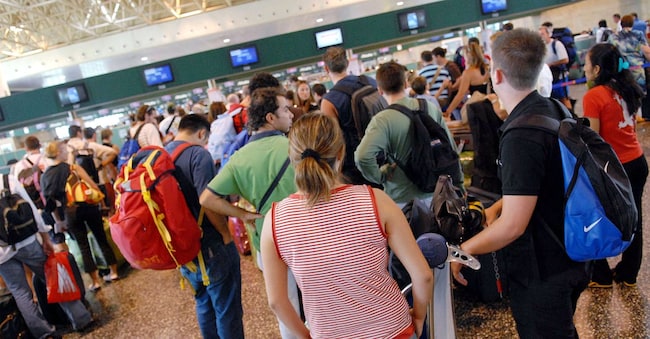
Following a period of complete calm due to the US-Iran conflict, the organised tourism sector is looking up again. In short, a crisis in holiday bookings has been averted, but Italians have changed the timing of their summer holiday bookings, taking their time and assessing destinations and travel conditions more carefully, favouring options that guarantee flexibility, reliability, safety and protection. As a result, the organised tourism sector is responding to this new consumer behaviour by offering advice, assistance and guarantees. This is what emerges from the Astoi Confindustria Viaggi Observatory, which highlights that for summer 2026, the market – following a very positive start to the year and a sharp slowdown between March and May – is showing signs of recovery. Following the turbulence between March and June, surveys carried out among tour operators belonging to the association now indicate a much more modest average decline in bookings – in the region of 5 per cent compared with the same period in 2025 – thanks to the recovery in demand recorded since June.
When it comes to making a choice, safety is the key factor. Italia is therefore continuing its very positive trend, with growth of around 3 per cent compared with 2025, and strong performance in Sardinia, Sicily, Calabria and Puglia. In the Mediterranean, the Balearic Islands, Greece and Tunisia remain among the most popular destinations, alongside Cape Verde, whilst the Red Sea is showing signs of a gradual recovery. Northern Europe is also attracting strong interest.
Long-haul travel continues to show resilience, confirming that distance is not in itself a deterrent when the destination is perceived as stable and attractive. Japan and China are the most popular destinations this season, alongside East Africa, the Dominican Republic, Mexico and South America. The sharpest slowdown has been in the Middle East and the Gulf states, followed by the Indian Ocean and South-East Asia, which have seen a decline of around 7 per cent. This decline is mainly attributable to the significant drop in bookings with airlines making stopovers in the Gulf and to the increase in fares charged by other airlines. North America is further behind, penalised above all by the effects of the country’s international policy on travellers’ perceptions. Egypt represents one of the most telling examples of the season: whilst remaining a highly competitive and historically significant destination for the Italian market, it has been affected by some of the repercussions of the tensions in the Middle East, despite never having been involved in any military conflict. The average decline, of around 5 per cent compared with last year, therefore appears to be linked primarily to this misperception rather than to objective factors. Over the past month, however, there has been a significant recovery in demand and a gradual return to normality.
“The Observatory confirms that the market is going through a challenging phase, but is not structurally compromised,” says Pier Ezhaya, president of Astoi Confindustria Viaggi. “Following the slowdown in the spring, demand has gradually returned to growth since June, demonstrating that Italians’ desire to travel remains strong. Consumers are more cautious and selective: they wait longer, seek clear information, carefully evaluate destinations and demand flexibility, reliability and concrete safeguards. Against this backdrop, the value of organised tourism becomes particularly clear: those who book a package holiday can rely on a single point of contact, capable of assisting the customer before, during and after the trip, identifying alternative solutions and, where applicable, arranging rebooking or issuing a refund. Our task is to continue offering reliable products, accurate information and all the necessary safeguards to ensure that travel remains an accessible, safe and rewarding experience.”
The average length of stay remains largely stable at between 7 and 10 days, with longer stays for long-haul and bespoke holidays. The average cost of package holidays varies depending on the type of product: from around 900–1,200 euros per person for short-haul trips and ‘Italia’ packages, to €2,500–2,700 for medium-haul holidays, and up to over €4,000 per person for long-haul holidays, individual tours and ‘tailor-made’ trips, which feature more comprehensive packages. For summer 2026 bookings, it is primarily the decision-making process that is changing: although a significant proportion of sales were made through advance booking schemes before the crisis in the Middle East escalated, the proportion of last-minute bookings – made in the weeks immediately preceding departure – is growing. Customers are now weighing up destinations, travel conditions, flexibility and the guarantees offered by organised tourism more carefully.

