
Hacker attacks boom, companies on the hunt for cybersecurity analysis
Photographing this scenario, and also suggesting solutions to be adopted, the Richmond Cyber resilience forum promoted by Richmond Italy

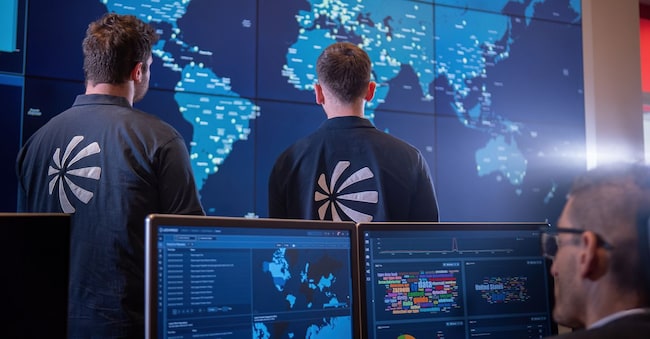
The boom in hacker attacks drives the demand for cybersecurity analysis: 29% growth is expected over the next ten years. Because sometimes all it takes is one wrong click to trigger a mechanism that puts data, systems and business continuity at risk and, in the most serious cases, an entire reputation.
The human factor
Arguments at the heart of the Richmond Cyber resilience forum, promoted by Richmond Italia in Rimini, where it was pointed out that today 'companies are no longer just defending themselves against cyber attacks, which, in 60% of cases, are caused by the human factor, but will have to be increasingly resilient, investing in new professional figures, increasingly central, such as cybersecurity analysts'. And then the panorama from the role of artificial intelligence to supply chain security and the challenges of the quantum future.
The challenges of the future
"Today, talking about cyber resilience," emphasises Marina Carnevale, events conference director of Richmond Italy, "means accepting that cybersecurity breaches are no longer a remote possibility, but a concrete scenario with which organisations have to come to terms". Also because cybercrime 'is no longer a sporadic phenomenon, but a constant operational threat'.
An attack every 39 seconds
In the global picture, as pointed out during the Forum, 'there is an average of one cyber attack every 39 seconds, totalling approximately 2,200 incidents per day'. Then there is the trend that, as underlined by the Cybersecurity Statistics 2025, in the first quarter of 2025 there is a 186% increase in the number of breached records. Making the scenario even more complex is the evolution of attack techniques. Italy, as the experts point out, 'continues to rank last among the G7 members in the ratio of spending on cybersecurity to GDP (0.12%), still far behind the United States (0.34%) and the United Kingdom (0.29%)'. In any case, 'in-house specialists dedicated to cybersecurity are on the rise and today 58% of large companies have a Chief Information Security Officer'.
Reverse course
One of the main roads to be followed to reverse this course, according to the experts, is that of knowledge and mastery of the systems used. And, in this area, it becomes important "to adopt a structured and shared approach that allows not only to strengthen technological defences, but also to develop organisational and cultural models capable of ensuring continuity, adaptation and solidity over time". Fundamental and strategic elements for the sustainability and competitiveness of companies.

