
Borgo Pignano doubles, after Volterra opens in Florence
Tycoon Michael Moritz accelerates sustainable luxury that redefines Italian hospitality Investments of 40 million euros to inaugurate the hotel on the outskirts of the Tuscan capital for the summer
by Paola Dezza
 Aggiungi Il Sole 24 Ore
ai preferiti su Google
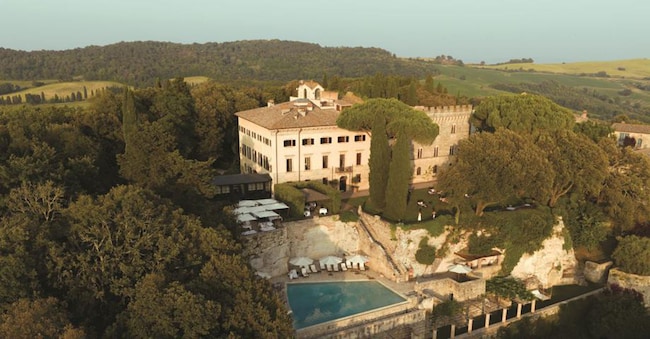
From the hills surrounding Florence to the Renaissance gardens on the outskirts of the city, a project is taking shape that is more than just a hotel expansion. With the planned opening in July 2026 of Borgo Pignano Florence, the Borgo Pignano group inaugurates a new phase in its evolution, this time bringing to the city a vision of hospitality born more than ten years ago from a regeneration project in the hills of Volterra.
The first reality, the Volterra property acquired in the early 2000s, represented a redevelopment challenge that started from a degraded farming village and then became a sustainable estate. "When we discovered the estate, it was neglected, environmentally damaged and architecturally fragmented, yet it possessed a profound historical and emotional strength," says Michael Moritz, entrepreneur and philanthropist, founder of the hotel group, before that a journalist (correspondent for Time) and then an investor since 1986 with Sequoia capital, a fund with which he has bet on Internet companies such as Google, YouTube, PayPal and many others.
The restoration of the Volterra estate took more than a decade and led to the opening of the accommodation facility in 2014. 'Hospitality emerged gradually,' he says, 'as a natural extension of caring for the place.
The total investment for the new structure opening in Florence is EUR 40 million net of the acquisition sum. An important investment considering that it is a structure of only 32 rooms and suites. The evolution of the initial project has had several steps, from the structural link between agriculture and hospitality to the Michelin Green Star arrived in 2023, a recognition that rewards environmental commitment in catering, to the entry into the Relais & Châteaux circuit and the creation of the Borgo Pignano Hotels brand. The Florentine opening represents the first step in this new phase. The structure will rise in a 15th-century mansion immersed in a park of about 5 hectares, a rarity in the urban context. 'The Florence property offered something extremely rare: historical value, architectural integrity and large green spaces in an urban context,' explains Moritz. The project will maintain a limited number of rooms and a high-end positioning, focusing on an experience that combines city and nature. "The relationship between Volterra and Florence is complementary, not competitive: one invites immersion in the countryside, the other a dialogue with the city," he says.
The decision to invest in Italia is part of a broader context of transformation of the sector. It is also part of the interest in Southern Europe and in particular in our country by the real estate players, who are looking closely at the world of hotels. In recent years, the luxury hospitality segment has experienced significant growth, supported by a demand increasingly oriented towards authentic experiences. "We aim to offer curated experiences for guests, to give them something they cannot find elsewhere," he notes. It is therefore not just about luxury, but uniqueness and identity.
Brand connect


Newsletter RealEstate+
La newsletter premium dedicata al mondo del mercato immobiliare con inchieste esclusive, notizie, analisi ed approfondimenti
Abbonati