
Nato, the final document. 'Firm commitment' to defence: an attack on one is an attack on all
The document for the first time does not condemn the Russian attack on Ukraine, although it describes Moscow as a 'long-term threat'
3' min read
Key points
3' min read
"We remain united and resolute in our determination to protect our billion citizens, defend the Alliance and safeguard our freedom and democracy".
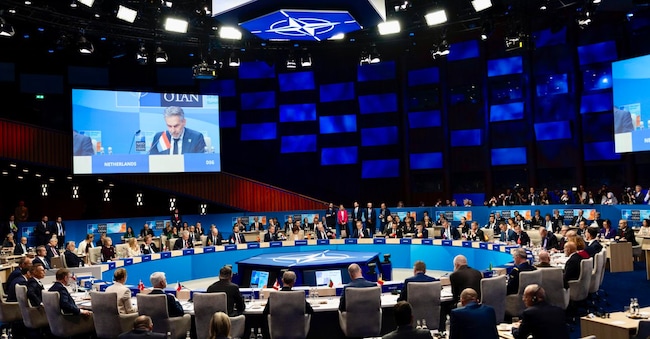
So reads the declaration of the NATO summit in The Hague, from which text an implicit pact between Donald Trump and all other Alliance leaders is deduced. Paragraph 1 of the one-page document contains a 'firm commitment to collective defence as enshrined in Article V of the Washington Treaty'. It begins: 'We, the Heads of State and Government of the Atlantic Alliance, have gathered in The Hague to reaffirm our commitment to NATO, the strongest Alliance in history, and to the transatlantic bond. We reaffirm our firm commitment to collective defence, as enshrined in Article 5 of the Washington Treaty: an attack on one is an attack on all'.
No condemnation of Russia
The document for the first time does not condemn the Russian attack on Ukraine, although it describes Moscow as a 'long-term threat'.
United in the face of profound security threats and challenges, in particular the long-term threat posed by Russia to Euro-Atlantic security and the persistent threat of terrorism," the document continues, "the Allies pledge to invest 5 per cent of GDP annually in core defence requirements, as well as in defence and security-related expenditures, by 2035, to ensure our individual and collective obligations, in accordance with Article 3 of the Washington Treaty. Our investments will ensure the availability of forces, capabilities, resources, infrastructure, operational readiness and resilience necessary for deterrence and defence, in line with our three core tasks: deterrence and defence, crisis prevention and management, and cooperative security."
Support for Ukraine
.All NATO members then signed the declaration sanctioning the considerable increase in spending to 5 per cent of GDP, although Spain declared that it did not need to reach it and that it could fulfil its commitments by spending much less.

