
Borrell: Israel has crossed another red line in Lebanon
The High Representative reports that "EU ministers reiterate full support for Unifil" and that no one has called for its withdrawal. Sanctions launched against Iran accused of supporting Russia
from our correspondent Beda Romano
2' min read
2' min read
BRUSSELS - Meeting in Luxembourg on Tuesday 15, EU foreign ministers reiterated their full support for the UN Unifil force deployed on the border between Israel and Lebanon, criticising the Jewish state for, among other things, injuring five Blue Helmets in recent days. At the same time, in their meeting, the ministers also passed a series of sanctions against Iran, accused of helping Russia in its war against Ukraine.
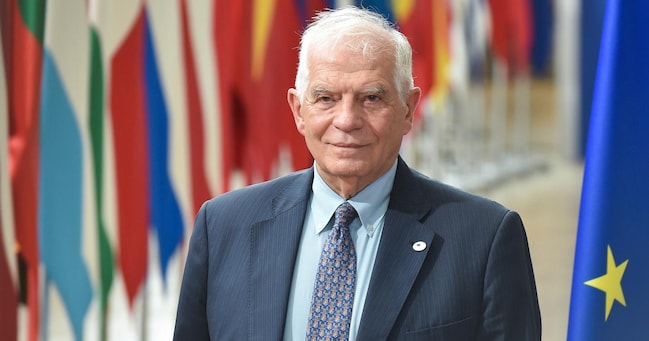
"In Lebanon, a new red line has been crossed by Israeli forces, with the attack on UN forces: today ( ministers reiterated full support for Unifil, none called for the withdrawal of the contingent," said High Representative for Foreign and Security Policy Josep Borrell at a press conference. "It seems clear that Israel wants to achieve its military goals at a high price. We have to face reality." In November, the Twenty-Seven will discuss the future of their Association Agreement with Israel.
In a statement on Sunday on behalf of the Twenty-Seven, the former Spanish Foreign Minister had expressed 'grave concern' about the situation on the ground. The statement had been the subject of lengthy negotiations. In particular, the Czech Republic had repeatedly asked for a softening of criticism against Jerusalem. Yesterday, Josep Borrell was harsher, calling the attacks against the Blue Helmets 'completely unacceptable'. Lebanon cannot become 'a second Gaza', he added, noting 'an erosion of humanitarian law at the international level'.
As mentioned, the EU foreign ministers also decided to impose sanctions on seven Iranian citizens and organisations, including the Iran Air company, for their links in the transfer of ballistic missiles to Russia. The list also includes the companies Saha Airlines and Mahan Air and Iranian Deputy Defence Minister Seyed Hamzeh Ghalandari. In September, the US had revealed that Moscow had received ballistic missiles from Iran for use in the war in Ukraine.
In response, Iranian President Masoud Pezeshkian stated that his government has not transferred any weapons to Russia since he took office in August. The sanctions also affect top officials of the Islamic Revolutionary Guards and the CEOs of Iran Aircraft Manufacturing Industries and the Aerospace Industries Organisation. The measures include an asset freeze and an EU travel ban.


