Minors

Family in the woods in Chieti, Meloni hears Nordio: consideration of sending inspectors

The Juvenile Court of L'Aquila found safety, health and relationship problems

Aggiornato alle 20:20

Famiglia in un bosco in Abruzzo, il Tribunale dei minori allontana i tre figli

7' min read

Translated by AI
Versione italiana

7' min read

Translated by AI
Versione italiana

The Prime Minister, Giorgia Meloni, 'alarmed' by the decision of the Juvenile Court of L'Aquila to move the mother and three children of the family living in a forest in Palmoli, in the province of Chieti, to an educational community, telephoned Justice Minister Carlo Nordio this afternoon. The prime minister reportedly took the case to heart, recommended keeping an eye on it and being updated on any developments. In addition, Meloni asked the Guardasigilli 'if there are any conditions' to consider sending inspectors. Giving the 'La' to the government's interest was Vice-Premier Matteo Salvini this morning, followed by League group leaders Massimiliano Romeo and Riccardo Molinari with a question to Nordio.

The Prime Minister is said to have recommended to the minister that the Leghist parliamentary act be answered quickly.

Loading...

The Story of the Family in the Woods

The Juvenile Court of L'Aquilahas ordered the urgent removal of the three children of the Anglo-Australian family - parents Nathan Trevallion and Catherine Birmingham - who have so far lived, with the 6- and 8-year-olds, in a run-down cottage in thewoods of Palmoli (Chieti). Parental responsibility was suspended, the minors were placed in a foster home and a temporary guardian of the minors, lawyer Maria Luisa Palladino, was appointed.

A decision motivated by a series of elements that, according to the judges, president Cecilia Angrisano, paint a picture of 'serious harm to the physical and psychic integrity of the children'.

According to the Court's reconstruction, the children have so far lived in a 'dilapidated ruin with no utilities', as well as in a small caravan. The expert's report filed by the parents confirmed 'the absolute absence of electrical and water/sanitary installations', as well as the lack of fixtures and fittings.
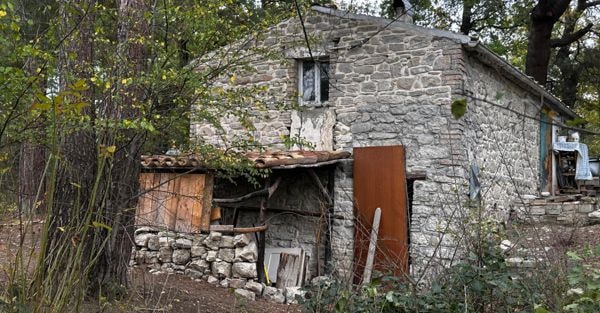
For the judges, the building is 'totally insufficient' to guarantee the safety of children, lacking static testing, certifications, and checks on sanitary conditions. The ruling states that, in the absence of habitability requirements, "the absence of habitability ... entails a presumption ex lege of the existence of danger of harm to the safety and physical integrity of minors".

It also mentions the seismic risk, the absence of fire prevention and moisture problems, which could affect the 'development of lung diseases' in the long run.

La casa nel bosco a Palmoli dove vivono Nathan Trevallion e Catherine Birmingham. ANSA/ANTONELLA SALVATORE

The protective order is not based on the danger of harm to thechildren's right to education, but on the danger of harm to the right to relationship life, Article 2 of the Constitution, "producing serious psychological and educational consequences for the child".

According to the court, 'deprivation of peer confrontation at primary school age can have significant effects on the child's development, which are manifested both in the school and non-school environment'. It is necessary to remove the minors from the family home, it goes on to say, 'in view of the danger to physical integrity arising from the living conditions, as well as the parents' refusal to allow statutory health checks and treatment'.

The order also refers to 'new inadequate parental conduct' with regard to the dissemination that the events of the proceedings have had through the mass media 'with the dissemination of data allowing the direct identification of minors, including through photos of them'.

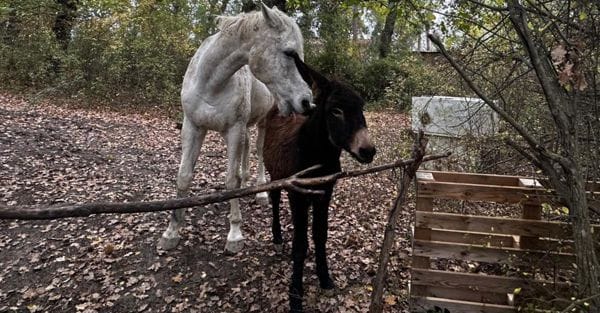
Gli animali

Il cavallo e l'asino della famiglia Trevallion-Birmingham. ANSA/ANTONELLA SALVATORE

According to the judges, "by such conduct the parents demonstrated that they were using their children for the purpose of achieving a procedural result favourable to them, in a de potestate proceeding in which they assume a procedural position opposed to that of the children and in conflict of interest with them".

As for the housing conditions and the expertise report carried out by a surveyor on behalf of the parents, "the report is completely insufficient to demonstrate conditions in the building suitable for the protection of the minors' physical integrity" according to the order. With regard to school education, the parents had not shown to the social services or produced in court the annual declaration to the school head of the nearest school on the technical or economic capacity to provide parental education, intended to allow the school head to check the validity of the declaration.

The lawyer for the family in the woods: we will appeal

"Falsehoods were written in yesterday's judgement. Measures are not to be commented on but challenged, that is why we will appeal'. Speaking is Giovanni Angelucci, the lawyer of the family that lives in a forest in Abruzzo. "They have short-circuited - continues the lawyer -. In the order, they still insist on the education of the minors who, according to the judges, do not have home schooling authorisation. The eldest is also challenged on the certificate of suitability for the passage to the third class because it was not ratified by the ministry. A certificate that, instead, is there and is also registered'.

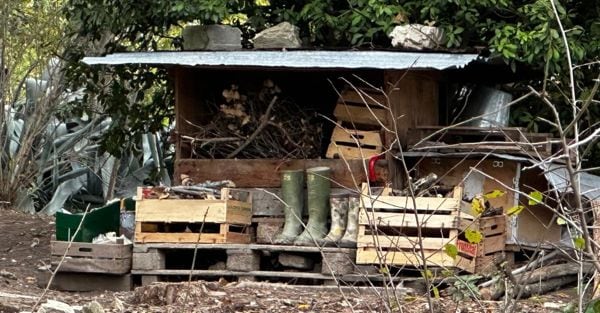
Attrezzatura

ANSA/ANTONELLA SALVATORE

Salvini: Shameful state, I will go there if needed

"I propose again, not as a minister but as a parent, as a father and as an Italian, to follow the case directly (of the family living in a house in the woods in the province of Chieti, ed.) and if necessary, to go there because I think it is shameful that the State should enter into the merits of the private upbringing, of the personal life choices of two parents who have found Italy to be a hospitable country and who instead steal their children from them'. Thus the vice-premier and leader of the League, Matteo Salvini, commenting on yesterday's decision by the Juvenile Court of L'Aquila to transfer the children to a community where they can stay with their mother. 'As a parent, I am ashamed of how the Italian State is behaving,' he added, 'towards an Australian mother who has been a teacher and a father who has been a chef, and with three children, who have made a choice of a different life, not to live in the centre amidst hurry and anxiety but in contact with nature, with a private teacher for their children. They have no electricity, no water and no television. But I was in the Roma camp in Giugliano on the outskirts of Naples last week, with hundreds of children of school age and not in school, dirty, without teachers, without electricity gas and water and with parents who in many cases live by stealing. Where are the social workers? Where is the public prosecutor's office, the juvenile court, the State?

"It seems to me a shameful, absurd choice, dangerous for children's health. As the League, we have already asked for clarification from the Minister of Justice". Thus the deputy prime minister and leader of the League Matteo Salvini on the sidelines of his speech at the Architecture Biennial in Venice. "I will do everything, if necessary even going to the place to bring those children home."

Pro Vita: children are not of the State

Pro Vita & Famiglia onlus expresses the strongest opposition to the decision of the Juvenile Court of L'Aquila that ordered the removal of the three children of the Trevallion couple, the so-called 'family of the woods' of Chieti, guilty only of having chosen to live in a cottage in Abruzzo and to propose to their children unconventional educational paths, but in any case in the wake of parental responsibility and free of certified harmful consequences. 'We are facing,' reads a note, 'a very serious violation of the educational primacy of parents. The State and the social services must only intervene in the presence of proven abuse, mistreatment or neglect, not to punish lifestyles that do not fit the prevailing standard. Children do not belong to the State, but to their family,' says Jacopo Coghe, spokesman for Pro Vita & Famiglia.

Nathan's announcement: my wife and children may return to Australia

"We would like to stay, but we have another option: we take the passports, my wife and children go back to Australia and I stay here to look after the animals. We hope not, because we like our home here,' Nathan, the father of the three children removed from the 'family in the woods' in Palmoli, Abruzzo, told reporters.

Pedagogist: taking children away an excessive decision

"From a pedagogical point of view it seems to me an excessive decision, an exaggerated measure. Perhaps an exchange could have been opened with the family, trying to convince the parents to send the children to school in the village. The relationship with classmates and teachers is certainly fundamental, but that the remedy is to take the children away or suspend parental authority and put them in a family home seems excessive to me'. Commenting on the case of what has become known as the 'family in the woods' in Palmoli is Saverio Santamaita, a professor of the History of Pedagogy at the University of Chieti-Pescara, and former director of the school of specialisation in secondary education. "Moreover, the right of parents to educate their children is constitutionally provided for, even if it does not mean that you can do what you want.

It seems to me,' Professor Santamaita commented to ANSA, 'that the measure is disproportionate. And furthermore, placing the children and the mother in a family home seems to me to be a real jackpot. However, I have read that the lawyers assisting the family will appeal, we'll see'.

"Home schooling, especially in some states in the US, is based on religious or, in a broader sense, political-cultural motivations; then there are the charter schools, which have the same characteristics, but are subject to the approval of local school bodies. In Italy, the 'paternal school' already existed in the mid-19th century: when wealthy families did not want to send their children to school because it was attended by different social classes, the father,' the professor explains, 'informed the school that he would provide primary education himself. Then, when the time came to enter the school system anyway, the child had to take an exam. As is the case today, moreover, with parental schooling'.

'The great pedagogist Raffaele Laporta, my academic teacher, born in 1916, was the son of small landowners,' recalls Saverio Santamaita. 'He himself received what was then called 'paternal education' and it was not a unique case. That was a formula that continued over time because the law allowed it'. Saverio Santamaita is the author and co-author of books such as 'Il professore nella scuola italiana dall'Ottocento a oggi', 'Storia dell'educazione e delle pedagogie', 'Storia della scuola. From school to education system'.

Copyright reserved ©
Loading...

Brand connect

Loading...

Newsletter

Notizie e approfondimenti sugli avvenimenti politici, economici e finanziari.

Iscriviti