Mafia

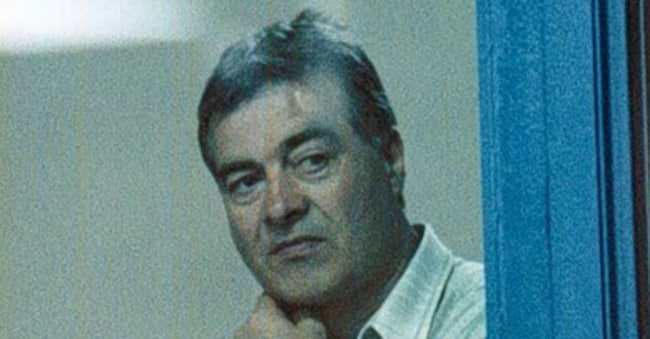
Boss Nitto Santapaola dead in Opera prison in Milan

by Nino Amadore

4' min read

Translated by AI
Versione italiana

4' min read

Translated by AI
Versione italiana

They called him the Hunter. It was not just a nickname: it was a method, a posture, a declaration of identity. Benedetto Santapaola, known to everyone as Nitto, was for a long time the undisputed dominus of the Catanese mafia. A man capable of crossing Cosa Nostra's bloodiest seasons while maintaining a profile at once fierce and calculating, allied with Totò Riina's Corleonesi but rooted to the core in the economic and social fabric of eastern Sicily.

He died today in the Opera prison, Milan, where he was held under the 41 bis regime, the so-called hard prison: he was 87 years old. The Milan Public Prosecutor's Office has ordered an autopsy. With his death, one of the longest and most symbolic parables of the contemporary Sicilian mafia comes to an end: arrested at dawn on 18 May 1993, after eleven years on the run, he had never returned free.

Loading...

The nickname - 'The Hunter' - arose from his passion for guns and real hunting. But it soon became a metaphor for his ability to spot, track and hit his enemies. But hunting for Nitto was not just a private hobby: it was also a relational space.

For example, his relationship with the businessman Gaetano Graci, one of the so-called 'four knights' of Catania's labour, is documented. In an interview published in 1994 in l'Unità, the reporter explicitly asked: "With Graci did you go hunting together?". Santapaola did not deny it outright, but shifted the focus to 'business relations'. A sign that this frequentation, at least as a public hypothesis, was already a matter of discussion. Not a folkloristic detail, but a piece that tells of the permeability between economic power and criminal power in 1980s Catania.

Another journalistic reconstruction, signed by Attilio Bolzoni, speaks of hunting parties with the head of the mobile squad and indicates the extent to which that practice was a field of transversal acquaintances. There is another element: his public legitimisation in the years of his rise. The car dealership traceable to Santapaola was inaugurated in the presence of the prefect and the quaestor. Not a chance meeting, not a stolen photograph, but an official ceremony. There are also pictures showing him in public contexts alongside mayors, regional deputies, businessmen. A photograph of an era: for a time, the boss was not perceived - or treated - as a pariah.

In those same years, according to journalistic reconstructions, he was interrogated and then dismissed with a formal apology by the then head of the Mobile, Tommaso Berretta. Episodes that tell of a more complex context than the simple State-Mafia conflict. They tell of a grey area.

That grey area is an integral part of its history.

In the 1980s, while Sicily was torn by the Mafia war, Santapaola consolidated his position as head of the Catania clan allied with Salvatore Riina. He is not a comprimario. He is one of the strategic nodes in the alliance that marks the rise of the Corleonesi.

Among the crimes that indelibly marked his parable was the murder of journalist Pippo Fava, assassinated on 5 January 1984. Fava had publicly denounced the relations between the Mafia, business and politics in Catania. The final sentences identified Santapaola as the instigator of that murder. It is a watershed: proof that the clan intervened when the public narrative threatened the balance of the system.

His name appeared in numerous proceedings for murders and massacres. Judicial reconstructions placed him at the top of the mafia organisation in the season of massacres in the early 1990s, culminating in the Capaci attack on 23 May 1992, in which Giovanni Falcone, his wife Francesca Morvillo and the agents of the escort were killed. His role in that phase has been the subject of investigations and trials that have reconstructed his weight in Cosa Nostra's strategic set-up.

Yet, within the biography of the boss lie details that seem to have come out of a contradictory novel. While on the run, he hid in a farmhouse in the countryside between Catania and Ragusa. When he was caught in the 'Luna Piena' operation, he asked to have breakfast with his wife before going out in handcuffs. After his arrest, his wife Carmela Minniti was killed in an ambush attributable to internal dynamics. In the courtroom, Santapaola read a letter of forgiveness to the murderer, later a collaborator of justice. A gesture that disconcerts, within a code founded on revenge.

Life sentences, final convictions for mafia association and murders. The name Santapaola remains linked to that season in which the Sicilian mafia tried to redefine its equilibrium through systemic violence. And here the deeper meaning of the nickname returns. 'Il Cacciatore' was not just the man of guns, he was the man of relationships. Of hunting parties turned into meeting places. Of official inaugurations with the authorities. Of the ability to move within the Catanese bourgeoisie without appearing an extraneous body.

His parable is not only the story of a bloodthirsty boss. It is also the story of a city and a season in which the boundaries between legality and social power became opaque. And perhaps it is precisely in that opacity - more than in the lupara - that the most disturbing part of his legacy lurks.

Copyright reserved ©
Loading...

Brand connect

Loading...

Newsletter

Notizie e approfondimenti sugli avvenimenti politici, economici e finanziari.

Iscriviti