
Brenner motorway, the challenge that united territories and Europe
The A22 was born from a territorial and pro-European vision of Trentino Alto Adige in the 1950s, when state road 12 was no longer sufficient for development and connection to Europe. Despite scepticism, local authorities and chambers of commerce carried the project forward from the bottom up.

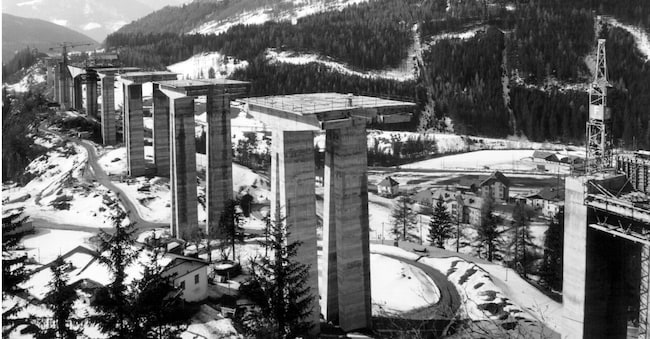
(Il Sole 24 Ore Radiocor)- To look at it, along its 314 kilometres running from the Brenner Pass to Campogalliano, the Brenner motorway seems to have always been there. Few now remember when the only available road was the State Route 12, when even modest distances represented a journey. A22, however, has not always existed, nor has Autostrada del Brennero Spa, the company that was set up to build it and then managed it for all the more than fifty years of its history.
To understand why Autostrada del Brennero Spa is not a motorway company like so many others, we need to rewind the tape of seventy years of history and find ourselves catapulted into an area, the Trentino Alto Adige/Sudtirol, which at the beginning of the 1950s was still mostly poor and rural, but with two characteristics that the others did not have: a European sense that derived from its history as a bilingual land and the Special Autonomy.
So in 1952, when the first tourists had already started to descend along the Brenner Pass, the regional council led by Tullio Odorizzi decided that the state road was no longer enough, that a highway was needed for the economic development of the territories and to connect Italy to Europe at the same time. They are not understood. The Romita Law of 1955, which gave Italy its first real motorway network, relegates the Brenner motorway to a work to be realised, eventually, at a later date. It goes ahead anyway, but the first stages of this story are a long list of rejections that Donato Turrini, regional councillor for public works and then the first and historic president of the company, cashes in impassively as only an Alpine veteran of Russia can do. Believing in the project, in addition to Trentino Alto Adige/Sudtirol, are the local authorities and the Chambers of Commerce of the 'south', as far as Modena. They all believed in it so much that, when the company was finally established on 20 February 1959, the concession for the construction and management of the motorway was still a long way off.
The breach would only open in 1961 when the Zaccagnini Law established the concession regime. The problems, however, remain enormous. The State's financial contribution is little more than symbolic: 3.25% for the Brenner-Verona section, 0.5% from Verona to Modena. Obtaining funding is difficult, paying it back will be much more so. Even before the loans were collected, the foundation stone was laid in 1964 at the 'Vodi' in Lavis. In 1968, the Bolzano-Trento section opened. In 1972 Italy is connected to Europe. In 1974, the work was completed. In 1984, the company's accounts broke even.


