
Brescia is stepping up its efforts to achieve net-zero emissions
The region aims to become a leading centre for the transition. Streparava said: ‘We are here to develop an industrial development plan for the next 10 years.’

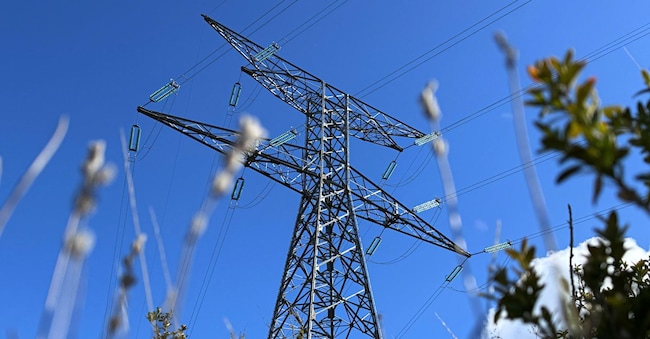
A key hub for the net-zero industry, capitalising on the opportunities provided by the EU to create a new model of development. Brescia’s industry aims to step up a gear, seeking to balance the criticisms levelled at the timing and approach of the Green Deal – and calls for changes to the regulations – with proactive measures designed to capitalise on the most innovative tools introduced by Brussels, such as the Net-Zero Strategic Valleys. These are areas designated by Member States where businesses in strategic sectors benefit from streamlined procedures, priority access to energy supplies and easier access to EU funds. This initiative forms part of the EU-wide strategy aimed at restoring the manufacturing sector’s share of European GDP to 20 per cent by 2035.
An initiative launched as part of the event organised by Confindustria Brescia in collaboration with Confindustria Lombardia, bringing together MEPs, institutions and businesses with the aim of working towards a regional bid for industrial acceleration.
“The transition to a low-emission industry,” comments Paolo Streparava, president of Confindustria Brescia, “cannot simply be a constraint; it must become an industrial policy initiative. For Brescia, this is a crucial issue, because we are one of Europe’s most industrially oriented regions and we have what it takes to try to lead this transformation. That is why we must start working in earnest on the possibility of putting forward our region as a European centre of excellence for Net Zero industry and industrial acceleration. Not to obtain a label or simply to access funding, but to build a plan for Brescia’s industrial development over the next ten years.” The Net Zero Regulation stipulates that, for 19 strategic decarbonisation technologies, 40 per cent must be produced within the EU; and during the planning phase for the new programme, having a region with these characteristics will certainly be an advantage.
“Lombardy and its businesses,” adds Giuseppe Pasini, president of Confindustria Lombardia, “have long been pursuing a transition towards sustainable models. Lombardy’s steel and chemical industries – sectors that are fundamental to Italian and European industry – are successfully moving towards low-emission production through investment in enabling technologies such as electrification and by playing an increasingly significant role in the circular economy. Decarbonisation must not be synonymous with deindustrialisation: this is why businesses are calling for security of supply to be guaranteed for circular raw materials: ‘We expect the Circular Economy Act to introduce measures aimed at promoting the recovery, recycling and use within the EU of scrap metal collected across Europe, whilst limiting its export to non-European countries that do not have the same regulations as those in Europe.’ The Brescia Chamber of Commerce, through research carried out by the Tagliacarne Research Centre, has produced an initial assessment of the region’s potential, with just under 1,400 businesses active in green technologies
“Of these,” explains Roberto Saccone, president of the Brescia CDC, “around 15 per cent stand out as the leading candidates to master the technology – that is, those capable of developing highly innovative products. The challenge is to strengthen the transition from incremental innovation to more technologically advanced innovation. Net Zero could provide an opportunity for businesses in Brescia to develop innovative technologies.”


