The Assolombarda Top 1000 Report

Brianza slows down, optimism about 2026

Revenues down for a third of companies but prospects are better. Biffi: 'Innovation decisive lever, now simple measures for relaunch'

by Luca Orlando
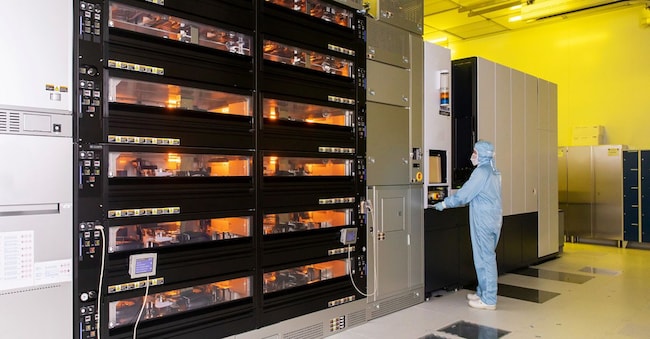
View of a machine inside STMicroelectronics R3 fabs in Agrate, Italy

6' min read

Translated by AI
Versione italiana

6' min read

Translated by AI
Versione italiana

How will revenues fare? While a year ago only 9% of the companies in Brianza responded with a thumbs-down, indicating a decline, 12 months later the share has almost tripled.

A sign of the times, the outcome of a complex year that could not fail to leave its mark on the performance of companies. The Top 1000 analysis of Monza and Brianza, a research project carried out by the Centro Studi di Assolombarda in collaboration with PwC Italia and with the support of Banco Bpm, paints a complex picture, made up of lights and shadows, with 2026 prospects that are nevertheless better.

Loading...

For the current year, in particular, while 46% of the companies expect revenues to increase, there are 34% who, on the contrary, indicate a decrease. Difficulties that, however, do not affect the solidity of the area, looking at the share of companies in profit among the Top 1000 companies examined (70 billion in revenues overall), which in fact remains important, at 92%, just as margins are confirmed at historically high levels (Ebit at 5.6%)

Two-thirds of the companies for 2025 estimate a stable or growing Ebit and in this context, the main obstacles for 2025 were the difficulty in finding adequate personnel (high risk for 43%) and insufficient demand (high risk for 42%), increasing compared to 2024 and due to the modest global pace and European weakness; the high cost of energy is perceived as a medium risk.

Looking ahead, turnover forecasts for 2026 are more favourable, reflecting expectations that the hitherto postponed economic recovery will actually materialise. In the coming year compared to 2025, 58% of the companies surveyed expect an increase in sales and 33% stability, while only 9% estimate a fall, compared to 34% who see a drop this year. "Monza and Brianza, with Milan, Lodi and Pavia," explains Assolombarda president Alvise Biffi, "form a quadrilateral worth 304 billion euro, 13.6% of Italian GDP. Specifically, Monza and Brianza is unique on the Italian scene thanks to its extraordinary density and diversification of advanced manufacturing and knowledge-intensive services rooted in the territory. Today, however, economic growth risks being limited not only by the unstable geopolitical context, but also by the increasing difficulty in finding qualified personnel. Acting on attractiveness is crucial to solving this critical issue: without skills, it is not possible to support the innovation processes - particularly those linked to artificial intelligence - that are profoundly transforming our industries. Innovation is the decisive lever for the increase in productivity that the country urgently needs, and it is on this front that we expect a strong and concrete commitment from the government. Resources are limited, we know. This is precisely why we need simple, certain and easily applicable measures, avoiding repeating the mistakes of the past, such as those related to Transition 5.0. Businesses must be provided with clear and immediate tools to continue to grow, innovate, and compete, developing new excellence capable of successfully competing in global markets'.

The territory's figures, however, highlight the overall slowdown, with local GDP growing by only 0.2% in 2024 as a result ofthe stagnation of industry (manufacturing production at -0.3%) and the slowdown of services (current turnover up only 3.3%). Despite this, exports remained a strong point, growing by 4.4% in value (EUR 14.4 billion), a performance well above the Lombardy average. Pharmaceuticals (+17.1%), electronics (+14.6%) and mechanics (+4.5%) led the way, while sectors such as fashion (-7.1%), design-furniture (-3.6%) and automotive (-6.4%) showed weakness. On the employment front, the number of workers decreased marginally (-0.5%) and the unemployment rate rose slightly to 3.3%, although remaining at historically low levels.

The weakness continued in the first half of 2025. After a de facto stationary industrial production (-0.5% per year) and dynamic exports in Q1 (9.0% growth due almost exclusively to pharmaceuticals), the second quarter marked a sharp contraction: manufacturing output fell by 5.2% and exports in value terms decreased by 1.2% (with double-digit declines for electronics, -36.6%, and mechanics, -14.4%).

In terms of markets, Germany remains the largest trading partner (EUR 1.5 billion of exports in 2024), followed by Switzerland and the United States. The high dependence on Germany makes local manufacturing sensitive to the recovery of German industry, while the high projection on the American market amplifies the risks related to US tariffs. Assolombarda estimates a potential loss of EUR 146 million in exports to the US in one year as a result of higher tariffs (-1.0% of total exports, therefore a small change), which could rise to EUR 315 million in the long term.

Overall, GDP growth estimates for 2025 as a whole are therefore downgraded from the beginning of the year to a modest +0.3%, with stagnation expected for manufacturing and services still weak. To cope with global risks, such as tariffs exposure, it is crucial for companies to diversify export geographies and invest in innovation and quality.

"In today's figures, although in an ever-changing international landscape," emphasised Matteo Parravicini, President of Assolombarda's Monza and Brianza office, "the strength of our advanced manufacturing sector emerges once again, based on its ability to create value in complex supply chains and to develop the area's attractiveness as a hub for innovation. But in order to support the processes that companies are carrying out to become increasingly competitive, increasingly up-to-date skills are needed. A concrete and shared integration between the business world and the university system is the lever to attract young talent and ensure the productivity of our companies. I am thinking of what I would call laboratories of excellence where the synergies between the world of education and the world of production are increasingly close and capable of generating an ecosystem of value, a model that can be a virtuous example where institutions and businesses actively collaborate for economic development, pooling skills for a sustainable and measurable future'.

Perspectives and risks - the survey evidence

The survey conducted by Assolombarda on a sample of more than 100 innovative industry and service companies in Monza and Brianza shows a polarisation and worsening of expected performance in 2025, against more favourable prospects for 2026.

Turnover expectations for the year 2025 have worsened significantly compared to the previous autumn's forecasts, mainly reflecting the slowdown in global demand. 46% of the companies expect an increase in turnover, 20% stability and 34% a decrease.

This polarisation is a sign of uncertainty, however, an overall resilience in operating margins is observed, with two-thirds of respondents estimating a stable (32%) or growing (34%) EBIT, partly due to the lower prices of some raw materials.

In the first ten months of 2025, the main risk factors perceived by companies were difficulty in finding suitable personnel and insufficient demand. On the first front, for 43% of the companies responding to the survey, this is a high risk. Indeed, with a low provincial unemployment rate (around 3%), the search for candidates is an intense 'competition'. Suffice it to say that, in the first half of 2025, 53% of the professional figures sought were hard to find, a figure higher than the Lombardy and Italian average.

Demand shortfall (42% high risk) is up from 2024 (where it was 32%), due to the modest pace of world trade and the weakness of European industry.

Among other obstacles, the high cost of energy was predominantly perceived as a medium risk factor (level indicated by 42% of the sample, high risk for 22%). Financial constraints (high risk for only 11%) and the prices of raw materials/components (9% high risk) were perceived as less impactful.

Expectations for 2026 are more optimistic, in line with Assolombarda's macroeconomic forecasts that indicate an acceleration of provincial GDP to +0.8%. As far as turnover is concerned, 58% of companies expect an increase in sales in 2026, 33% stability and only 9% estimate a decrease.

The Top 1000

Assolombarda's analysis confirms the presence of a nucleus of companies of excellence, with 16 realities able to go beyond 800 million in revenues, nine of which reach over one billion. The technology distributor Esprinet is the leader, followed by Stmicroelectronics and Mediamarket (Mediaworld).


Copyright reserved ©
Loading...

Brand connect

Loading...

Newsletter

Notizie e approfondimenti sugli avvenimenti politici, economici e finanziari.

Iscriviti