
Brigitte Bardot, the sensual diva with the pout that rocked the Sixties
B.B., symbol of liberation with the film 'And Man Created Woman', has died at the age of 91 in the south of France. Since '73 she had retired from the stage

Key points
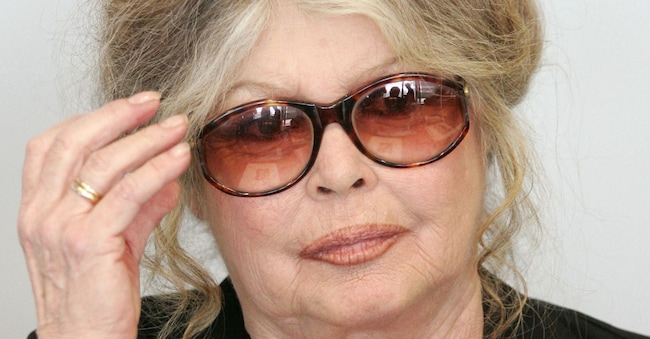
They say that diastema, or the slight gap between the incisors, brings good luck to those with it. In the case of Brigitte Bardot - who died at the age of 91 in the Saint-Jean clinic in Toulon, in the south of France, not far from her home in Saint-Tropez - it was an additional element of seduction, perhaps because it gave a childlike and jaunty accent to her indomitable beauty. Talking about her beauty, in fact, is reductive because one does not remain a star and a symbol for so many decades, one does not become an example to imitate and an icon, to continue using an overused term, if one is not also intelligent, shrewd and pragmatic. B.B., as everyone called her by the initials of her first name and surname, in addition to her body, had a strong character, an even cheeky personality and a very clear line of thought, in recent years ultra-animalist, unafraid to expose herself and to express thoughts against the tide, as when, last June, she returned to television after 11 years of absence from the screens to defend her friend Gérard Depardieu, convicted of sexual assault.
Bourgeois and Parisian origins
A Parisian from an upper middle-class background - her father Louis was an industrialist, her mother, Anne-Marie Mucel, looked after the family - she devoted herself to the study of ballet and theatre from an early age. Not particularly brilliant at school, unlike her younger sister Marie-Jeanne, she did, however, manage to enter the Conservatoire de Ballet in Paris and live with the deminutio of amblyopia (she could only see out of one eye), even making her slightly fearful gaze a feature of charm. Sensual and uninhibited from the first moment she posed as a model, not even 15 years old, for the women's magazine 'Elle' (whose editor, Hélène Lazareff, was a friend of her mother's), it was clear that her career would not be limited to paper. B.B.'s physical prowess and temperament, her wild hair, her pout, and her mischievous smile soon led her to the cinema, with which she had trained from an early age, because her cinephile father made her act in home movies with her sister.
The cinema debut
In "Elle" she is noticed by director Marc Allégret, who gives her an audition for Les alloris à la mer, a film that is never shot. On this occasion Brigitte met Marc Allégret's assistant, the young Roger Vadim, and a great passion broke out between them. Brigitte's parents, initially against the relationship, ask her to wait until she is 18 to get married. Roger introduced her to the film world and so Brigitte made her screen debut in Le Trou normand in 1952 by Jean Boyer, opposite Bourvil: B.B. was only 18. The film was a flop, but the actress decided to continue her career on the big screen by starring in Willy Rozier's Manina ragazza senza veli, where she was already a leading lady. Thanks to her manager, Olga Horstig, she then appears in several films (Les grandes maœuvres, Cette sacrée gamine, La lumière d'en face).
The topless scandal in the US
At the Cannes Film Festival she decided to bleach her hair to seek funding for her husband Vadim's debut film and from then on became the European answer to Marilyn Monroe. The States ogled her, adored her, but were equally shocked by her topless appearances. The Old Continent is not particularly touched by this and follows her in the bikinis that Brigitte exhibits first and in her trend-setting way of dressing, the fisherman's trousers, the tight tops on her shapely physique that make her an appetite subject even for Andy Warhol.
The media are not so interested in her professional calibre. When she goes to Cannes or Venice all the photographers are for her. The photo of B. B. at the Lido lying on the sand while being immortalised by a forest of cameras.


