Chemistry

Brindisi, Eni announces selection of advisor for cracking sale

New plans emerged from the meeting in Rome at Mimit with Eni. Urso convenes a new 'Versalis' table in June

by Vera Viola

4' min read

Translated by AI
Versione italiana

4' min read

Translated by AI
Versione italiana

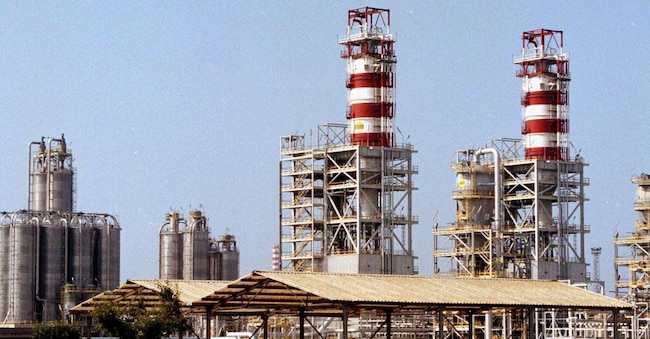
A surprise breakthrough. The Brindisi cracking plant is to be sold: Eni has announced to Minister Urso that it has begun the selection of a leading international advisor who will have the task of identifying an industrial entity interested in taking over the assets put in storage (cracking). The advisor will apparently be Jp Morgan. All the plans for the Sicilian plants in Priolo and Ragusa are also confirmed. This is what emerged from the meeting held yesterday in Rome on the Versalis reconversion plan. A new round table has been convened for June.

The meeting took place at Palazzo Piacentini between the Minister of Enterprise and Made in Italy, Adolfo Urso, and Eni's Head of Industrial Transformation, Giuseppe Ricci.

Loading...

Eni highlighted to the minister _ we read in a note _ "how the Industrial Transformation and Conversion Plan is advancing in full compliance with the timetable defined by the Protocol signed at Mimit on 10 March 2025. "Meanwhile, the investment in collaboration with Seri Industrial for a lithium battery gigafactory for the stationary storage of energy, for which the joint venture company, Eni Storage Systems, has been established since September 2025, is proceeding _ as reported _".

The meeting was also an opportunity to focus on Sicily. Eni reassured - as reported by the ministry - that 'the authorisation process for the reconversion of the Priolo site is advancing. "In Ragusa, activities are continuing for the creation of a centre of competence and specialisation on safety and maintenance issues, as well as for the planned industrial garrison to support the bio and sustainable supply chains.

Urso then announced that a new meeting of the Versalis table would be convened by June, with all the signatories to the Protocol, to verify the progress of the conversion plan and share solutions that would ensure the protection of employment and the maintenance of the sites' strategic production capacity. The minister then recalled the government's commitment at the European level, in a context that sees Italia at the forefront of the revitalisation of the chemical sector, starting with the non-promotion with other member states and the work begun in the Critical Chemicals Alliance to strengthen the competitiveness and sustainability of strategic European production. From his words, an indication emerged that he wanted to continue basic chemical production in Brindisi.

The decision on the Apulian petrochemical plant acknowledges the strong alarm (see yesterday's Il Sole 24 Ore) of workers, companies, the Apulia Region, and economists, and therefore kicks off a new relaunch programme. The minister then met with the Puglia Region's councillor for Economic Development, Eugenio Di Sciascio. And the latter informed Urso that he would meet with Eni representatives on 30 April, together with President Antonio Decaro, on the subject of the reconversion of Brindisi.

The Brindisi petrochemical plant, active since the early 1960s, has marked Apulia's industrial history. It reached peak production in the mid-1970s and until 1977 was one of the three most modern plants in Europe and the largest plastics producer nationwide. In 1977 it employed more than 7,500 direct and indirect employees. The final closure of the cracking line is scheduled for 2025, with significant repercussions on employment. The memorandum of understanding signed on 10 March 2025 at Mimit sanctioned the transformation of the Versalis petrochemical plant in Brindisi: the cracking plant would be put into 'conservation' as of 31 March 2025, to make way for a lithium battery gigafactory for energy storage systems in collaboration with Seri Industrial. The five-year plan envisaged more than EUR 2 billion of total investment in circular and sustainable chemistry, with the aim of maintaining current employment and reducing CO2 emissions by 40 per cent.

But the continuing uncertainty over the future of the petrochemical plant has increased concerns throughout Puglia. The repeatedly repeated demand of the territory was the sale of the production site to continue producing basic chemicals. 'With Eni's cracking coming to an end, the entire plastics production system is left without raw material,' Patrizio Bianchi, an economist and former minister, pointed out. 'The closure will have an effect on the entire production system in Italia, given that basic chemistry generates products that enter into the composition of 95% of the manufactured goods used every day. The end of basic chemical production, in short, would hand Italia over to foreign supply chains. A risk that even the events of war and the consequent blockage of supplies would advise avoiding.

But first of all there were the jobs at risk. About 970 between direct jobs at Eni and other companies within the petrochemical plant's boundary wall (although Eni had assured the placement of its 400 direct jobs in other plants). But a domino effect on the entire supply chain was also expected. The plant, which is considered one of the most modern in Europe, is a site on which an estimated 2,500 direct and indirect employees gravitate (Confindustria Brindisi estimates).

Copyright reserved ©
Loading...

Brand connect

Loading...

Newsletter

Notizie e approfondimenti sugli avvenimenti politici, economici e finanziari.

Iscriviti