
Brindisi, trade unions and region in defence of the petrochemical plant
From the territory the request to Eni to divest the plant so that it can continue to produce basic chemicals. Eni confirms lithium battery project
by Vera Viola
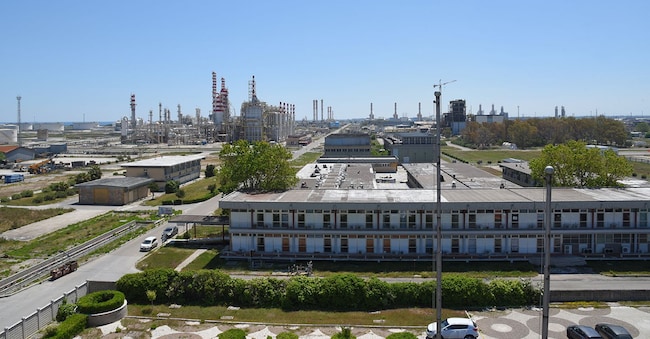
There is high tension in Brindisi and throughout Puglia due to the continuing uncertainty over the future of the petrochemical plant, after Eni Versalis closed the cracking plant a year ago. A reconversion towards sustainable chemical activities is planned, with start-up by 2026, but to date it has not started, apart from the project for a lithium cell production plant by Eni and Fib (Seri Industrial group), which is confirmed.
The request of the territory - workers, institutions, companies, the university world - to Eni Versalis is clear: to sell the plant, to save the production of basic chemicals (ethylene, polyethylene and polypropylene) and to save the allied industries, which are already in a deep crisis. The trade union and in particular the CGIL secretary Maurizio Landini asked for a meeting with the government. The Apulia Region and the employment task force led by Leo Caroli have long been in the front row in pressing the Ministry of Enterprise and Made in Italy and Eni. "We have continuous talks with all the parties involved," says Eugenio Di Sciascio, regional councillor for economic development, "with the social partners, the government and the petrochemicals owner. We believe that the site should be sold'. Today, however, the latter sees some glimmer on the horizon and lets it be known, without revealing anything, that he hopes for positive news. It is also reported that the company is looking for an advisor (perhaps for a sale?). This news is not confirmed.
"At the moment we can only confirm that the transformation project is proceeding in line with the protocol signed last year at MIMIT," say Eni. "In March, Eni obtained the final investment decision for the construction of a gigafactory for static energy storage at the Versalis hub in Brindisi, in a joint venture with a specialised operator. The plant will have a capacity of 8 GW and will be completed by the end of 2028'. Final decision stands for formal approval for the development of the project.
"The Eni project in Brindisi is an example of a great transformation," adds Giuseppe Ricci, Director of Industrial Transformation at Eni. "Eni Storage Systems, the joint venture set up by Eni and Fib, a company of the Seri Industrial group, is operational and is developing the industrial project for the production of lithium iron phosphate batteries on an aqueous basis, which are mainly intended for stationary storage of electricity, complementary to the production of renewable energy. It is an environmentally sustainable project that maintains the industrial vocation and jobs, that can also develop an important downstream supply chain, and that has important market prospects'.
But the conversion alone does not convince the supporters of the divestment. "With Eni's cracking coming to an end, the entire plastics production system will be left without raw material,' observes Patrizio Bianchi, economist and former minister. 'The closure will have an effect on the entire production system in Italia, given that basic chemistry generates products that enter into the composition of 95% of the manufactured goods used every day. The end of basic chemical production,' it is noted, 'will consign Italia to foreign supply chains. A risk that war events and the consequent blockage of supplies would also advise avoiding.


