
UK, Labour's manoeuvre: new investment and tax increases
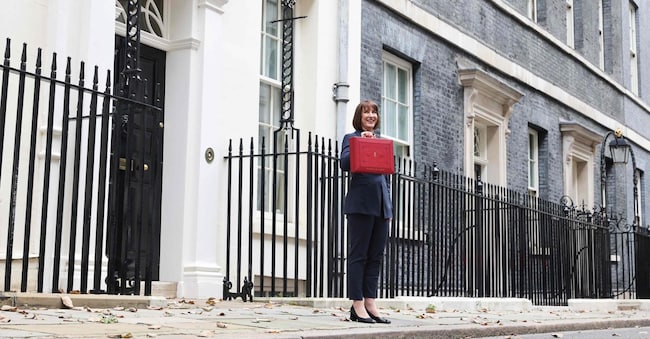
Chancellor of the Exchequer Rachel Reeves announces the government's economic programme: 100 billion in infrastructure over the legislative period. More taxes but no adjustments on VAT

3' min read
3' min read
Labour's first budget bill fulfilled the government's promise to turn over a new leaf after 14 years of the Conservatives in power. Chancellor of the Exchequer Rachel Reeves presented a budget in Parliament today that includes £40 billion of tax increases and heavy investment in infrastructure and public services, particularly health and schools.
"There are no shortcuts, to grow you have to invest, invest, invest," said Reeves, for "a decade of national renewal that will restore economic stability after the last few years of instability and chaos".
Many of the new tax revenues - £25 billion - will come from the increase in employers' social security contributions, which rise from 13.8% to 15%, while the threshold at which they are triggered has been lowered from £9,100 to £5,000. Exemptions for more than one million small and medium-sized enterprises are planned.
Reeves was thus able to claim that she had kept her solemn campaign promise not to increase VAT, income tax, corporation tax or workers' social security contributions. The Tory opposition accused Labour of hypocrisy, arguing that penalising employers also has negative consequences for workers. "I have not taken this decision lightly, I know it will be onerous for businesses, but I have chosen to restore economic credibility," Reeves said.
The chancellor also announced a 6.7 per cent increase in the minimum wage to £12.21 per hour while the minimum wage for under-21s rises from £8.60 to £10 per hour. "It was a Labour government that introduced the minimum wage in 1999 and it is only right that it is a Labour government that increases it to protect workers from the rising cost of living."
New Tax Rules
.The UK Treasury has decided to change the fiscal rules, separating current spending from investment. The commitment to fiscal austerity and balancing the public accounts remains, with a promise to return to surplus in 2026, but borrowing is allowed to invest in projects that are 'productive and bring jobs, growth and prosperity'.
The government intends to 'create the right conditions to stimulate private investment, as Britain under the Tories has become the tail end of the G7,' the chancellor said, 'but public investment is also needed and the benefits and not just the costs of these investments must be taken into account.
Hundred billion available for infrastructure
During the legislature £100 billion will therefore be made available for investment in new infrastructure such as roads and railway lines, public building such as new schools and social housing, and renewable energy projects such as green hydrogen.
"There will be no return to austerity," said Reeves, announcing a massive £22.6 billion increase in the National Health Service (NHS) budget and £6.7 billion for schools, which will reduce waiting lists at public hospitals, which have reached record levels, and recruit thousands of new teachers. The Ministry of Defence will also get an extra £2.9 billion both to meet its commitments to Nato to reach 2.5 per cent of GDP and to continue to support Ukraine without time limit, 'for as long as it takes'.
The Labour government will complete the work begun by the Tories, who had scaled back the 'non-dom' system, which allows the super-rich resident in Britain to pay no tax on profits generated abroad. The non-dom regime will be abolished altogether, Reeves said.

