
Renewables: UK-based Elgin sets its sights on Italia with batteries and agrivoltaics
Investments totalling 460 million are planned in Umbria, Molise, Puglia, Sicily and Lombardy

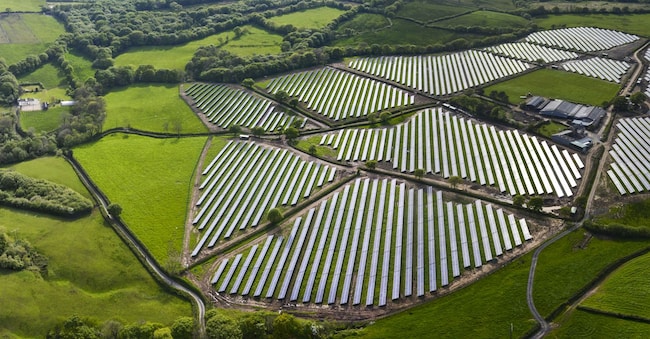
To develop a pipeline of over 3 GW in Italia by 2030, with a particular focus on the integration of renewable energy generation plants and energy storage systems: this is the objective of the British company Elgin, which has been controlled for the past two years by the Danish group Copenhagen Infrastructure Partners (CIP), a global fund manager specialising in investments in energy infrastructure.
“Our entry into the market, which began in 2024 with the opening of our Rome office and was consolidated in 2025 through our partnership with Rinascita Holding, forms part of Elgin’s broader development plan as an independent producer of energy from renewable sources: Italia represents a key market in our European growth strategy and a central element of the company’s long-term ambition, which aims to significantly expand the local team and project portfolio in the coming years,” confirms Dermot Kelleher, the company’s CEO.
In addition to the 250 million allocated for the development of a Bess (battery energy storage system) project in Umbria, there is a further 210 million for four new agrivoltaic projects, with the hope that they will be fully operational within the next two years: on the border between San Martino in Pensilis, in the province of Campobasso, and Chieuti, in the province of Foggia (30 million for 60.5 MW); in Ramacca, in the Catania area (a total of approximately 60 million for two plants of 72 and 60 MW); in Valeggio, in the province of Pavia, on a rice-growing area (120 million for 130 MW).
Kelleher, who has been leading the company for 16 months after serving as its CFO for 11 years, explains: “The aim of our projects is to enable the production of energy from renewable sources to coexist with agricultural activities, helping to maximise land productivity whilst supporting decarbonisation targets.” Agrivoltaic design minimises the impact on the soil and would offer local farmers an additional source of income, supporting long-term rural development. For this type of strategy, battery storage systems – whether integrated with solar installations or developed as standalone assets – represent another key element, as they help increase grid flexibility, facilitate the integration of renewable energy generation and contribute to making the electricity system more reliable and efficient.
The partnership with Rinascita Holding, which specialises in the development of large-scale electricity storage facilities, reflects the approach Elgin intends to pursue in Italia: “To establish partnerships with experienced local operators who have in-depth knowledge of the regulatory framework, authorisation processes and market dynamics,” emphasises Kelleher. In short, the group will not neglect the local business community; indeed, during the construction phase, projects will be able to utilise local suppliers, thereby supporting local businesses and creating jobs. Furthermore, once operational, facilities of this kind require professionals for maintenance, agronomic management and digital monitoring. A total of 150 professionals are leading the development and implementation of the group’s large-scale renewable energy projects.

