
BRT changes course: lower volumes, greater profitability and growth abroad
The Bologna-based company is reviewing its strategy. It forecasts revenue of 2 billion in 2026

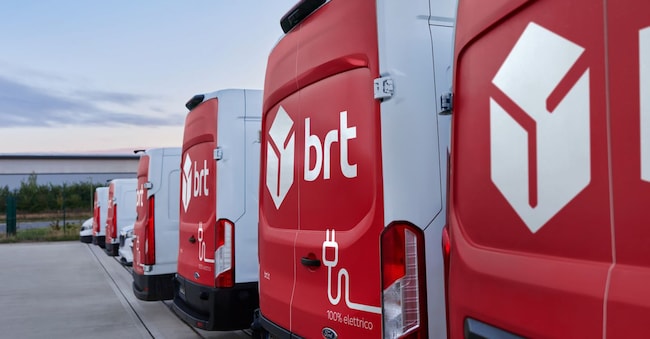
BRT is reviewing the Galileo business plan launched in 2025 and shifting the focus of its growth strategy from volume to profitability. Two years into court-supervised administration, the transformation strategy launched by the Bologna-based logistics firm remains the cornerstone of its recovery, but the new environment calls for more cautious targets: the growth target for 2029 has been lowered from the 20 per cent forecast last year to a range of between 10 and 13 per cent. “The world has changed: inflation, rising diesel prices, pressure on prices and the entry of low-cost operators have led us to adapt our strategy,” explains CEO Stefania Pezzetti. In other words: “We are focusing more on the quality of what we sell than on the quantity.” 2025 ended with another loss, albeit with revenue slightly higher than the previous year. For 2026, however, estimates point to a turnover of close to 2 billion. In a market where revenue per parcel is trending downwards, BRT has decided to focus on segments where it believes it has a competitive advantage: heavier and more complex shipments, a better balance between B2B and B2C, and higher-value services.
The biggest transformation is taking place within the supply chain. Following the court-appointed administration, Pezzetti steered the company towards a drastic reduction in the number of supplier companies: from over 2,000 to around 150, introducing regular checks “which have enabled us to avoid new problems”, the CEO admits. This is in contrast to competitors who, on the other hand, have once again come under investigation on charges of illegal labour recruitment. At the same time, 2,000 warehouse staff have been taken on in-house. The months under administration “proved to be a catalyst for taking a closer look at processes and procedures”.
And speaking of the future, BRT’s growth will increasingly come from overseas. Of the 220 million parcels handled each year, 10 per cent currently go abroad, and the integration into the French Geopost network – which in 2025 recorded revenues of 15.8 billion and 2.2 billion deliveries across 160,000 collection points – “offers us a platform to support Italian SMEs in European markets and develop business with more sustainable margins”. Then there are the new services: the Italian network comprises between 12,500 and 13,000 collection points and lockers, whilst ‘Fresh’, dedicated to temperature-controlled food products, has doubled its turnover in a year, despite starting from a modest base.
Underlying all this is a broader issue, which Pezzetti describes as ‘the logistics of whim’. The race for ever-faster, more precise and seemingly free deliveries has squeezed prices and margins, whilst increasing traffic and environmental impact. ‘We need to start restoring dignity to the work of express couriers, transport and logistics. Behind every parcel there is organisation, people and systems, and all of this must be valued and remunerated.’ Collection points and lockers can be part of the solution, alongside greater consumer awareness.
Finally, the matter of the fire in July at the BRT site in Bovisa, Milan, remains unresolved. The investigation is ongoing and ‘there are no significant new developments’ regarding the causes. The extent of the damage is still being assessed, whilst operations have returned to full capacity. “The good news is that no one was involved: the safety measures worked.” The CEO adds that this incident will also serve to strengthen safety measures across the network.

