In Manoeuvre

Budget Law 2025, annus horribilis for Italian culture

After the OK in the House, the green light from the Senate is awaited. For the sector yet another year of cuts: over 147 million in 2025, 178 in 2026 and over 204 in 2027

by Roberta Capozucca and Giuditta Giardini

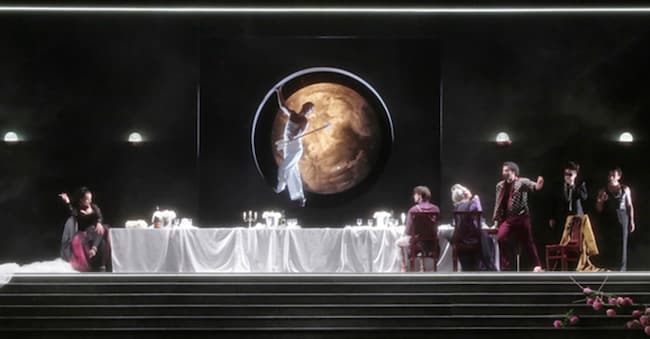
“Ermione”, Rossini Opera Festival 2024, Diretto da Michele Mariotti, Regia di Johannes Erath, scenografia Heike Scheele, costumi di Jorge Jara.

7' min read

7' min read

Once again this year, there is no good news for culture. The paradox? While, in recent weeks, the government has made a big deal about the exhibition 'The Time of Futurism' opened at the National Gallery of Modern Art in Rome and the revolutionary power of art, it has not bet on the cultural sector translating these words into more spending on culture, on the contrary. That the coming year would be a lean one for all ministries we already knew in April 2024, when the reform of European economic governance came into force, which introduced significant changes to budgetary rules and surveillance procedures, introducing the so-called Medium-Term Budgetary Structure Plans. Certainly, especially given the already scarce resources allocated to the Ministry of Culture, it was not expected that the appropriations would drop from 0.4 per cent in 2024 to 0.3 per cent of the total for an annual reduction of 147 million for 2025, 178 for 2026 and even 204 for 2027.

A manoeuvre of cuts and fragmentation

For the budget of the Ministry of Culture, the bill authorises final expenditure of EUR 3,097.6 million in 2025, to EUR 3,074 million for 2026 and EUR 3,204.2 million for 2027. Compared to the Budget Act 2024, the new law for 2025 declares, in absolute terms, a decrease of EUR 448.2 million (-12.6 %). This decrease is mainly caused by the 357.2 million decrease in capital expenditure (-21.31 %), which partially decreases in the following years, especially in 2027. Current expenditure also decreases, more slightly in 2025 than in the 2024 Budget Act, by EUR 91 million (-4.9 %): in this case, the decrease continues in the following years 2026 and 2027.

Loading...

The headings for research and training in cultural heritage and activities (with an allocation of €93,860,896 in 2023 and €92,029,407 in 2024), for coordination and guidance for the preservation of cultural heritage (with allocations of €364,752,80 in 2023 and €314,952,800 in 2024) and for the implementation of protection activities in the territorial sphere (with allocations of €23,265,596 in 2023 and €23,252,214 in 2024) are deleted.

Main Measures in the Manoeuvre: MiC labour contracts and deductions for individuals

The Budget Law introduces a novelty for the fixed-term employment contracts of personnel employed at the Ministry of Culture, which cannot be renewed for a period exceeding 12 months beyond the prescribed term, within the financial limits set forth in Article 9, Paragraph 28 of Decree-Law No. 78 of 31 May 2010, converted by Law No. 122 of 30 July 2010, for the year 2025. In addition, an increase of EUR 2 million per year has been added to the fund intended to cover the ancillary services performed by MiC staff in the implementation of the Extraordinary National Plan for the Enhancement of Cultural Institutes and Places, whose maximum limit had been set at EUR 5 million. The Manoeuvre confirms the income tax deductions for individuals who carry out or promote activities of significant cultural and artistic value (Art. 15 co.1 lett. h, TUIR) and liberal donations in favour of the Venice Biennale culture society (Art. 1, Law No. 28 of 1999).

The special fund for the granting of interest subsidies by the Istituto per il Credito Sportivo e Culturale is confirmed with an increase in the endowment of 50 million euro for the year 2026 and 40 million euro for the year 2027.

Cultural Heritage Protection

.

The Manoeuvre authorises an increase in spending of EUR 3 million per year from 2025 to support the implementation of an excavation campaign in national archaeological parks for the safety, conservation, and protection of areas of interest. Art 65 bis of Law Decree No. 73 of 25 May 2021 was also put in place, providing for an extension of the endowment of the Fund for the restoration and other conservative interventions on buildings of historical and artistic interest by one million euro for the three-year period 2025-2027. For individuals who own property of cultural interest, the tax credit recognised for such interventions is increased by 50 per cent for expenses incurred by persons obliged to maintain, protect or restore listed property pursuant to the Consolidated Income Tax Act, under Presidential Decree No. 917 of 1986. A fund with a value of €0.5 million for each of the years 2025, 2026 and 2027 is established for the restoration and consolidation of the cultural heritage damaged by the earthquake of 6 April 2009.

The Budget Law authorises the expenditure of EUR 600,000 for the year 2025 and EUR 3.2 million for the year 2026 for urgent measures to secure and upgrade roads, buildings or public buildings, including those of historical-religious interest, included in the municipalities of the Gallico Valley in the province of Reggio Calabria.

Celebrations and Capital of Culture

.

A fund is established at the Presidency of the Council of Ministers with an endowment of 0.7 million euros per year starting from 2025 for the promotion and implementation of initiatives for the celebration of the 70th anniversary of the Resistance and Liberation War, the Republic and the vote for women and the Constitution, as well as the celebration of the figure of Giacomo Matteotti on the 100th anniversary of his death for which, among other things, the 'Fund for the Matteotti House Museum in the Province of Rovigo' is established, with an endowment of 300,000 euros per year starting from 2025 (Paragraph 601). For the promotion of the Municipality of Agrigento as the Italian Capital of Culture 2025, the Manoeuvre authorises in 2025 the use of the surplus shares of the resources allocated to the National Fund for the support to the design of public works of the regions and local authorities, with reference to the 2002 and 2003 annual periods.

Cinema and Audiovisual

The contents of the annual report that the Ministry sends to the Houses of Parliament on the state of implementation of public support measures for the film and audiovisual sector have been modified, including references to the need to control expenditure and extending the impact analysis and assessment contained therein to support measures other than tax measures. The 'cinema tax credit', as already announced by Minister Giuli at Atreju, is in the crosshairs of the spending review. The Manoeuvre introduces a series of changes to Law No. 220 of 14 November 2016, in Article 12(6) the references to 'tax concessions' are deleted and become mere incentives. The new Article 14(5-bis) provides that the resources allocated for the financing of the planned interventions, where unused, may be allocated, in compliance with public finance balances and to the extent defined by a decree of the Minister of Culture, in agreement with the Minister of Economy and Finance, to the refinancing of the Cinema and Audiovisual Fund. Moreover, in relation to cinematographic works, the tax credit rate is no longer "ordinarily provided for to the extent of 40%o" but is "provided for to the extent of 40% maximum"; the deletion of the word "ordinarily" and the introduction of the word "maximum" have the effect of giving the implementing ministerial decree greater discretion, compared to the current text, in determining the exact extent of the rate.
As regards audiovisual works, it is specified that the tax credit rate that may be provided, as a priority, for works made for distribution through a national television broadcaster and, jointly, in international co-production, or for audiovisual works of international production, is not the 40% rate, but the "maximum 40%" rate, thus clarifying that, also in this case, the implementing ministerial decree retains the discretion as to the exact determination of the intensity of the tax credit.

Action was taken on the rules of the Film and Audiovisual Fund, raising the maximum share that can be allocated to selective contributions and promotion grants from 15 to 30 per cent. The discipline of the selective contribution that the Ministry used to grant to companies operating in the film exhibition sector and to film and audiovisual companies, prioritised among newly established companies, start-ups and those meeting the requirements of micro-enterprises, in accordance with European regulations on State aid, was abolished, with particular reference to small cinemas located in municipalities with a population of less than 15 thousand inhabitants. The Plan for the digitisation of the cinematographic and audiovisual heritage was made permanent, with an endowment (from the Cinema and Audiovisual Fund) of up to 3 million as of 2025, and the detailed regulation of the Public Register of cinematographic and audiovisual works was assigned to a ministerial decree.

Provisions on support for the performing arts sector

While the approval of the long-awaited Entertainment Code is still delayed, the Budget Law increases the Fund for live entertainment, referred to in Law No. 163 of 1985, by 0.5 million euros for 2025 and 1 million euros for each of the years 2026 and 2027 (Art. 1, par. 608). The following funds are also established: a fund to support the protection and enhancement of historical carnivals in the amount of €1,500,000 (Art. 1, par. 604) and an equal amount to support the sector of choir and band festivals (Art. 1, par. 605). In addition, it establishes a fund for the revitalisation and strengthening of the symphonic opera sector worth 8 million euros (Art. 1 par. 606) and a fund for the lyrical-symphonic foundations for the realisation of institutional activities worth 192,000 euros (Art. 1 par. 607).

Cuts also on Cohesion Funds

The latest blow to the MiC's budget comes from Minister Fitto, who, before leaving the ministry for European Affairs, Cohesion Policies and the National Recovery and Resilience Plan, launched a very heavy cut in the 2021-2027 Development and Cohesion Funds, leaving the Ministry of Culture with almost 90 per cent fewer resources than in the last planning. The total amount of resources from the Development and Cohesion Fund has plummeted from the 31.3 billion of the previous planning to 5.7: in particular, the Ministry of Culture would be left with only 171.8 million. Fitto is said to have told the ministry's owner, Minister Alessandro Giuli, that he would also have at his disposal "4.2 billion from the plan and other European resources," as reported by La Repubblica.

Copyright reserved ©
Loading...

Brand connect

Loading...

Newsletter

Notizie e approfondimenti sugli avvenimenti politici, economici e finanziari.

Iscriviti