
Buffalo industry: 30 million credit line for businesses in the Piana del Sele
A project organised by the Symbola Foundation in partnership with Bcc Campania Centro, Capaccio Paestum Serino, Magna Grecia, Coldiretti Campania and Confagricoltura Salerno

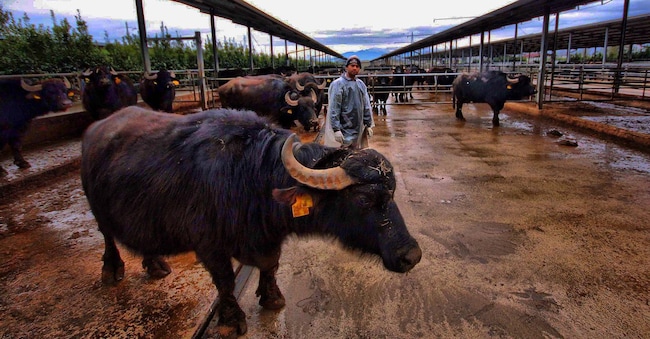
The use of new technologies to promote sustainability could give a boost to the buffalo industry in the Piana del Sele, in the Salerno area. This is the premise behind the project promoted by the Symbola Foundation in collaboration with Bcc Campania Centro, Bcc Capaccio Paestum Serino and Bcc Magna Grecia, developed with the involvement of Coldiretti Campania and Confagricoltura Salerno, as well as numerous businesses within the sector. The project revives an approach that has already been trialled in the fresh-cut produce sector in the same area. In addition to the technical analysis, dedicated funding of 30 million has been made available by the sponsoring banks at preferential rates.
This is a strategic sector for Campania, a region where around 70 per cent of Italy’s buffalo herd is concentrated. In particular, the Piana del Sele is home to 13.2 per cent of Italy’s buffalo farms and 22 per cent of the buffalo population. A significant proportion of Campania’s PDO buffalo mozzarella is also produced here.
The Symbola project – which is being presented today in Eboli – is divided into three phases: it begins with a study, continues with the available funding, and is completed with the implementation of the investments, overseen by the trade associations.
At the heart of the research is the analysis of six macro-dimensions that encompass the entire production cycle: from the substitution and reduction of chemical use to the efficient management of water resources; from the protection of soil and biodiversity to the reduction of climate-changing emissions; and finally to the recovery and valorisation of by-products and the adoption of sustainable packaging, without neglecting the cross-cutting aspect of animal welfare. Concrete solutions are identified – many of which are already available on the market – capable not only of mitigating environmental impact but also of significantly improving the quality of production, the sector’s reputation and the competitiveness of the businesses involved.
Here are a few examples of the advice offered: in the agricultural sector, the use of smart fertilisers and precision farming helps to reduce the use of plant protection products and chemical fertilisers, optimising the use of natural resources and reducing the risk of soil and groundwater contamination. In livestock farming, the use of nutraceutical supplements, homeopathic remedies and precision animal husbandry technologies helps to improve the health of buffaloes. Tools such as environmental sensors, software for monitoring microclimatic conditions and smart milking robots not only raise hygiene, health and production standards, but also significantly improve animal welfare and the farm’s overall performance.


