Build 2026: from proprietary MAI models to Majorana 2 chips, Microsoft accelerates AI agents

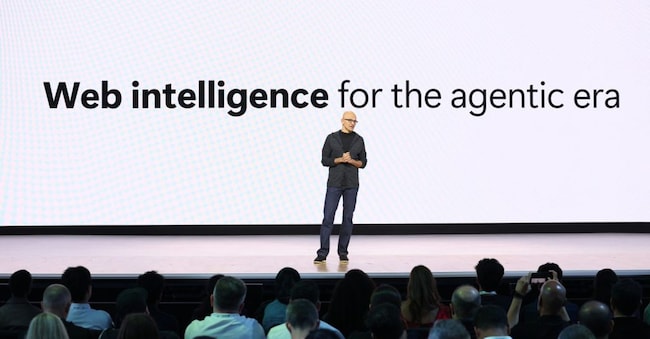
Perhaps never before as in this edition, Microsoft Build marks one of the most important strategic steps in recent years for the Redmond giant. On the stage of the annual conference dedicated to developers, CEO Satya Nadella outlined a vision that goes well beyond the simple updating of artificial intelligence tools: the goal is to build a complete platform for the age of agents, and thus software systems capable of operating autonomously, learning from the context and performing complex tasks without continuous user intervention. During the keynote many announcements converged in this direction, from the new proprietary models of the MAI family to the first in-house developed reasoning model, from the new generation of the Majorana quantum chip to an operating system designed for multi-agent environments, from Autopilot autonomous assistants to a hardware platform dedicated to AI developers. Nadella's message was clear and confirms how Microsoft intends to preside over more and more levels of the artificial intelligence value chain, progressively reducing dependence on third-party models. "What you have seen represents a very significant change," said the CEO from the Build stage, "and we believe the time has come for every company to move from simply using frontier models to participating directly in the AI innovation ecosystem. A shift that for many sums up the company's ambition to shift the centre of gravity from the consumption of technology to its construction and customisation by businesses. Nadella's expressed belief, in other words, is that the next phase of artificial intelligence will see an increasing number of companies participating directly in building applications, agents and specialised models, rather than simply consuming pre-packaged services. And this is a paradigm shift that has become crucial for artificial intelligence.
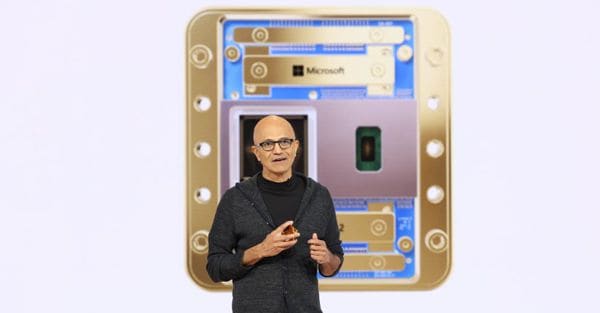
US press: it's Redmond's 'AI Independence Day'
Build 2026 thus tells of a Microsoft that wants to be simultaneously a cloud infrastructure provider, a developer of templates, a platform for intelligent agents and a manufacturer of AI-optimised hardware. A strategy that aims to exploit the synergies between Azure, GitHub, Windows and Microsoft 365 to offer businesses an integrated and governable ecosystem, and in this sense great attention was also paid to security and governance, issues that are becoming central as agents acquire greater operational autonomy. The San
Francisco also highlighted Microsoft's increasing focus on optimising computational costs and democratising access to advanced models. The 'new' watchword is efficiency: cheaper models, more controllable systems and infrastructures designed to take AI from the laboratory to large-scale production. Nadella, not surprisingly, wanted to trace this evolution back to a broader industrial logic, emphasising that 'it is never technology for its own sake' and reiterating how the value of artificial intelligence will increasingly be measured by its ability to generate productivity, accelerate research and transform business and scientific processes. Finally, another element of great importance in terms of the future also emerged in the background. While remaining the main partner (also financially) of OpenAI, Microsoft is accelerating the construction of its own artificial intelligence supply chain, from foundational models to development tools to specialised hardware. It is no coincidence that some US observers have defined this edition of Build as a sort of 'AI Independence Day' for Redmond: not a break with OpenAI, but the will to progressively reduce technological dependence on external suppliers and directly preside over the most profitable segments of the value chain. And this, probably, is the real news that emerged from Build 2026.
More control over the entire technology stack, from models to silicon
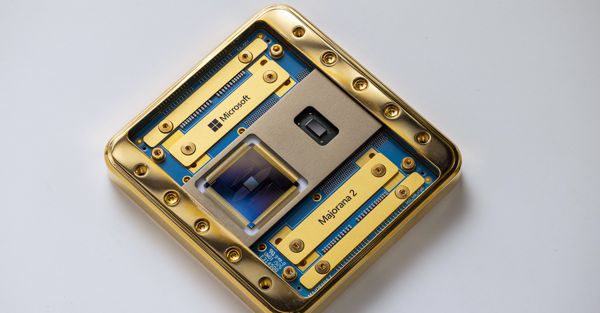
Among the most relevant announcements of Build edition 2026 is the new MAI family of proprietary models, developed by the AI Superintelligence Team led by Mustafa Suleyman. The debut of MAI-Thinking-1 represents a symbolic step because it is to all intents and purposes Microsoft's first in-house-built reasoning system designed to cope with multi-step instructions, coding tasks and complex decision-making processes while maintaining lower operating costs than alternatives from Anthropic and Google (as well as OpenAI itself). Its credentials speak for themselves - 35 billion active parameters and a context window of up to 128 thousand tokens - and its training was carried out without resorting to distillation techniques from external models, using proprietary and commercially usable data. The entire family of MAI models (including Image-2.5 for image generation and editing, Voice-2 and Transcribe-1.5 for voice and multilingual transcription) will be available through Microsoft Foundry and progressively integrated into products such as PowerPoint and OneDrive. Microsoft's underlying objective is therefore quite clear, and it is to strengthen its control over the AI infrastructure and build its own technological autonomy along the entire supply chain. This also explains the other major product innovation presented at the event, which comes directly from Redmond's labs. Majorana 2 is in fact the chip that should accelerate the path towards a commercially usable quantum computer by 2029 and introduces topological qubits that,
according to the company, they are a thousand times more reliable than the previous version. Even more significant is the stability figure: whereas many architectures maintain the quantum state for only a few microseconds, Majorana 2's qubits achieve an average life of around twenty seconds, with peaks of up to one minute. The ultimate goal remains ambitious: to concentrate up to a million qubits in a chip the size of the palm of one hand and harness this computing power to tackle problems that are today unsolvable in the fields of health, energy and advanced materials.