Shaping the future of work: face to face with the younger generations
Businesses, universities and the third sector: a meeting in Milan on youth entrepreneurship, artificial intelligence and new paths to change.
by the Editorial Team
 Aggiungi Il Sole 24 Ore
ai preferiti su Google
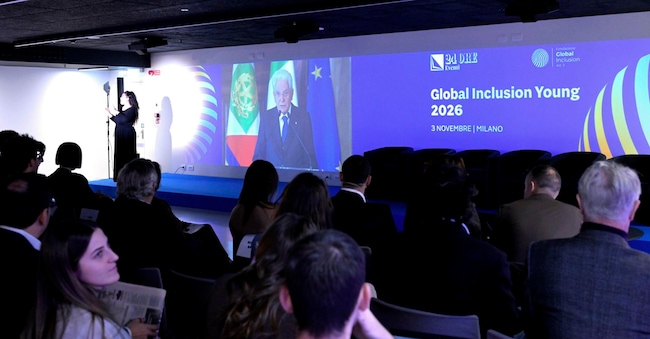
“In an era of major technological and social change, the emphasis must be placed on epistemic responsibility – that is, responsibility for knowledge,” says Susanna Sancassani, director of Metid Learning Innovation at the Politecnico di Milano. “What are we capable of putting our stamp on today? Not by reproducing, copying or pasting existing material, but by creating original and innovative writing and thought?”
“If it is not made accessible to everyone, AI risks becoming the greatest source of social division,” warns Andrea Laudadio, Head of Tim Academy and Development at the Tim Group.
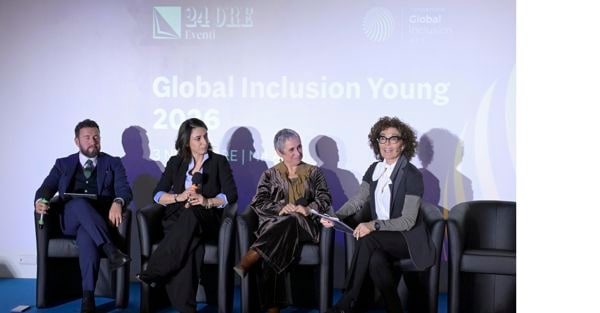
“People cannot be pigeonholed into rigid roles and definitions. There is no single way to achieve a goal. But there are many different paths to the same outcome,” says Sara Bocchicchio, a neuropsychologist and co-founder of AnotherWayTo.
“I belong to Gen Z, which is made up of thousands of different individuals, stories and experiences. Just because we were born during the same period doesn’t mean we can be described in a uniform, generalised way,” warns Benedetta Angiello, Head of Community & Partnerships at University Box.
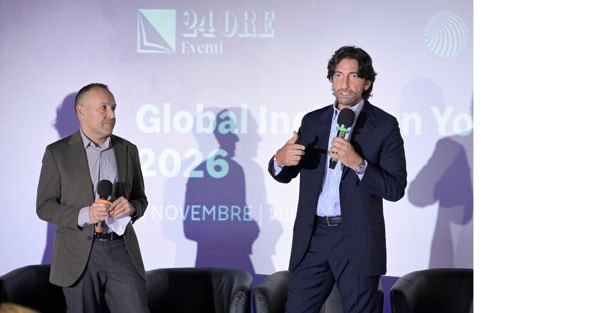
These are just some of the testimonies and ideas that emerged at Global Inclusioni 2026, organised by the Global Inclusion – Art. 3 Foundation and *Il Sole 24 Ore*, which took place in Milan. The younger generations are spearheading a quiet revolution capable of reshaping work, technology, rights and the very concept of the future. In an era marked by the advent of artificial intelligence and major geopolitical tensions, the demand from the younger generations is clear: we need a new social contract based on opportunity, learning, consistency and well-being. The world of work is thus having to redefine its priorities. At the heart of the debate were some key questions for understanding the future: How can we regenerate organisations based on trust and new meta-skills? How can we promote a genuine alliance between genders and generations? Now in its eighth edition, Global Inclusion has brought together businesses, the third sector, universities and the media, reaffirming – 80 years after the birth of the Republic ‘founded on work’ – the centrality of the Constitution, but also the need to keep it alive and relevant in workplaces, in public spaces and in social life. ‘The Constitution is not a machine that, once set in motion, runs by itself. The Constitution is a piece of paper; if I drop it, it doesn’t move: for it to move, we must refuel it every day. We must put into it (…) our own sense of responsibility’. These were the words of Piero Calamandrei, in his speech to young students in Milan: it was 1955.