
Rumen Radev towards a clear victory in Bulgaria: political breakthrough and possible tensions with the EU
The former pro-Russian president wins the broadest consensus in decades, promising stability but raising doubts about the future relationship with the European Union.

Key points
- In exit polls ahead former president Radev, conservatives collapse
- Gerb conservatives defeated
- Sofia Stock Exchange (-0.1%) weak after vote result
- Kremlin: we welcome the Bulgarian neo-premier's willingness to talk
- Berlin: we hope for stable and reliable government for EU challenges
- Costa: "I look forward to working together with you"
Official results are showing that former pro-Russian President Rumen Radev is poised to score a landslide victory in the Bulgarian elections, potentially ending years of weak coalition governments and sidelining long-dominant political forces. The voter turnout, above 50 per cent, is the highest since 2021, according to the polling institute Market Links. This is the country's eighth parliamentary election in five years.
Radev's Progressive Bulgaria party won 44.7% of the vote after 96% of the ballots were counted, 30 points ahead of its nearest challenger. Progressive Bulgaria's tally puts it well ahead of the pro-European Continuing Change-Bulgaria Democratic (Pp-Db) coalition with 14.2%, and the long-dominant Gerb party, led by former prime minister Boyko Borissov, with 13%.
According to a projection by the polling institute Myara, in the country's eighth general election since 2021, Radev's Progressive Bulgaria Party is heading towards an absolute majority with 135 seats in the 240-member chamber. With 78% of the votes counted, Radev is at 44%,.
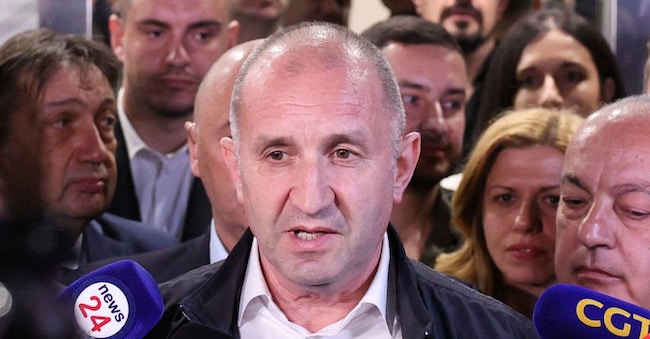
"Progressive Bulgaria wins unequivocally," Radev, 62, told reporters in Sofia after the projections were published. "This is a victory of hope over distrust. This is a victory of freedom over fear. And finally, this is a victory, if I may say so, of morality."
Radev, the country's most popular politician, stepped down as head of state in January after nine years. to form his own new movement and enter the race after another wave of demonstrations brought down a fragile coalition led by former Prime Minister Boyko Borissov's Gerb party.

