
Bureau Veritas sounds the alarm on infrastructure: ‘More vulnerable to climate change’
According to a Nexta study, 60–70 per cent of roads, viaducts and railway lines were built under hydrogeological conditions that are incompatible with current ones

Key points
The certification body Bureau Veritas has sounded the alarm over the condition of infrastructure (such as viaducts, railways and tunnels) in Italia: a study by Nexta, the group’s engineering firm, argues that it is not only ageing infrastructure that poses a danger but also, and increasingly so, climate change. The overall context, emphasises Carla Formenti, Technical Director of Nexta’s B&I (Business & Industry) division, ‘is changing rapidly due to climate change and the increase in the frequency or intensity of certain extreme weather events. And this represents a risk and a problem that needs to be addressed, particularly for older structures, which were designed on the basis of climatic and hydrological data that may no longer adequately reflect current conditions. The issue, which is particularly acute in highly exposed areas such as the Alps and the Apennines, concerns not only the structural integrity of the building but also its ability to continue to fulfil its function safely’.
Works created more than 30 years ago
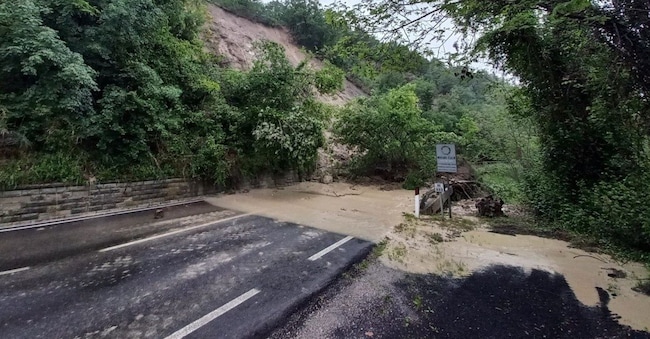
In Italia, Formenti continues, ‘the infrastructure network comprises around 600,000 kilometres of roads, over 16,000 kilometres of railway lines, around 240,000 registered bridges and viaducts, and 3,500 tunnels. Around 60–70 per cent of these structures were built more than 30 years ago, based on climatic, hydrological and geographical conditions that differ from those of today. Suffice it to say that, according to ISPRA, in 2023, 18.4 per cent of the national territory was at risk of landslides and 4.1 per cent at risk of flooding, under the highest-risk scenario; and now, this scenario is further compounded by the trend of climate variability in Italia, which confirms a rapid rise in temperatures, a reduction in rainfall, and a significant increase in the intensity of individual events.”
All this calls for, as the study states, ‘a necessarily innovative approach to checks and inspections. These cannot be limited to the search for defects: cracks, deformations, corrosion or other visible damage. It is also necessary to check whether the conditions for which the structures were designed have changed. Indeed, a piece of infrastructure may appear to be structurally sound, yet be operating in a more demanding environment than that originally envisaged.’
‘We need to identify prevention and adaptation measures’
In fact, as the Nexta report points out, every piece of infrastructure ‘is designed on the basis of specific environmental, hydrological, geological and geotechnical conditions. Designers also take into account specific load scenarios, traffic levels, river flow rates, soil characteristics and drainage conditions. Over the course of the structure’s service life, however, these parameters may change. Rising temperatures, the alternation between periods of drought and heavy rainfall, changes in flood patterns and slope instability drastically alter the framework within which infrastructure – primarily viaducts and tunnels – operates’. Consequently, ‘the stresses to which infrastructure is subjected may change’.
To tackle the situation, Formenti concludes, these issues must be addressed by ‘integrating structural, hydraulic and geotechnical engineering with risk management. A coordinated approach is essential not only to understand the condition of a structure, but also the changing environmental conditions’ in which it is situated ‘and to identify appropriate prevention and adaptation measures’.


