
Burlando: 'We want to make Bancomat the digital currency of the Italians'
New CEO speaks: 'The brand is there and it is strong, but it needs refreshing. The M&?Focus on fintech operations within the Italian perimeter".
by Luca Davi
3' min read
3' min read
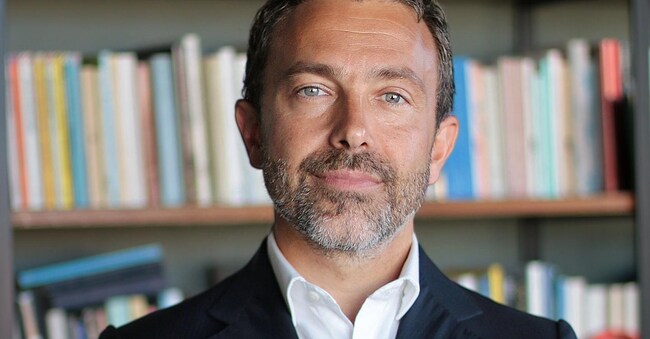
"The brand is there and it is strong, but it needs to be refreshed: we want to make Bancomat the digital currency of Italians, the product that will summarise all the ways of paying and using money, from withdrawals at ATMs to payments on Pos, from e-commerce to transferring money between private individuals to paying bills". Fabrizio Burlando, born in 1974, is the new CEO of Bancomat, the company that for 40 years has managed one of the best-known and most widespread withdrawal and payment circuits in Italy, with about 3 billion transactions handled by 2023 and about 30 million cards in circulation in our country. An electronics engineer with an Mba from Insead and specialisations at Yale and Lse, Burlando boasts 20 years' experience in the digital payments sector, gained mainly over the last 16 years at Mastercard, where he held roles of increasing responsibility at a global level, focusing on data platforms, value-added services and development support for bank customers and users worldwide.
Release objective
.However, as of today - since yesterday the new board of directors appointed him at the helm in place of the outgoing Alessandro Zollo - he has a non-trivial task ahead of him: that of modernising and relaunching a well-known (but tarnished) brand such as Bancomat, a historical reality, with over 100 member banks, which has to deal with the challenges of a market, that of payments, which is undergoing rapid evolution, between the challenge of big Tech and competition from other operators.
Investors and rearrangement
To implement this project, Fsi, the fund led by Maurizio Tamagnini, has so far invested 75 million euro (with the prospect of rising to 100 million), becoming its largest shareholder with 42.9 per cent. Alongside Fsi, there are four banks (Intesa Sanpaolo, Iccrea Banca, Banco Bpm and Bper), which are signatories with Fsi of a shareholders' agreement that controls a total of 74.7 per cent of Bancomat's capital. The growth prospects, Burlando explains, are there. "Italy is an extremely interesting market," the manager explained to Il Sole 24Ore. "With 400 billion euros transacted, our country still has a very low penetration of digital payments and ample room for development: just think that only 40% of transactions go through electronic instruments compared to 80% in the Nordic countries. But the other reason for accepting the challenge is prospective. "Payment circuits are now infrastructures that are considered fundamental by individual countries for interconnections between banks, and are therefore of strategic importance".
Innovation and Partners
.What the lines of development will be, and the potential links with a rapidly changing market, we will see. What Bancomat needs, however, is a breakthrough on the digital innovation front. The group in recent weeks chose Nexi as a strategic partner for the centralised infrastructure platform (application centre). "It is a project that I completely endorse: it will allow the use of a domestic payment circuit in line with the best standards, with low costs and the possibility of providing a quality solution to make it the digital currency of the Italians," Burlando emphasises. Could it be that in order to accelerate on the digital front, the company is looking at M& A operations? "We have a fair amount of fresh capital at our disposal. This will allow us to carry out operations in the fintech field, within the Italian perimeter. We want to acquire skills complementary to ours that will help us complete our offer. This does not exclude, on the other hand, the possibility of looking abroad, but more 'from the perspective of partnerships,' says the manager. 'We are evaluating the most interesting solutions that will help aggregate various brands in a logic of interoperability, as already happens with Spain and Portugal.
The shareholding structure
.In the background remains the issue of the shareholding structure: Fsi's entry was approved by most of the more than 100 shareholder banks, but UniCredit, which participated in the last shareholders' meeting and has a minority director on the new board, did not join the pact. What do you think about this? 'Bancomat looks at the whole market,' Burlando emphasises, 'Many banks believe in our project, others have decided to stand at the window, but I am sure there is space for them to come with us. Ours is a plan that looks at everyone'.


