Great Britain

Andy Burnham on his way to Downing Street: Starmer’s successor and the challenges facing the new Labour Prime Minister

For the ‘King of the North’, the race against his rivals is set to begin. Though no rivals are yet in sight: the winner is likely to be announced on 16 July

by Nicol Degli Innocenti

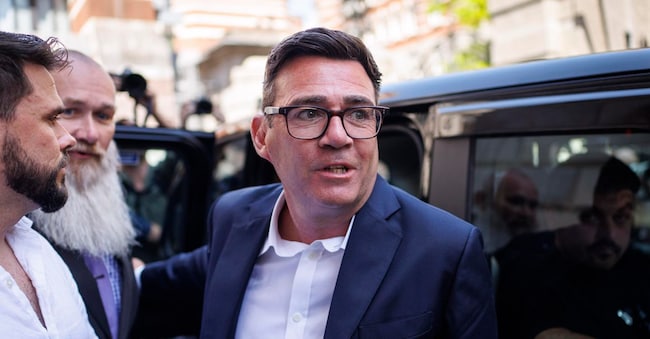
Andy Burnham.  EPA/Tolga Akmen EPA

4' min read

Translated by AI
Versione italiana

4' min read

Translated by AI
Versione italiana

On 16 July, the UK could have a new Prime Minister – the fifth in four years and the seventh in the last decade. It seems almost certain that it will be Andy Burnham, the hugely popular former mayor of Manchester, who was sworn in yesterday at Westminster as the newly elected MP for Makerfield.

In announcing his resignation yesterday morning Keir Starmer, the outgoing Prime Minister, had set out the timetable: candidates for the leadership can come forward from 9 July and the new Prime Minister will be chosen by MPs by the summer. The rules stipulate that prospective leaders must have the support of at least 81 Labour MPs, 20 per cent of the total in Parliament.

Loading...

In fact, barring any last-minute surprises, it seems there will be no contest but rather a coronation, given that the only contender for the Downing Street throne is Burnham, the so-called ‘King of the North’. It therefore seems likely that the party’s Executive Committee will announce the new leader and Prime Minister on 16 July, the day before Parliament adjourns for the summer recess.

The only other challenger, Wes Streeting, a former Health Secretary who had resigned in protest at the Prime Minister’s inaction, yesterday threw his support behind Burnham. “We can spend the summer blowing our minor differences out of proportion, or we can roll up our sleeves and bring about the change that the party and the country need,” said Streeting. “That is the choice I am making, and I hope everyone else will support Andy.”

Now that Streeting has pulled out – presumably in exchange for the promise of a prestigious post in a future government led by Burnham – there are no other credible candidates on the horizon. Angela Rayner, the former Deputy Prime Minister nicknamed ‘the Red’ due to her political views and the colour of her hair, has not entered the race and may be in line for a prominent role as she is considered close to Burnham.

Some Labour MPs would like to see someone stand as a candidate, as they regard a contest as more democratic than a coronation, but it would be a mere formality: it is hard to imagine who could have the support and popularity needed to challenge the ‘King of the North’. One need only look at yesterday’s scenes in Parliament to see just how powerful the ‘Burnham effect’ is.

Elected as the MP for Makerfield last week with 55 per cent of the vote, he was sworn in yesterday at Westminster, surrounded by hundreds of jubilant Labour MPs, including several ministers allied with Starmer. Confirming his candidacy, the former mayor of Manchester said that “people want to see progress on economic growth, the cost of living, public services, housing and opportunities for the next generation” and promised a “positive renewal” of the party and the country.

Starmer, who had been elected less than two years ago with a large majority, had pledged to bring change and stability following the chaos of recent Tory governments, but failed to deliver on his promises. Too rigid and cautious, he quickly lost support, becoming the most unpopular prime minister in British history. In last month’s local elections, Labour suffered a series of humiliating defeats.

After insisting that he wanted to remain in his post and take on any challenger, Starmer realised last weekend that he had no support left and decided to step down with dignity, highlighting in his farewell speech his achievements in the economy, healthcare, and foreign and defence policy. According to an instant poll conducted by YouGov, 62 per cent of those surveyed believe Starmer was right to resign.

If Burnham, as it seems, succeeds in his third attempt to become Prime Minister, it is because he has earned a reputation for efficiency during his nearly ten years as mayor of Manchester, revitalising the city’s economy and fighting for greater autonomy from London.

His victory in Makerfield – a constituency which, in last month’s local elections, had turned its back on Labour and voted for Reform – confirmed his popularity and cemented his credibility, paving the way for him to Downing Street.

In the eyes of Labour MPs, Burnham – who is open, charismatic and close to the people – seems the only politician capable of defeating Reform, the right-wing, anti-EU and anti-immigration party founded by Nigel Farage, which has been leading in all the polls for months.

Burnham now has little time to put his team together, draw up a government programme and choose his ministers. He has a long history of party membership and has previously served as a minister in the governments of Tony Blair and Gordon Brown, so he has experience, but he has been away from Westminster for ten years.

It will not be easy to replicate on a national scale the undeniable success he has enjoyed in Manchester, or to manage the economic crisis, the complex geopolitical situation, relations with President Trump’s US administration, or the rapprochement with the European Union.

A staunch pro-European, Burnham had come out against Brexit and expressed support for a return of the UK to the EU, but as Prime Minister he might proceed with greater caution. The EU decided yesterday to give him more time, announcing the postponement of the bilateral summit scheduled for 22 July.

Copyright reserved ©

Brand connect

Loading...

Newsletter

Notizie e approfondimenti sugli avvenimenti politici, economici e finanziari.

Iscriviti