
'Buses, for fleet renewal it is urgent to think about the post-NRP'
Federauto's warning: 'Despite significant expenditure, the local public transport fleet is still obsolete'

4' min read
4' min read
'Despite the significant volume of expenditure in the Pnrr phase, the circulating fleet in the Tpl (local public transport) sector is still obsolete'. So says Maria Fiorentino, vice president of Federauto with responsibility for buses. In 2018, according to data from Asstra, the average age of the bus fleet in Italy was 12.1 years, among the highest in Europe. In 2022 it dropped to 10.3 years, but the European target is to reduce the average age of the city bus fleet to 7.5 years in the next 15 years. 87% of the buses in circulation in Italian cities are powered by diesel, 9% by methane and LPG, 3% are hybrid and zero-emission vehicles (finally, there is a 1% of other fuels). According to the associations of the Tpl (Asstra, Agens and Anav) 'a review of funding for the sector is urgently needed'. Fiorentino continues: 'It is necessary to start devising a new regulatory instrument capable of ensuring a constant, adequate and accessible flow of funding for the renewal of the bus fleet, in continuity with the strategic plan for sustainable LPT mobility currently in force'.
"We are, in fact, on the eve of the second five-year flow of funds of the Strategic Plan and the resumption of the obligation of co-financing by local authorities," adds Federauto's vice president, "and the data on the registration of buses in LPT service in the first quarter of 2024, show that the market is responding well to Bev (battery electric, ndr) technology - the only one supported by the Pnrr - for fleet renewal in urban areas, while Cng/Bio-Cng (methane, biomethane) technology is the one preferred by companies for the operation of intercity and suburban lines". "This," Fiorentino concludes, "essentially means two things: the first is the need to orient the planning framework of resources for investments towards technological plurality, leaving companies freedom of choice in relation to the scheduled missions set out in the service contracts; the second is the need for overall governance - with the relative definition of future resources for investments - that puts LPT companies in a position to meet the deadlines defined by EU regulations for decarbonisation targets, which are particularly challenging and specific to the scheduled bus sector.
The algorithm
.In this sense, Asstra (which associates 141 companies representing 75% of the LPT market in Italy) has defined a tool that, thanks to an algorithm, allows LPT operators and public decision-makers to quantify the resources needed to manage the energy transition process. "A tool at the disposal of individual transport companies and institutions, useful in terms of fleet development, company organisation and economic planning," emphasises Asstra president Andrea Gibelli.
As far as the financial requirements are concerned, Gibelli clarifies: 'For bus fleet renewal investments alone, net of operating costs, around 700 million euros are needed annually for the next fifteen years. A colossal volume of resources, around 10.5 billion, which requires adequate coverage to prevent the objectives set by Europe on the ecological transition from remaining on paper.
The cases of Milan and Bologna
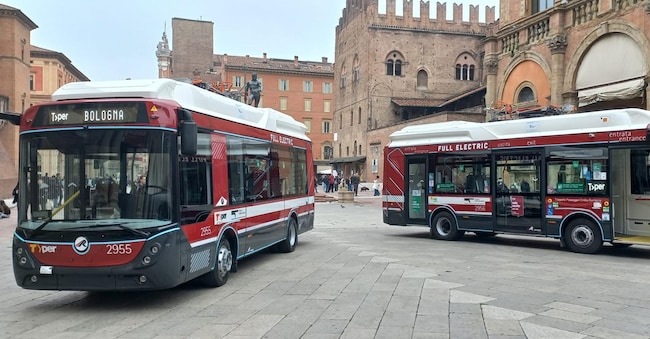
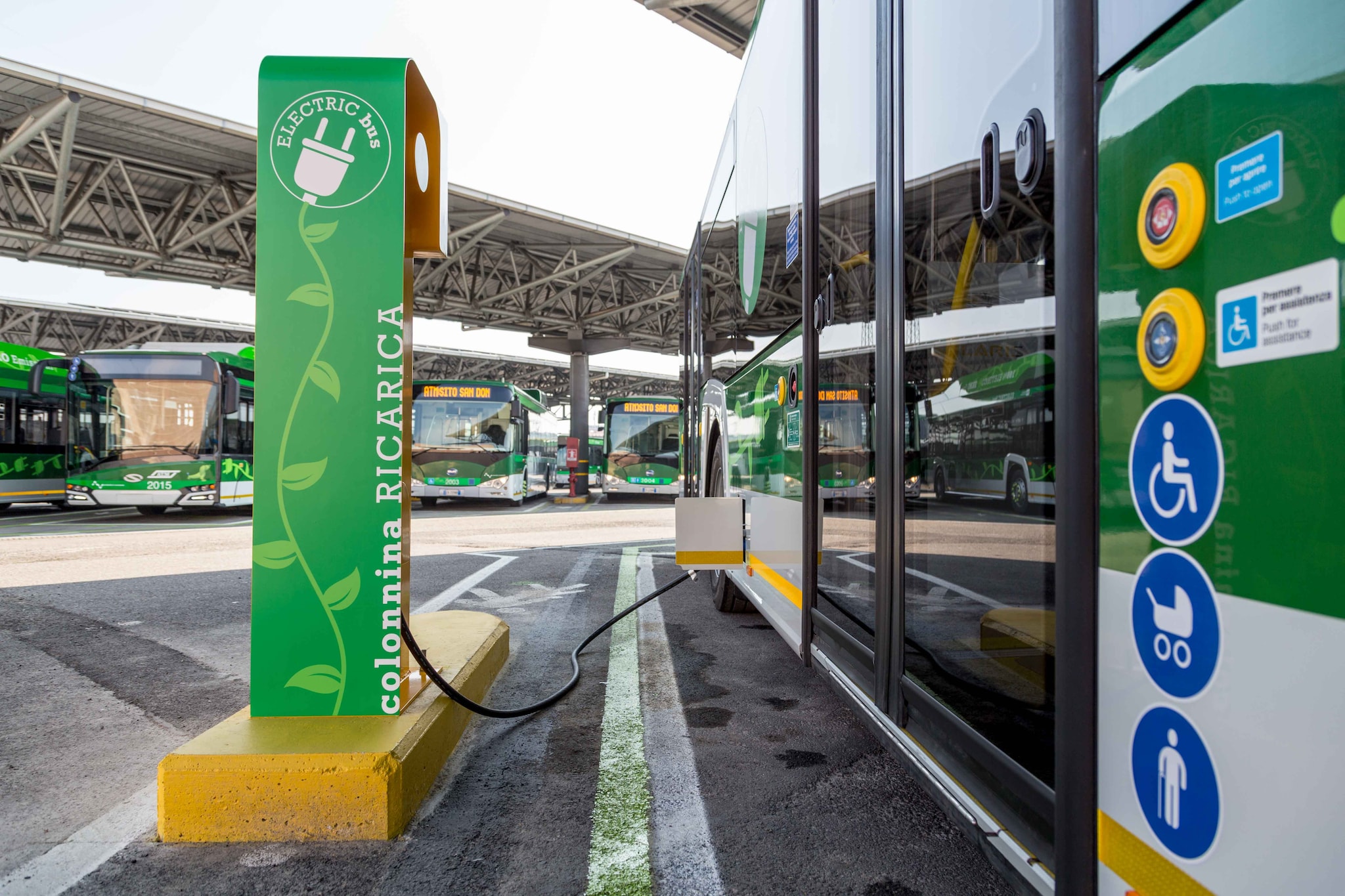
With the transition to electric power, public transport companies have completely new tasks and must also deal with the technological innovations that are occurring at an ever faster pace. Let us look at the cases of Milan and Bologna. Atm Milano, which is in the process of converting its entire bus fleet (1,200 vehicles, most of which are still endothermic) to full electric, explains that there is no single solution, 'but each line is a system and there can be different alternatives: for example, battery recharging can take place in depots at night or along the line through recharging stations, and all these choices imply that we operate within a system logic'. Atm is 100% controlled by the Municipality of Milan. Atm's full electric plan envisages a total investment of around EUR 1.5 billion for new vehicles and infrastructure. For the renewal of the fleet alone, the investment amounts to EUR 800 million, of which EUR 293 million from public funding that has already been fully spent and contracted.


