
Butti: 'Invested 1 billion in start-ups, now develop private participation'
. .
by Marco Alfieri
 Aggiungi Il Sole 24 Ore
ai preferiti su Google
3' min read
3' min read
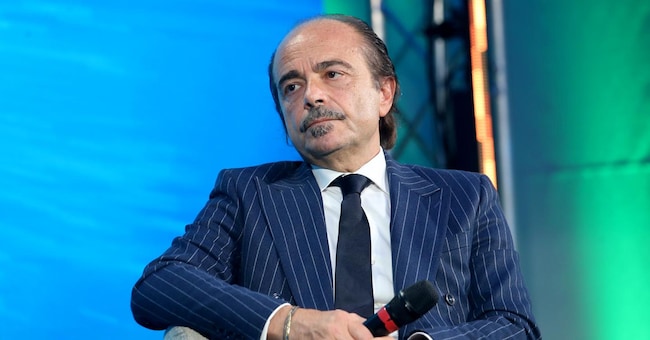
"We came up with a bill and invested 1 billion in public funds for the development and assistance of start-ups and for the identification of a national champion. It is clear that this is not enough, although in this way Italy is firmly on the European podium in terms of public funding. In fact, private participation must also be developed, and on this the parliament is already wondering what the best instrument might be. Probably a foundation, but I don't want to get hung up on the name'.
Alessio Butti, undersecretary for technological innovation and digital transition in the Meloni government, said this during the AI Transition 2024 event. "We need to put private individuals, the start-ups that exist and other Italian companies that are doing admirable things with regard to AI in a position to stay here, to do research, production and market their products here."
As for regulation, the European AI Act 'is definitely the first regulation in the world and has a vision that the Italian government shares very much. From our point of view, some regulation is essential to put in place: especially when you don't really know where a technology is falling, we start by saying that some constraints are given to you'. Even if only to raise awareness among individuals and businesses of the risks connected with data security and the ability of generative AI to write malicious code or to guard and manage entire chains of cyber attacks, making very destructive aspects such as malware and polymorphic viruses more efficient, Nunzia Ciardi, Deputy Director General of the National Cybersecurity Agency, spoke about during the first day of the summit.
In short, if for Butti this is the true rationale of the AI act, to give ourselves smart rules, 'then we have to be the ones to give a strong boost to competitiveness because I also share the thought that Europe is the world champion in regulating but a little less proactive when it has to invest and above all complete projects,' admits the undersecretary.
Before Butti, Roberto Viola, Director General for Communications networks, content and technology (Cnect) at the European Commission, had already spoken, proudly defending the continental way to AI.

