
Buyers: war weighs on markets, but demand for Italian-made products remains high
Almost 400 international operators, including 264 buyers, selected and invited by Agenzia Ice to the Furniture Fair

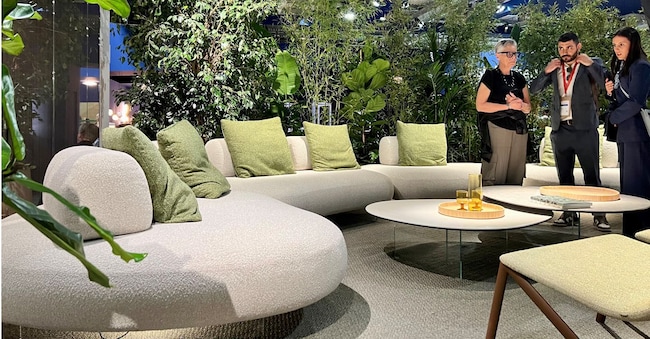
Fewer arrivals from the Gulf countries, as was to be expected, and also from some Asian countries, particularly India, due to flight cancellations or price increases. On the other hand, there was an increase in visitors from North and South America, China and Korea, making the Salone del Mobile the most international of Italian trade fairs.
Waiting for the official numbers of the fair, we have a cross-section of the operators selected and invited to the fair by Agenzia Ice, in cooperation with the Fair: the incoming programme brought 395 operators to Milan, including 264 buyers from the main markets of interest and 131 journalists from 35 countries.
The war, with the instability and fears that come with it, is making itself felt everywhere, not only in the Middle East: everyone - from Europe to Oceania - is talking about a slowdown in the market and a phase of suspension, of waiting, yet confirming the interest of their respective markets in Italian-made design, appreciated above all for its quality, its style and the ability of Italian companies to respond to the needs of a sector that is now fundamental in all continents, that of large projects.
That doesn't stop even in the countries closest to the conflict, as Riyas Cherukunnum, procurement manager of Absal John Paul, a construction company in Riyadh that has been working for 15-16 years with Italian companies supplying marble, furniture and everything else needed to realise the most prestigious projects - flats and hotels. "We buy furniture and materials from major Italian brands for 4-5 star projects, while for mid-level projects we turn to local suppliers," he points out. He admits some slowdown in business due to the war, but without any particular repercussions: 'Projects are going ahead, we have some delays in deliveries, but we do not record any cancellations in Saudi Arabia.
From Dubai comes Dan Mounir, art director of Bravacasa Interior, a design studio with 200 employees, who tries to reassure companies about the situation in his country: 'There are problems with logistics, in the shipment of goods, but no projects have stopped, we only register delays in deliveries. I am sure that we will overcome this moment and the Emirates remain an excellent market for Italian companies'. The architect also gives some advice: 'I think it is advisable to increase the volume of products in stock, at least for 2-3 months, to ensure price stability. This would be an important signal to Emirati customers: to make them feel that Italian companies are on our side and support us'.

